You found the perfect room. The price is right. The photos look great. The landlord seems friendly.
Then you pay the deposit — and they’re gone.
This is the fate of thousands of renters every year. Rental fraud is among the most common scams that hit those searching for shared housing in bustling cities. And the victims are not all careless people. These tricks work all the time on smart, educated renters.
The reason? Scammers are becoming more adept at what they do.
They copy real listings. They use fake names. They create professional-looking fake leases. Some of them appear in person with cash in hand — then disappear.
And if you’re using the rent by room model to find affordable city housing — and it honestly is one of the most brilliant ways to save money in a city — you need to know how to protect yourself.
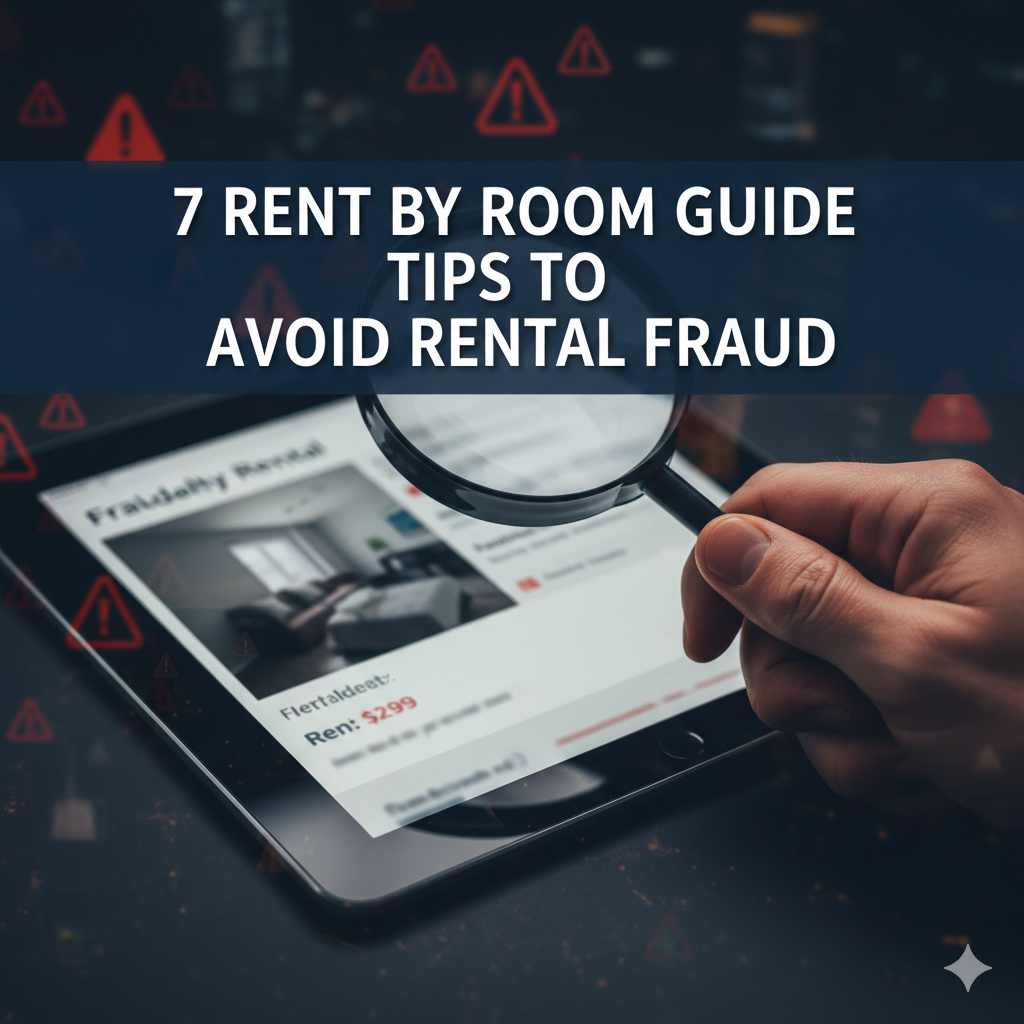
That’s why this guide includes 7 simple, actionable tips to help you identify rental fraud before it hits your wallet. These are not vague warnings. These are concrete, practical steps you can implement in your very next room search.
Let’s break it all down.
How Bad Is Rental Fraud at the Moment?
Before diving into the tricks, let’s review the scale of the problem. These numbers will surprise you.
| Rental Scam Stat | Data |
|---|---|
| Number of Americans who fell victim to rental scams (2023) | 5.2+ million |
| Amount most lose on average | $1,500 – $3,000 |
| Proportion of fraudulent listings on major sites | Up to 30% in specific cities |
| Most targeted cities | NYC, LA, Chicago, Miami and Houston |
| Most targeted renters | First-time renters, students, new immigrants |
Data is based on Federal Trade Commission (FTC) annual fraud reports.
These are not small numbers. American renters lose billions of dollars each year to rental scams. And the rent by room market is one of the most targeted segments — because renters are often desperate, cash strapped and ready to pull the trigger on a good deal.
That urgency is precisely what scammers depend on.
Trick 1: Don’t Ever Send Money Before You See the Room — No Exceptions
This is the first rule of rent by room safety. Yet so many people break it.
Tenants in a hurry are the targets of scammers. They generate a fake sense of urgency — “five other people are interested,” “the room fills up fast,” “just send a holding deposit and I’ll take it off the market for you.”
Do not fall for it.
No real landlord asks for payment until after a viewing.
If someone tells you to wire money, send a gift card or pay through something like Zelle or Venmo before you’ve seen the room in person — that’s a scam. Full stop.
What Scammers Say vs. What Legit Landlords Say
| Scammer Language | Legitimate Landlord Language |
|---|---|
| “Pay a deposit to hold the room right now” | “Come check out the place, and we’ll talk about the deposit” |
| “I’m out of the country — I will send you the keys by mail” | “Let’s schedule a showing for this week” |
| “Trust me, it’s a great deal — don’t worry!” | “Here is my contact info and details of the lease” |
| “PayPal only, no refunds” | “We accept check or bank transfer with a receipt” |
| “A lot of people are interested. Make a decision today!” | “Take your time and let me know if you have any questions” |
If the person you are speaking with leans toward the left column, walk away.
The Video Call Workaround
If you simply can’t visit in person — say, you’re moving from out of town — always ask for a live video call tour of the room.
A scammer will almost always come up with excuses to avoid this. A real landlord will have no problem doing it.
On the video call, ask them to open up a closet, show you the view from the window, or walk to the kitchen. These simple requests verify that the person is physically present at the actual property.
Trick 2: Do a Reverse Search of Every Listing Photo

This single trick has spared thousands of renters from being scammed. And almost nobody does it.
Scammers take photos from real listings on legitimate sites and repost them on scam listings. The photos are beautiful because they’re real — just stolen from another home, sometimes in a totally different city.
Here’s how to catch them:
How to Perform a Reverse Image Search in 3 Steps
Step 1: Right-click on any photo in the listing and choose “Copy Image Address” or “Save Image.”
Step 2: Go to Google Images (images.google.com) or TinEye (tineye.com).
Step 3: Either upload the image or paste its URL and hit search.
If that image appears in listings for a place in a different city or under some other address — you have found a scam posting. Report it immediately and move on.
Other Red Flag Photo Signs to Look Out For
In addition to stolen images, keep an eye out for these red flags in listing photos:
- Too few pictures — a real landlord would want to showcase the space
- Blurry or dark images — may be concealing issues
- Stock-looking photos — too pristine, magazine-style pictures of a “room” with no personal items
- Off-season mismatch — pictures of snow when it’s summer in that city
- No photos of the bathroom or kitchen — these rooms show the true condition of a property
A legitimate rent by room listing will have plenty of clear photos of every room — including the common areas you share with housemates.
Trick 3: Check That the Landlord Really Holds Title to the Property
This is a step many renters don’t think to take.
Anyone can call themselves a landlord. Sometimes scammers rent a property themselves, then illegally sublet it to multiple victims — taking deposits from five or six people for the same room. By the time everybody arrives on move-in day, the scammer is already gone.
This is known as a subletting scam, and it’s extraordinarily common in high-demand cities.
How to Verify Property Ownership for Free
Public property records are available in most United States cities. Here’s how to use them:
| Method | How to Access | What It Shows |
|---|---|---|
| County Assessor’s Website | Google “[your county] property search” | Owner’s name, property details |
| Zillow / Redfin | Search the address | Listed owner, estimated value |
| Google Maps | Street View the address | Confirms the property exists |
| Local Court Records | Search landlord’s name | Any past eviction or fraud cases |
| State Business Registry | Search their LLC or business name | Confirms if they’re a registered landlord |
If the name on the property records doesn’t match that of the person you are speaking with — ask for a clear explanation. A legitimate landlord won’t be offended by that question. A scammer will become defensive or simply disappear.
What If They Claim to Be a Property Manager?
Some legitimate landlords use property managers. That is fine. But if someone says they’re a property manager, ask for:
- The name of the actual property owner
- Their property management company name
- A business license or registration number
A real property manager will provide all of this without hesitation.
Trick 4: Spot Fake Leases Before You Sign Them
Not all scams stop before the leasing phase. Some scammers do issue a lease — a fake one — to appear more legitimate.
They can create a real-seeming lease. It comes with formatting, legal-sounding language and official signatures. But if you know where to look, they are full of holes.
Fake Lease Warning Signs Checklist
Use this checklist each time you receive a lease:
| What to Check | Red Flag | Green Flag |
|---|---|---|
| Landlord’s full legal name | Missing or just initials | Full name matches property records |
| Property address | Vague or incomplete | Exact address with unit number |
| Lease start and end dates | Missing or unclear | Specific dates listed clearly |
| Monthly rent amount | Not written in words and numbers | Both written form and numeric amount |
| Security deposit terms | No refund terms listed | Clear refund conditions and timeline |
| Utilities and inclusions | Not specified | Clearly listed what is and isn’t included |
| Signatures | Only tenant required to sign | Both parties sign and date |
| Contact information | Only an email address | Phone, email and physical address |
If a lease is missing more than two or three of these items — do not sign it.
Always Get a Second Set of Eyes on the Lease
Have someone you trust read anything before you sign it. It could be a friend, a parent or even a local tenant’s rights organization.
Many cities provide free tenant legal consultation services. A quick Google search of “[your city] + tenant rights + free help” should steer you in the right direction.
Trick 5: Always Use Safe Payment Methods
How you pay reveals a lot about whether a deal is legitimate.
Scammers need untraceable money. That is why they demand wire transfers, gift cards, cryptocurrency and cash. Once that money is out of your account through these channels, it’s virtually unrecoverable.
Legitimate landlords have no need for untraceable payment methods. They have nothing to hide.
Safe vs. Unsafe Payment Methods
| Payment Method | Safe? | Why |
|---|---|---|
| Personal check | ✅ Yes | Traceable, bank record exists |
| Bank transfer (ACH) | ✅ Yes | Traceable, can dispute |
| Money order | ⚠️ Use with caution | Keep the receipt; harder to trace |
| Venmo / PayPal (Goods & Services) | ⚠️ Sometimes | Only when buyer protection is used |
| Zelle | ❌ No | Instant, no fraud protection |
| Wire transfer | ❌ No | Untraceable, no recourse |
| Gift cards | ❌ Never | Classic scam method |
| Cryptocurrency | ❌ Never | Untraceable, unrecoverable |
| Cash | ❌ Avoid | No paper trail |
The rule is simple: if you can dispute it with your bank, it’s relatively safe. If you can’t, don’t use it.
Whenever you make any payment — even a partial deposit — always ask for a written receipt.
Trick 6: Watch for These 9 Classic Rental Scam Patterns
Scammers recycle the same tricks again and again. Once you know their playbook, you can spot a fraud listing in seconds.
The 9 Most Common Rent by Room Scam Patterns
1. The Too-Good-To-Be-True Price A spacious, furnished room in an excellent neighborhood at half the average market price. If it sounds too good to be true, it almost always is.
2. The Overseas Landlord “I’m out in London / on a military assignment / serving abroad. Once you send the deposit, I’ll mail you the keys.” Real landlords overseas hire property managers. They don’t mail keys to strangers.
3. The Bait-and-Switch You schedule to see one room. You arrive and are told “that room is no longer available, but we have this other one.” The replacement is always worse and often overpriced.
4. The Phantom Listing A listing that reposts itself over and over again. You inquire, they say it’s available, you arrive — it never existed or was never available to rent.
5. The Fake References The scammer offers to provide references. The references are friends or fake numbers. Always verify references independently.
6. The Application Fee Scam You pay an application or credit check fee — typically $50–$100. Then the “landlord” vanishes or continues to delay. Legitimate landlords use proper screening services, not cash application fees.
7. The Duplicate Listing The same room is listed under a variety of different names, prices and phone numbers. Always search the address before replying to a listing.
8. The Pressure Close Constant urgency. “Someone else is going to take it.” “I need your answer in the next hour.” Real landlords want good tenants — they don’t push you into panic decisions.
9. The Fake Property Manager Someone claims to manage a property but has no verifiable connection to it. They might even have a fake business card and a fake website.
Quick Scam Scorecard
Use this to evaluate any listing you’re considering:
| Warning Sign Present | Points |
|---|---|
| Price is 30%+ below market | +3 |
| Landlord is overseas | +3 |
| No in-person viewing offered | +3 |
| Requests gift card or wire transfer | +5 |
| Lease appears incomplete | +2 |
| Pressure to decide immediately | +2 |
| Photos fail reverse image search | +5 |
| Name does not match property records | +4 |
Score of 5 or higher = walk away right now.
For more in-depth guidance on staying safe while searching for shared housing, visit Rent by Room Guide — a trusted resource dedicated to helping renters find legitimate, affordable rooms in any city.
Trick 7: Report Scams — And Check Existing Reports First
This is a step that most renters skip altogether: checking if a landlord or listing has previously been reported as a scam.
Take five minutes to do some basic research before responding to any listing.
Where to Check for Reported Scams
| Resource | What It Covers |
|---|---|
| FTC Complaint Database (reportfraud.ftc.gov) | Reported rental scams by location |
| Better Business Bureau (bbb.org) | Landlord and property company complaints |
| Yelp / Google Reviews | Property management company reviews |
| Reddit (search address or landlord name) | Community warnings and real tenant experiences |
| Local Facebook Groups | Area-specific fraud alerts and warnings |
| ApartmentRatings.com | Tenant reviews of specific buildings |
Simply Googling “[landlord name] + scam” or “[address] + fraud” can reveal immediately if others have been burned before you.
How and Where to Report a Rental Scam
If you encounter a fraudulent listing or get scammed, report it. Your report may prevent someone else from losing that money.
Here’s where to report:
- Federal Trade Commission: reportfraud.ftc.gov
- FBI Internet Crime Complaint Center: ic3.gov
- Your state attorney general’s office
- The platform where the listing was posted (Craigslist, Facebook, etc.)
- Local police department — particularly if money was lost
According to the Federal Trade Commission, reporting rental scams takes less than 15 minutes and helps protect other renters in your area. It matters more than most people realize.
Rent by Room Fraud Protection Checklist
Print this out or save it to your phone. Use it every single time you look for a room.
| Step | Action | Done? |
|---|---|---|
| 1 | Never pay before viewing in person or via live video call | ☐ |
| 2 | Reverse image search every listing photo | ☐ |
| 3 | Verify landlord’s name against county property records | ☐ |
| 4 | Confirm the address exists on Google Maps Street View | ☐ |
| 5 | Go through the lease checklist before signing | ☐ |
| 6 | Confirm payment method is traceable and safe | ☐ |
| 7 | Search landlord name + “scam” before responding | ☐ |
| 8 | Ask for references and verify them independently | ☐ |
| 9 | Never pay application fees in cash | ☐ |
| 10 | Report any suspicious listings immediately | ☐ |
What to Do If You Have Already Been Scammed
It happens to good people. If you have already lost money to a rental scam, here’s what to do immediately:
Step 1: Reach out to your bank or payment platform right away. If you paid by credit card or bank transfer, there may be a brief window in which you can dispute the charge.
Step 2: Report the theft to the FTC at reportfraud.ftc.gov.
Step 3: Report it to your local police department and get a case number. You will need this for insurance and legal purposes.
Step 4: Report the listing to the platform where it was posted. That helps get it removed quickly.
Step 5: Alert others by posting in local Facebook groups, Reddit communities and Nextdoor.
Step 6: Reach out to a local tenant rights organization. Some provide free legal assistance and can guide you on next steps.
Recovery is not always guaranteed — especially in the case of wire transfers or cash. But moving fast gives you the best chance.
FAQs About Rent by Room Rental Fraud
Q: How can I tell if a rent by room listing is a scam? Warning signs include: the asking price is significantly below the area average, the landlord won’t show the place in person, photos fail a reverse image search, payment is requested before viewing, and the lease looks sketchy or unprofessional. Each of these is a warning on its own. Multiple signs together is nearly always a scam.
Q: Is it safe to look for rooms on Craigslist or Facebook Marketplace? These platforms are common and may include legitimate listings. But they also have the highest volume of scam listings, since anyone can post. Always verify the landlord, the property and the listing before making any contact or payment.
Q: What is the biggest rent scam in 2024? The overseas landlord scam continues to be the most reported. A fake landlord says they are traveling or working abroad and requests a deposit before a showing. They collect the money under a phony rental agreement and vanish. Do not send money to anyone you have not met in person or on a verified video call.
Q: Is it possible to get a refund if I was defrauded? It depends on how you paid. Credit card payments and bank ACH transfers have dispute options. Zelle, wire transfers, gift cards and cryptocurrency are nearly always unrecoverable. If you realize you were scammed, act within 24–48 hours for the best chance of recovery.
Q: Is it safer to rent through a property management company than a private landlord? In general, yes — but not in every case. Verify that the company is registered and has a physical address and legitimate reviews. Some scammers pretend to be property managers to appear more credible.
Q: Do scammers target certain kinds of renters? Yes. Students, people moving from other cities, immigrants and anyone on a tight timeline to find housing are frequent targets. If you find yourself in one of these situations, be extra careful and take the process step by step at your own pace.
Q: What should I do if a landlord asks me to pay with gift cards? Stop communicating immediately. No legitimate landlord, property manager or business of any kind ever requests payment in gift cards. This is one of the most obvious signs of a scam — no exceptions.
Stay Smart, Stay Safe
Rental fraud is a serious problem. But it is also a highly preventable one.
Scammers prevail when renters are rushed, uninformed or too trusting. The moment you slow down, ask the right questions and use the tricks in this guide — you take away their power completely.
The rent by room market remains one of the best ways to find affordable housing in any city. Every single year, millions of people find safe, comfortable, legitimate rooms. You can too — as long as you go in prepared.
Stick to the fundamentals: see before you pay, verify before you trust, and report what you find.
Your money, your safety and your peace of mind are worth that extra 30 minutes of research. Every single time.