You find a room that seems just right.
The price is right. The location is great. The pictures all seem clean and cozy. You are prepared to drop that deposit.
But wait.
Thousands of renters lose hundreds — sometimes thousands — of dollars each year to fake listings. The room never existed. The landlord was never real. And the money? Gone.
Rental scams are everywhere, but particularly in large cities where the demand is great and individuals will do whatever it takes to find a space quickly. Scammers know exactly how to make a fake listing appear real. They borrow real photos, copy existing addresses, and create fictitious personas that are as convincing as it gets.
The good news? Before you spend even a penny, there are simple signs to look for.
Use this rent by room guide to walk yourself through 10 simple, practical things you can do or investigate when evaluating whether a room listing is legit. No tech skills needed. No special tools required. Just good habits every renter should follow.
Let’s safeguard both your money and your peace of mind.
Why It’s Getting Tougher to Spot Rental Scams
Five years ago, it was easy to spot scam listings. Bad grammar. Blurry photos. Weird email addresses.
Today? Not so simple.
Scammers have gotten smarter. They create professional-looking fake websites, copy actual listings word for word, and even establish phony phone numbers that look local. Some even conduct fake video tours.
According to the Federal Trade Commission (FTC), rental scams cost Americans millions of dollars each year. And renters looking in hot markets are the most vulnerable.
The urgency — coupled with a fear of missing out — is precisely what scammers rely on. They want you to panic, to skip your checks, to send money before you think better of it.
This rent by room guide aims to slow that process down by giving you the upper hand.
The Scam Red Flag Snapshot
Before going into the 10 ways, here’s a quick visual overview of the most common red flags renters encounter:
| Red Flag | What It Means |
|---|---|
| Price way below market | Likely fake or bait-and-switch |
| Landlord is “overseas” | Classic scammer excuse to avoid in-person meetings |
| No in-person viewing offered | Room may not exist |
| Wire transfer or gift card payment | Untraceable payment = scam |
| Pressure to decide immediately | Manipulation tactic |
| No written lease offered | Illegitimate arrangement |
| Listing photos look too perfect | Possibly stolen from another site |
| Contact info doesn’t match listing | Fake identity |
Refer back to this table as you run through each check below.
Way #1 — Reverse Image Search Each and Every Photo

This is by far the quickest way to identify a fake listing.
Most scammers don’t take their own pictures. They swipe photos from actual listings on Zillow, Realtor.com, Airbnb, or even Instagram. A photo of the same bedroom might show up on dozens of different fake listings in multiple cities.
How to Reverse Image Search in 30 Seconds
- Right-click on any listing photo
- Click on “Search image” or “Copy address of the image”
- Go to Google Images or TinEye.com
- Paste the image or upload it
- Find where else that image appears online
If that same photo appears in a listing for an entirely different city — or on a real estate website under a different address — you’re dealing with a scammer.
Repeat for each of the photos in the listing. Not just one. Scammers sometimes mix actual and stolen photographs to make things look more believable.
Way #2 — Check if the Address Really Exists
Sounds obvious. But a lot of renters skip this completely.
Enter the complete listing address into Google Maps. Switch to Street View. Walk around the property virtually.
What to Look for on Street View
- Does the building match the photos in the listing?
- Does the property exist at that address?
- Is it a residential building or something entirely different (office, parking lot, empty lot)?
- Is the street number consistent with what’s shown in the listing photos?
You can also search to see if the address shows up on property record websites. In most US states, property ownership is searchable through the county assessor’s website. Search “property records in [county name]” to find your local version.
If the address does not exist — or belongs to a completely different kind of building — that listing is fake.
Way #3 — Check the Listing on Different Sites
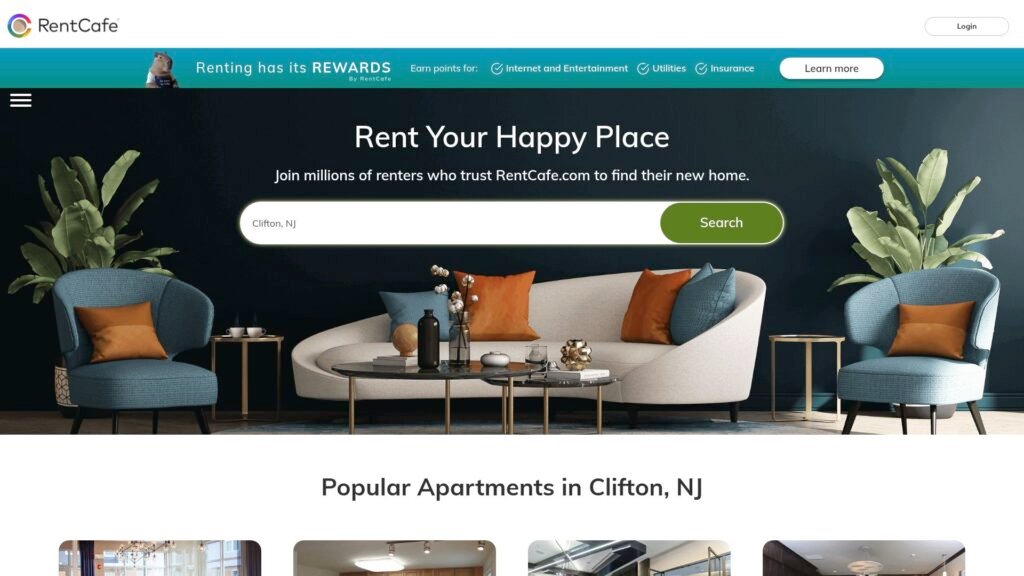
A real landlord is usually on one or two platforms. A scammer usually duplicates the same listing and spreads it everywhere at once — hoping someone bites before the fake gets flagged.
Search the entire listing title or description on:
- Craigslist
- Zillow
- Facebook Marketplace
- Apartments.com
- Roomies.com
If an identical room description, with the same photos and price, appears under different landlord names or contact numbers on multiple platforms — walk away. That’s a recycled scam listing.
The Copy-Paste Test
Pull a unique line from the listing description. Enclose it in quotation marks and Google it. If that exact wording shows up under a different name or address, the listing has been copied from somewhere else.
It takes less than a minute and can save you thousands.
Way #4 — Verify the Landlord’s Identity
You have every right to know who you’re renting from. Any legitimate landlord should have no issues verifying who they are.
Here’s what to ask for — and how to verify it:
| What to Request | How to Verify |
|---|---|
| Full legal name | Search name + city on Google |
| Phone number | Use Truecaller or Google to check if it’s linked to a real person |
| Email address | Check if domain matches a real business or property company |
| Government-issued ID | Compare against public records or property records |
| Proof of ownership | Check county property records for their name |
A genuine landlord will produce all of this readily and without hesitation.
A scammer will drag their feet, make excuses, or come up with reasons — like saying their papers are “with their lawyer” or they’re “traveling and can’t send right now.”
If a landlord can’t or won’t verify their identity — that’s your answer. Move on.
Way #5 — Always Demand to See the Room
This one is non-negotiable.
Never — under any circumstances — send a deposit for a room you haven’t seen. Not even a “small holding deposit.” Not even if the landlord offers a full refund.
Genuine landlords want to meet their tenants. They want to know who they’re renting to. If someone is outright avoiding an in-person meeting, something is seriously wrong.
What If You’re Renting Remotely?
Renters sometimes are moving from another city or country and cannot visit in person right away. That’s understandable. In that case:
- Request a live video call tour of the room (not a pre-recorded video)
- Ask the landlord to show you the building entrance, hallways, and the actual room in real time
- Request they hold up today’s newspaper or display the current date on their phone during the call
- Have a trusted local friend or professional service visit on your behalf
If the landlord won’t even do a live video call — there’s no room. There’s only a scam.
Way #6 — Conduct a Price Reality Check
If something feels too good to be true, chances are it is.
Scammers lure fast, desperate renters with below-market prices. There is no beautiful private room in Manhattan for $500/month. A furnished studio near downtown Los Angeles for $600/month doesn’t exist.
How to Run a Price Check
Use these resources to compare prices in your target neighborhood:
- Zillow — Search “rooms for rent” in your specific zip code
- Rentometer.com — Enter an address and find the average rent for similar rooms nearby
- Padmapper.com — See a map of current room listings with real prices
- Facebook Marketplace — Check what similar rooms are going for in the same area
If the listed price is 30–40% or more below what comparable rooms are renting for in your area — be very suspicious.
Here’s a rough guide to what a healthy price range looks like:
| City | Typical Room Rental Range |
|---|---|
| New York, NY | $900 – $1,500/month |
| Los Angeles, CA | $800 – $1,300/month |
| Chicago, IL | $650 – $1,100/month |
| Austin, TX | $600 – $1,000/month |
| Miami, FL | $700 – $1,200/month |
| Seattle, WA | $800 – $1,300/month |
Ranges based on 2024 averages. Vary by neighborhood.
Anything far below these ranges in a competitive city warrants closer scrutiny.
Way #7 — Read the Lease Carefully Before You Sign
A legitimate rental will always come with a lease. Always.
The lease is a legal document that helps protect both you and the landlord. If someone says “we don’t need a lease, just trust me” — that is a massive red flag.
What a Real Lease Must Include
- Full name and legal address of the landlord
- Full name of the tenant (you)
- Property address, including unit or room number
- Monthly rent amount and due date
- Security deposit amount and conditions for return
- Lease start and end dates
- Rules about utilities, guests, pets, and shared spaces
- Conditions for ending the lease early
Read every single line. Don’t skip the fine print.
If you have any doubts about any section, share it with someone you trust — a parent, a friend with renting experience, or a free tenant legal aid service. Many cities have free tenant rights hotlines that can review leases at no cost.
Never sign under pressure. A real landlord will give you time to read.
Way #8 — Pay Attention to How They Ask You to Pay
Payment method is one of the clearest indicators of whether a landlord is legitimate or not.
Real landlords accept:
- Personal checks
- Bank transfers to a verified account
- Secure online platforms like Venmo, Zelle (only after identity is verified), or PayPal
Scammers demand:
- Wire transfers (once sent, cannot be reversed)
- Gift cards (iTunes, Google Play, Amazon — this is always a scam)
- Cryptocurrency (untraceable and irreversible)
- Cash by mail (no paper trail, no protection)
The Golden Rule of Rental Payments
If you can’t get a refund when things go wrong — don’t use that payment method.
Wire transfers and gift cards have zero buyer protection. Once that money leaves your account, it’s gone. No bank can recover it. It is not easily traceable by police.
This rule applies even if the landlord otherwise seems completely aboveboard. Always pay through a method that provides at least some protection or record.
Way #9 — Search the Landlord and Property Online
A simple Google search can tell you a lot.
Search the landlord’s name along with words like “scam,” “complaint,” or “review.” Search the property address alongside “scam” or “fraud.” Check if they have been reported on any tenant review platforms.
Websites That Help You Research Landlords
- Yelp — Some landlords and property managers have reviews
- Google Reviews — Search the property management company name
- ApartmentRatings.com — Tenant reviews of landlords and properties
- Ripoff Report (ripoffreport.com) — Scam and fraud complaints
- Better Business Bureau (BBB) — Check if a property company has complaints filed
Also search the landlord’s phone number and email address separately. Scammers frequently use the same contact details across multiple fake listings. A search of their phone number might pull up complaints from other cities.
One search. Two minutes. Could save you everything.
Way #10 — Listen to Your Gut — Then Verify It
This final point is not about a tool or checklist. It’s about instinct.
If something feels off — trust that feeling. Then verify it.
Scammed renters often say the same thing afterward: “Something didn’t feel right, but I ignored it because I didn’t want to lose the room.”
Here are the situations where your instincts should go on high alert:
- The landlord is too eager and clearly pushing you to commit fast
- They won’t directly answer simple questions
- The story keeps changing (different move-in date, different price, different terms)
- They reach out to you specifically, out of nowhere, after you posted a “looking for a room” ad
- They request personal information (such as your social security number) before you’ve even viewed the room
A Quick Trust Checklist
Walk through this before you commit to anything:
- ✅ I have verified the landlord’s identity
- ✅ I have seen the room in person or via live video
- ✅ The price matches market rates
- ✅ The address exists and matches the photos
- ✅ I have a real lease to review
- ✅ Payment is through a safe, traceable method
- ✅ Listing photos are original (not stolen)
- ✅ No one is pressuring me to decide immediately
- ✅ I have searched the landlord’s name and found no complaints
- ✅ My gut says this feels right
If you can check off all 10 boxes — you’re in good shape.
If even two or three are missing — slow down and dig deeper before sending a single dollar.
How These 10 Checks Work Together
Consider these 10 ways as layers of protection. No single check is a guarantee of safety on its own. But when you stack them together, you build a shield that almost no scam can get through.
Here’s what the complete process looks like when you discover a new listing:
| Step | Action | Time Needed |
|---|---|---|
| 1 | Reverse image search all photos | 2 minutes |
| 2 | Verify address on Google Maps | 3 minutes |
| 3 | Cross-check listing on other platforms | 5 minutes |
| 4 | Verify landlord identity | 10 minutes |
| 5 | Request in-person or live video viewing | Scheduled |
| 6 | Compare price to market rates | 5 minutes |
| 7 | Review lease thoroughly | 30–60 minutes |
| 8 | Confirm payment method is safe | 2 minutes |
| 9 | Search landlord and property online | 5–10 minutes |
| 10 | Complete personal trust checklist | 3 minutes |
Total time for full verification: Under 2 hours
That’s a small price to pay versus losing your deposit, your first month’s rent, or worse.
FAQs: Checking Room Legitimacy
Q: Which type of room rental scam is most common?
Perhaps the most prevalent scam is the “phantom rental.” A scammer shares pictures of an actual property they don’t own or have access to. They collect deposits from multiple renters and then vanish. On move-in day, the victims show up only to find a locked door or confused real tenants already living there.
Q: Can scammers fake a video tour?
Yes, but faking a live video call is much harder. Pre-recorded videos can be edited or stolen. Always request a live video call and ask the landlord to do things in real time — like opening a closet, turning on a faucet, or showing a specific feature of the room. This is much harder to fake.
Q: Is it safe to rent a room without signing a lease?
No. The absence of a written lease leaves you completely unprotected. In the event of a dispute over the deposit, the rent, or your right to live there, you have no legal document to protect you. Always insist on a written lease before paying anything.
Q: What should I do if I’ve already been scammed?
Immediately report it to: the FBI’s Internet Crime Complaint Center (IC3.gov), the FTC at ReportFraud.ftc.gov, your local police department, and the platform that hosted the fake listing. If you sent money, contact your bank immediately — in some cases, especially with bank transfers, they may be able to halt or reverse the transaction.
Q: Are rooms listed on large platforms like Zillow or Apartments.com safe?
These platforms are generally safer as they do have some verification processes. But no platform is 100% scam-free. Scammers do operate on major platforms. No matter where you find a listing, always run through your own checks.
Q: How can I tell whether a landlord’s ID is real?
Request to see a government-issued photo ID (driver’s license or passport) and check that the name on it matches the name on the lease and the property records. You can verify property records through your county assessor’s website to confirm the landlord actually owns or manages the property.
Q: Is it acceptable to pay a small holding deposit before viewing a room?
No. Any request for money before a viewing is a warning sign. A legitimate landlord will never ask for a deposit before showing a room. Even if the amount seems small, sending it signals to the scammer that you’re willing to pay — and they may push for more.
Conclusion: Your Legitimacy Check Is Your Strongest Defense
Rental scams are stressful. Losing money to one is even worse.
But the reality is this: most rental scams are completely preventable when you know what to look for.
This rent by room guide has provided you with 10 solid, practical ways to verify any room listing before you commit a single dollar. From reverse image searching photos to verifying the landlord’s identity, comparing prices, and reviewing the lease — each step adds another layer of protection.
The renters who get scammed are almost always the ones who skipped these steps because they were in a hurry. Don’t be that person.
Take the two hours. Run the checks. Ask the hard questions. A legitimate landlord will appreciate your diligence. The moment you start asking, a scammer will disappear.
Your ideal room is out there. And now you have the means to find it safely.