You found a room. The price looks right. The photos look great. The landlord seems friendly.
So you know what, you are going to pay the deposit and you are moving in.
Not so fast.
Things are serious when you put money down. The amount is often several hundred dollars — occasionally more. Once that money is out of your hands, fighting to get it back can be a real issue. And if there’s something wrong with the room or the landlord, you might find yourself stuck.
That’s why savvy renters always do their due diligence before parting with a penny.
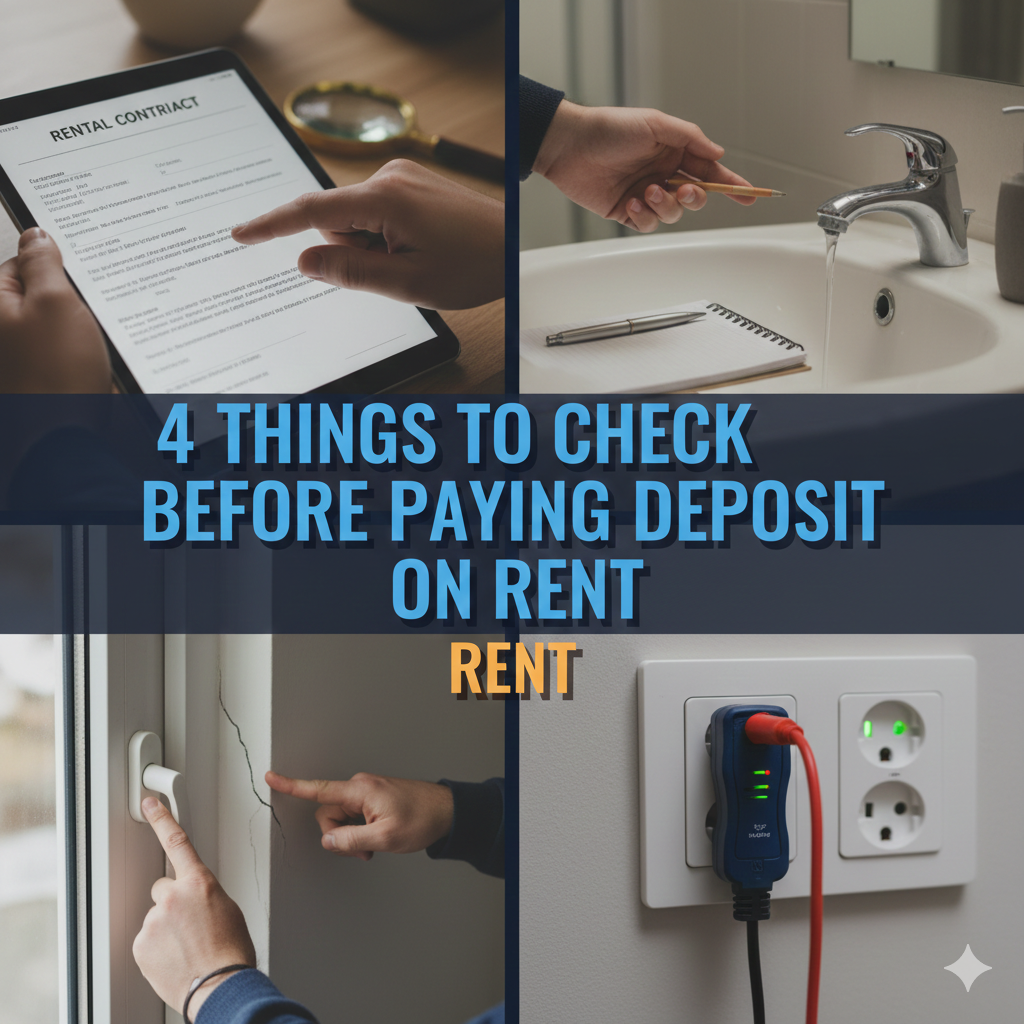
This guide outlines the 4 quick rent by room guide checks that every renter should carry out before handing over a deposit. These checks are easy, fast, and may save you a monumental headache — or a big loss of money.
Whether it’s your first room you’re renting or your fifth, this guide is a must-read before the next move.
Why Deposit Checks Are More Important Than Most Renters Realize
Most people look for a room they like. That’s natural. But when you fall in love with a listing, your defenses drop. You no longer ask the tough questions. You begin picturing your furniture in the space.
That’s exactly when mistakes happen.
Here is the cold, hard truth about deposits:
| Deposit Problem | How Common It Is |
|---|---|
| Landlord won’t return deposit | Very common — especially without documentation |
| Room in much worse condition than advertised | One in nearly three rentals |
| Hidden fees not disclosed upfront | Extremely common for informal room rentals |
| Deals with fake landlords in listings | Growing problem on online platforms |
| Verbal agreements that don’t hold up | Constantly, without written leases |
These aren’t rare situations. It happens to average renters all the time.
The good news? All of them are avoidable. All you need to know is what to look for — and when.
Check 1 — Visit the Room in Person First

This is the biggest check of all. And yet, many renters skip it.
Never pay a deposit on a room you haven’t seen in person.
Photos can be edited. Listings can be outdated. And some “landlords” are actually scammers who don’t even own the property they have listed.
What to Look for During Your In-Person Visit
When you enter the room, do not merely glance around. Go in with a checklist mentality. You’re not simply appreciating the space — you’re judging it.
Walls and ceiling:
- Check for cracks, water stains, or mold spots
- Mold is a significant health risk and costly to remediate
- Even faint brown stains on the ceiling could indicate a leaking roof or pipe above
Floors:
- Look for soft spots, warping, or broken tiles
- Squeaky or uneven floors may seem like a minor annoyance but can point to larger structural problems
Windows and doors:
- Open and close every window and door in the room
- Do they lock properly? A broken lock is a safety issue
- Inspect for gaps that allow in cold air or noise
Electrical outlets:
- Bring your phone charger and try at least one or two outlets
- Outdated or faulty wiring can be signaled by non-working outlets
Lighting:
- If you can, visit the room during daytime hours
- A brightly photographed room could be very dark in real life
Check the Shared Spaces Too
In a rent by room scenario, you are sharing portions of the home with other people. So don’t stop at your room. Walk through every common area you’ll pass through on a daily basis.
Kitchen:
- Is it clean and well-maintained?
- Are the appliances working?
- Is there sufficient space for your food and cookware?
Bathroom:
- Look for mold around the tiles and under the sink
- Check the shower pressure and hot water
- See how many people share it — this changes your daily routine a lot
Common areas:
- Are they tidy or chaotic?
- Do they feel cozy and livable?
The state of shared areas says a lot about how the household is run — and what your day-to-day life will actually be like.
The Red Flags That Should Make You Stop Dead in Your Tracks
Some things you’ll see during a showing should make you walk away immediately, regardless of how much you liked the listing.
| Red Flag | What It Means |
|---|---|
| Landlord can’t meet in person | Possible scam — genuine landlords welcome viewings |
| Strong smell of mold or dampness | Health risk and expensive repairs to come |
| Broken locks or security issues | Your safety is at stake |
| No hot water or functioning appliances | Maintenance is being neglected |
| Other tenants appear unhappy or evasive | The living situation could be toxic |
| The landlord rushes you to make an instant decision | Pressure tactics — a classic warning sign |
Trust your instincts. If something doesn’t seem right, it likely isn’t.
Check 2 — Read the Entire Lease Before You Sign

A lease is more than a formality. It’s a legal document that governs your life in that room for however long you are there.
Most renters gloss over it or don’t look at it at all. That’s the kind of mistake they pay for dearly later.
Read the lease well before paying any deposit. If there’s no written lease given, that should raise a red flag on its own.
What to Watch Out for in a Room Rental Lease
Rent amount and due date:
- Check that the exact monthly rent matches what was advertised
- Find out what happens if you don’t pay on time — are there fees?
What the rent includes:
- Does it include utilities such as electricity, gas, water, and Wi-Fi?
- Or are those billed separately?
- This can potentially add $100–$200 to your monthly expenses if not included
Deposit terms:
- How much is the deposit?
- When will it be returned?
- What can the landlord deduct?
Notice period:
- How much notice must you give before leaving?
- How much advance notice is the landlord required to give you?
House rules:
- Are guests allowed? Overnight guests?
- What are the quiet hours?
- Are pets allowed?
- Who is responsible for cleaning shared areas?
Early termination:
- What if you need to leave before your lease expires?
- Is there a penalty?
Lease Terms to Watch Out For
Some lease terms are illegal or unfair in certain places. Here are some to look out for:
| Red-Flag Clause | Why It’s a Problem |
|---|---|
| “Deposit is non-refundable” | In most places, deposits must be returned if no damage occurs |
| “Landlord may enter any time” | You have a right to privacy — notice is usually required by law |
| “Rent can be increased without notice” | Rent increases with no warning are typically illegal |
| “Tenant responsible for all repairs” | Most major repairs fall under the landlord’s responsibility |
| “No written receipt for payments made” | Always get a receipt — this protects you in case of disputes |
If you find any of these in a lease, ask about them before signing. Even better, look up your local tenant rights laws or consult with a tenant advocacy group.
No Lease? Here’s What to Do
Some landlords — particularly in informal room rental arrangements — do not use written leases. They prefer verbal agreements.
Don’t accept this.
It would be nearly impossible to enforce a verbal agreement. If a dispute arises later, it’s your word against theirs — and landlords are often favored in those scenarios.
If a landlord refuses to provide a written lease, at the very least request that they put key terms down in writing by email or text. That creates a paper trail.
For a full breakdown of what a solid room rental lease should look like — in plain language that any renter can follow — Rent by Room Guide is a great resource to bookmark before signing anything.
Check 3 — Ensure the Landlord Is Who They Say They Are
This one sounds dramatic. But landlord fraud exists — and it is a more widespread threat than many people realize.
Fraudsters advertise rooms they don’t own. They take deposits from several people for the same room. Then they vanish and the money disappears.
Even seemingly legitimate landlords can misrepresent their authority to rent a property. A tenant, for example, might attempt to sublet a room without the real property owner’s consent — which could lead to your eviction and no deposit refund.
Protecting yourself takes a few simple checks.
Verifying a Landlord’s Identity
Request identification: This may feel uncomfortable, but any legitimate landlord would have no problem presenting you with some form of ID. You’re about to transfer a lot of money — so you deserve to know who you’re doing business with.
Verify property ownership: This is a public record in the vast majority of countries and states. You can check the local property or land registry online to verify that the person showing you the room is actually its owner — or has permission to rent it.
Google their name and phone number: A simple search can tell you a lot. Look for reviews, complaints, or a history of disputes. Check them on scam warning sites and local tenant forums.
Check the listing history: Is the same room listed over and over again for months on end? That might be an indication of constant tenant turnover — a sign that the landlord or living situation is problematic.
Verifying Online Listings
If you found the room through an online platform, take these extra steps:
| Verification Step | What It Tells You |
|---|---|
| Reverse image search the listing photos | Stolen photos = likely scam listing |
| Check how long the account has been active | Brand new accounts are higher risk |
| Look for other listings from the same person | Legitimate landlords often have a history |
| Read all platform reviews if available | Past renters don’t lie |
| Never pay via wire transfer or gift cards | Scammers always ask for untraceable payments |
Rental listing scams cost consumers millions of dollars each year, according to the Federal Trade Commission (FTC). The FTC also recommends that renters always confirm a landlord’s identity and never send money before viewing a property in person.
It takes under 30 minutes to protect yourself here. It’s worth every second.
Check 4 — Have Full Clarity on All Costs Before You Make a Payment
This is the check that most renters don’t even realize they need to be doing.
The rent amount is only the start. There are lots of extra costs that never get mentioned upfront — until after you’ve paid your deposit and gotten the keys to your new room.
The Real Price of Renting a Room
Here’s what your real monthly outgoings could look like:
| Cost Item | Included in Rent? | If Not, Estimated Monthly Cost |
|---|---|---|
| Electricity | Sometimes | $40–$80 |
| Gas/Heating | Sometimes | $30–$70 |
| Water | Usually | $20–$40 |
| Wi-Fi/Internet | Sometimes | $25–$60 |
| Cleaning service for shared areas | Rarely | $20–$50 |
| Parking | Rarely | $50–$150 |
| Laundry facilities | Rarely | $20–$40 |
If any of those aren’t included in your rent, you may find yourself paying $200–$500 more a month than what you were budgeting for.
Always ask before you commit.
Questions to Ask Your Landlord About Costs
Don’t assume anything. Ask these questions directly and get answers in writing:
1. What is included in the monthly rent? Be specific. Ask about each utility individually.
2. How are bills split between tenants? Is it divided equally? Based on usage? Is there a flat fee?
3. Is there a bond or holding deposit in addition to the security deposit? Some landlords will request a holding deposit to take the room off the market while they process your application. Understand if this is refundable or not.
4. Are there any move-in fees? Some landlords might charge a cleaning fee or admin fee at move-in that is separate from the deposit.
5. How often does rent increase? Ask about the history of rent increases at that property. If it increases every year, factor that into your budget.
6. Who pays for repairs? Minor wear-and-tear is typically the landlord’s responsibility. But some landlords attempt to pass all repair costs onto tenants. Get clarity on this upfront.
Make Your Own Cost Comparison Sheet
Before choosing between rooms, make a simple comparison like this:
| Room | Base Rent | Utilities | Other Fees | Total Cost Per Month |
|---|---|---|---|---|
| Room A | $800 | Included | None | $800 |
| Room B | $700 | +$150 est. | $30 cleaning | $880 |
| Room C | $750 | +$100 est. | None | $850 |
Room A appears to cost the most upfront — but it’s actually the cheapest overall. This takes five minutes and can save you hundreds of dollars.
How All 4 Checks Work Together
With each check, you are safeguarding another aspect of the renting process. Combined, they provide complete protection before a single dollar comes out of your pocket.
| Check | What It Protects You From | Time Needed |
|---|---|---|
| Check 1 — In-Person Inspection | Hidden damage, poor conditions, scam properties | 30–60 minutes |
| Check 2 — Lease Review | Unfair terms, missing protections, future disputes | 20–30 minutes |
| Check 3 — Landlord Verification | Fraud, fake listings, unauthorized subletting | 15–30 minutes |
| Check 4 — Full Cost Clarity | Budget shocks, hidden fees, financial stress | 10–20 minutes |
Cumulative time investment: about 1.5 to 2.5 hours.
Not much time, given it covers thousands of dollars and your shelter for months or years.
A Quick Checklist — Print This Before Your Next Viewing
Use this before placing any deposit on a room rental:
Room Inspection
- [ ] Visited in person
- [ ] Inspected walls, ceiling, and floors for damage
- [ ] Windows, doors, and locks tested
- [ ] Inspected shared kitchen, bathroom, and common areas
- [ ] No significant red flags noted
Lease Review
- [ ] Written lease provided
- [ ] Rent amount and due date confirmed
- [ ] Clear specification of utilities and inclusions
- [ ] Deposit return conditions understood
- [ ] House rules read and agreed upon
Landlord Verification
- [ ] Landlord ID checked
- [ ] Property ownership confirmed
- [ ] Online search completed
- [ ] Listing photos confirmed as authentic
Cost Clarity
- [ ] Monthly expenses broken down
- [ ] True monthly cost calculated
- [ ] Move-in fees confirmed
- [ ] Repair responsibilities agreed upon
If you can check every box, you’re well-positioned to pay with confidence.
FAQs — Rent by Room Checks Before Paying Deposit
Q: Is it normal for a landlord to ask me to put down a deposit before seeing the room? A: No. No legitimate landlord will ever ask for payment before an in-person viewing. If you’re asked to pay a deposit before you’ve seen the room — even if they have a good reason — consider it a scam and walk away.
Q: What’s a standard deposit for renting a room? A: In many markets, the general rule is a deposit equal to one month’s rent. Some landlords require two months. Beyond that is unusual and needs to be questioned. Always check your local rental laws, as many places set limits on the amount of deposits that can be collected.
Q: What do I do if the landlord will not give me a written lease? A: At the very least, request the key terms in writing via email or text. If they refuse to put anything in writing, that’s a serious red flag. Consider finding a different room. Verbal-only agreements afford you practically no legal protection.
Q: Can I negotiate the deposit amount? A: Yes, in many cases you can. Particularly if you have solid references, steady income, or plan to sign a longer lease. It never hurts to ask politely. The worst they can say is no.
Q: What if I find damage during my inspection that wasn’t listed? A: Take photos with timestamps immediately. Discuss it with the landlord before you sign anything. Get any existing damage documented in writing as part of the lease agreement or a move-in condition report. It safeguards your deposit when you eventually move out.
Q: Is a holding deposit different from a security deposit? A: Yes. A holding deposit is a small upfront payment that secures the room while your application is processed. A security deposit is the larger sum you pay when you sign the lease. Always check whether a holding deposit is refundable — and on what terms.
Q: What happens if I notice an issue with the room after I’ve already paid a deposit? A: Document everything right away and notify the landlord in writing. Depending on your local laws, if the room was misrepresented you might be able to ask for repairs before moving in, negotiate a partial refund, or in some cases walk away and receive your deposit back.
Closing Thoughts — Slow Down to Speed Up Your Move
When you see a room you love, it’s easy to be eager to get moving. The pressure is real. Good rooms don’t last long.
But a few hours of careful checking now can save you weeks of stress later on. A bad rental situation — a dishonest landlord, undisclosed mold, unexpected bills, or a lost deposit — touches your finances, your health, and your peace of mind.
These 4 fast rent by room guide checks are not complicated. They don’t require much legal know-how or specialized skills. All they ask is for you to slow down, ask the correct questions, and look before you leap.
Inspect the room. Read the lease. Verify the landlord. Understand every cost.
Do all four before putting down your deposit, and you’ll step into your new room with confidence — not regret.