It seems so easy to sign a room agreement. Until it isn’t.
One missing clause. One vague sentence. A verbal promise never written down. And suddenly you’re battling over your deposit, trapped in a room you can’t legally exit, or stuck with a landlord who won’t fix the heater.
Room agreements are foundational to every rental experience. Get them right and you are protected. Get them wrong, and you’re vulnerable — even if you got everything else right.
This rent by room guide includes 11 tips you should know in order to sign safe, strong room agreements. Whether you’re a first-time renter or have been burned in the past, these tips will transform how you approach every lease moving forward.
Let’s break it all down.
What Is a Room Agreement — And Why Is It So Important?
A room agreement is a legal contract between you and your landlord. It lays out the terms of your tenancy — how much you pay, when you pay, what you can and can’t do, and what happens if things go wrong.
Most renters treat it as a formality. Sign it and move on. That mindset costs people thousands of dollars every year.
A strong room agreement does three things:
- It keeps your money safe — especially your deposit
- It defines your rights — so no one can impose rules after the fact
- It gives you legal footing — if there’s ever a dispute that goes to court or arbitration
Without a formal agreement, you are renting on blind faith. And in a city rental market, trusting someone without paperwork is a risk.
Tip 1 — Don’t Rent Without a Written Agreement
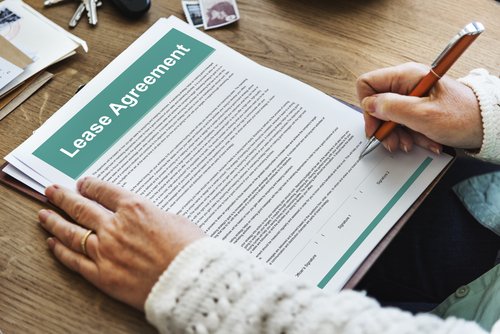
This sounds obvious. But it still happens constantly.
Some landlords rent out rooms on an informal basis — a handshake, a WhatsApp message, a verbal confirmation. It feels relaxed and friendly. But it is practically impossible to enforce a verbal contract in court.
Why Verbal Agreements Fall Apart
- There’s no evidence of what was agreed
- Either party can rewrite the story later
- Your deposit has no legal protection
- You have no guaranteed right to be notified before facing eviction
Always require a written agreement. If a landlord is unwilling to put anything in writing, that’s your sign to walk away.
Even a one-page document is better than nothing. But the more detailed an agreement is, the better.
Tip 2 — Know the Difference Between a Lease and a License
Not all room agreements are the same. The type of agreement you sign determines how much legal protection you actually have.
Lease vs. License — What’s the Difference?
| Feature | Lease (Tenancy Agreement) | License to Occupy |
|---|---|---|
| Legal protection | Strong | Weaker |
| Right to exclusive space | Yes | Not always |
| Landlord entry rights | Restricted | More flexible |
| Eviction process | Formal legal process | Often faster/easier |
| Common in | Private rentals | Lodging, hostels, some HMOs |
| Best for renter | Yes | Less so |
A lease gives you more rights. A license allows the landlord greater flexibility in removing you.
Many landlords use license agreements in shared houses specifically to limit their legal obligations. Always ask what kind of agreement you’re signing — and know what protections each type provides.
Tip 3 — Read Every Single Line Before You Sign

Most renters don’t read past the signature page. That’s how you find yourself boxed in by clauses you never even knew existed.
What Happens When You Don’t Read the Fine Print
- You might agree to cover repair costs that are the landlord’s responsibility
- You could inadvertently give up your right to proper notice
- You might sign away your right to have guests or work from home
- You could agree to rent increases with no notice
Give yourself at least 24–48 hours to read the full agreement before signing. If anything is unclear — stop. Get clarification in writing before you sign off on anything.
Tricky Clauses to Watch Out For
- “Fair wear and tear” — Some agreements define this very narrowly, making it easy to claim against your deposit
- “Landlord may enter with reasonable notice” — “Reasonable” should be defined (ideally 24–48 hours)
- “Tenant is responsible for all maintenance” — This is often illegal and unenforceable, but renters don’t always know that
- “Rent may be revised at the landlord’s discretion” — This gives a landlord almost unlimited power to raise your rent
Tip 4 — Get Every Detail of the Deposit in Writing
The deposit is one of the most contentious issues between renters and landlords. Vague deposit terms are practically an invitation for disputes.
What Your Agreement Must Say About the Deposit
Your room agreement should clearly state:
- The exact deposit amount
- The reason(s) it can be withheld (damage, unpaid rent, etc.)
- The timeline for returning it after you move out
- Where it will be held (in many countries, deposits must be in a protected scheme)
According to Shelter’s guide on deposit protection, tenants have a legal right to know where their deposit is held — and landlords who fail to protect it can face significant penalties.
Deposit Protection Schemes by Country
| Country | Scheme / Requirement |
|---|---|
| United States | Varies by state — check local landlord-tenant law |
| United Kingdom | Must be in a government-approved scheme (TDS, DPS, MyDeposits) |
| Australia | Must be lodged with the state bond authority |
| Canada | Rules vary by province — many require receipts |
| New Zealand | Must be lodged with Tenancy Services |
If your landlord cannot tell you where your deposit is held — that’s a red flag.
Tip 5 — Make the Rent Terms Crystal Clear
Rent disputes often start with lack of clarity. “I thought it was due on the 1st.” “I thought utilities were included.” “I thought the price was brought down.”
None of that holds up without written precision.
What the Rent Section Should Include
- Exact monthly amount — No “approximately” or “around”
- Due date — Specific day of the month
- Payment method — Bank transfer, check, cash
- Late fee policy — Amount and grace period
- What’s included — Utilities, WiFi, parking, etc.
- Rent review clause — When and how rent can change
Included vs. Not Included — A Common Source of Confusion
| Item | Often Included | Often Separate |
|---|---|---|
| Water | Sometimes | Sometimes |
| Electricity | Rarely | Usually separate |
| Gas/Heating | Rarely | Usually separate |
| WiFi/Internet | Sometimes | Sometimes |
| Parking | Rarely | Usually extra |
| Laundry access | Sometimes | Sometimes coin-operated |
Always ask for a written list of what’s included in your rent. Never assume.
Tip 6 — Confirm the Notice Period for Both Sides
The notice period is one of the most overlooked sections of any room agreement. This is how much warning either side must give before ending the tenancy.
Without a clear notice period, you could find yourself:
- Asked to leave with little to no warning
- Legally stuck paying rent for months after you want to leave
- In a dispute with no clear resolution
Typical Notice Periods in Room Rentals
| Agreement Type | Common Notice Period |
|---|---|
| Month-to-month room rental | 30 days |
| Fixed-term lease | Usually tied to lease end date |
| License agreement | As little as 7–14 days |
| Informal arrangement | No legal protection |
Always check the notice period on both sides — what you must give and what the landlord must give you.
Tip: Try to get equal notice periods. If the landlord only needs to give 7 days but you need to give 30, that’s not a fair arrangement.
Tip 7 — Nail Down the Rules for Shared Spaces
In any shared living situation, the biggest daily source of friction comes from shared spaces. Kitchen cleanliness. Bathroom schedules. Noise levels. Guests.
If your agreement doesn’t address shared spaces, you’re setting yourself up for conflict.
What Shared Space Rules Should Cover
- Cleaning responsibilities — Who cleans what, and how often
- Kitchen use — Designated shelves, shared or separate food
- Bathroom schedules — Especially important in high-occupancy homes
- Noise policies — Quiet hours, particularly at night and on weekends
- Guest policies — Overnight guests, frequency, house rules for visitors
- Common area furniture — Who is responsible for maintenance
Some landlords attach a House Rules document to the lease. That’s a great sign — it means expectations are set from day one.
If your landlord doesn’t provide one, consider creating a simple shared agreement with your housemates. It doesn’t need to be a legal document — just clear.
Sample House Rules Checklist
| Area | Rule Example |
|---|---|
| Kitchen | Dishes washed within 24 hours |
| Bathroom | 30-minute limit during morning hours |
| Living Room | Shared TV schedule; no loud music after 10pm |
| Trash | Alternating weekly responsibility |
| Guests | Max 2 nights per week without prior notice |
Tip 8 — Check Who Is Legally Responsible for Repairs
This is one of the most misunderstood areas of room agreements — and one of the most exploited.
Many landlords insert clauses that shift repair responsibilities onto tenants. Some of these clauses are legal. Many are not. But renters often pay anyway because they don’t know their rights.
Who Typically Handles Which Repairs
| Type of Repair | Usually Landlord’s Responsibility | Usually Tenant’s Responsibility |
|---|---|---|
| Structural damage | ✅ | |
| Heating and hot water | ✅ | |
| Plumbing leaks | ✅ | |
| Pest control | ✅ | |
| Broken appliances (provided by landlord) | ✅ | |
| Damage caused by tenant | ✅ | |
| Light bulbs | ✅ | |
| Minor wear and tear fixes | ✅ |
Your agreement should spell out how repairs are reported and the landlord’s response timeline. A well-written agreement will say something like: “Urgent repairs will be addressed within 24 hours. Non-urgent repairs within 7 days.”
If the agreement is silent on repairs — insist that language be added before you sign.
Tip 9 — Clarify the Rules Around Subletting and Guests
City life is flexible. Sometimes you travel for work. Sometimes a friend needs a place to crash. Sometimes you want to sublet your room for a month to cover rent.
If your agreement doesn’t clearly address subletting and guests, you could be breaching your lease without even realizing it.
Questions Your Agreement Should Answer
- Can you have overnight guests? How often?
- Do guests need to be registered?
- Are you allowed to sublet your room?
- If subletting is permitted, does the landlord need to approve the subtenant?
- What happens if you sublet without permission?
Unauthorized subletting is one of the most common reasons renters lose their deposit — or face eviction. Always review this clause before inviting anyone to stay for an extended period of time.
Subletting vs. Room Sharing — Know the Difference
Subletting means you temporarily hand over your room to someone else and they pay rent to you. You remain responsible to the landlord.
Room sharing means another person lives in your space with you. Different rules may apply.
Both need to be addressed in your agreement.
Tip 10 — Protect Yourself With a Move-In Inspection Report
This single step prevents more deposit disputes than anything else. Yet most renters skip it entirely.
A move-in inspection report is a documented record of the condition of your room and shared spaces on the day you move in.
How to Conduct a Proper Move-In Inspection
Step 1: Walk through every room with your landlord or their representative.
Step 2: Note any existing damage — scratches, stains, broken fixtures, marks on walls.
Step 3: Take timestamped photos and video of everything. Every corner. Every wall. Every appliance.
Step 4: Write it all down in a document. Both you and the landlord sign it.
Step 5: Keep a copy. Send yourself an email with the photos so they’re date-stamped in your inbox.
Why This Matters So Much
Without an inspection report, your landlord can claim any existing damage was caused by you. You’ll have no proof otherwise.
With an inspection report, you have documented evidence. Any pre-existing damage is on record. Your deposit is protected.
This is arguably the most powerful single tip in any rent by room guide. It takes 30 minutes. It can save you hundreds.
Tip 11 — Know Your Exit Strategy Before You Move In
Most people think about moving in. Very few think about moving out — until they’re desperate to leave and realize they’re stuck.
Your agreement should make your exit as clear as your entry.
What a Clean Exit Requires
- Written notice — Given in the correct format and within the notice period
- Condition of room — Returned in the same condition as move-in (with inspection report as proof)
- Final rent payment — Confirm whether your deposit covers the last month (most agreements say it cannot)
- Return of keys — Documented handover
- Deposit return timeline — Confirm the legal deadline and the process
Exit Red Flags in Agreements
| Clause | Why It’s a Problem |
|---|---|
| “Deposit may be withheld at landlord’s discretion” | No clear standard for deductions |
| “No refund within first 30 days” | You lose deposit if you must leave early |
| “Tenant responsible for professional cleaning on exit” | Can lead to inflated cleaning bills |
| “Lease continues until landlord confirms receipt of notice” | Delays your exit indefinitely |
Study the exit terms as closely as the entry terms. They’re equally important.
Room Agreement Safety — Quick Reference Cheat Sheet
Here’s an overview of everything your room agreement must cover:
| Agreement Section | What to Look For | Green Flag | Red Flag |
|---|---|---|---|
| Deposit | Amount, protection, return timeline | Specific and time-bound | Vague or unprotected |
| Rent Terms | Amount, date, inclusions | Detailed and fixed | Ambiguous or variable |
| Notice Period | Days required on both sides | Equal and reasonable | Landlord has far more power |
| Repairs | Who handles what | Clear responsibilities | “Tenant handles all maintenance” |
| Shared Spaces | Cleaning, noise, guests | House rules document included | Nothing mentioned |
| Exit Clause | Move-out process | Step-by-step process | No terms or open-ended |
| Subletting | Rules and permissions | Clearly defined | Silent or totally prohibited |
Save this table. Bring it to every lease review.
Frequently Asked Questions
Q: Should I have a lawyer review my room agreement? Not always. For typical room rentals, most people can review agreements themselves if they know what to look for. But if the agreement is lengthy, complicated, or you’re signing a joint lease, getting a free legal consultation from a housing clinic is an advisable step.
Q: Can I negotiate the terms of my room agreement? Yes, absolutely. Many renters don’t realize this. Clauses regarding notice periods, deposit amounts, guest policies, and repair responsibilities are frequently negotiable — especially if the landlord is eager to fill the room quickly.
Q: What happens if my landlord adds new rules after I’ve signed? New rules cannot be added to your agreement without your written consent. If a landlord attempts to impose new rules mid-tenancy, you are not legally obligated to abide by them unless you agree in writing.
Q: Is a digital or e-signed agreement legally valid? In most countries, yes. Electronic signatures are legally recognized in the US, UK, Canada, Australia, and most of the EU. Always save a copy of the digitally signed document.
Q: What if my landlord asks me to sign without giving me time to read it? Don’t sign. Any landlord who pressures you to sign immediately without reading is a red flag. You have the right to take time to review any contract before signing. If they insist, consider walking away.
Q: Can a landlord evict me without proper notice? In most countries, no. Legal eviction requires proper written notice and, in many cases, a court order. If your landlord tries to remove you illegally — changing locks, removing your belongings — this is known as unlawful eviction and is illegal in most jurisdictions.
Q: What is the most common reason renters lose their deposit? Unclear move-out conditions and no move-in inspection report. Without a written record of the room’s condition at move-in, landlords can blame existing damage on you. Always do an inspection report.
Q: Does a room agreement need to be notarized? In most cases, no. Standard room rental agreements do not require notarization to be legally valid. A signed, written document between two parties is generally sufficient.
A Final Word on Safe Room Agreements
A safe room agreement isn’t about distrust. It’s about clarity.
When both sides know exactly what they’ve agreed to — the rent, the rules, the responsibilities, the exit — there’s far less room for conflict. Good agreements protect renters and landlords equally.
The best landlords welcome clear agreements. The ones who resist putting things in writing are often the ones who plan to use that vagueness against you later.
This rent by room guide exists to make sure you’re never the renter who signs something they don’t understand, loses a deposit they deserved back, or stays in a bad situation because they didn’t know how to leave.
Use these 11 tips every single time you approach a new room agreement. Read before you sign. Document everything. Know your exit before you move in.
Your next room doesn’t have to be a perilous one — and it begins with the contract you sign on day one.