
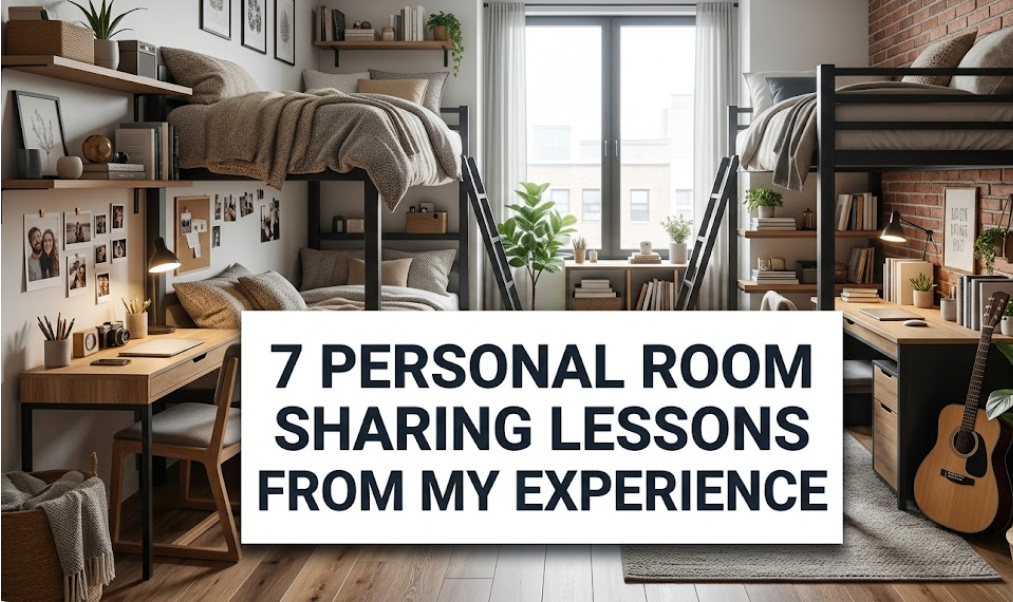
Sharing a room sounds simple on paper—two people, one space, split everything evenly. In reality, it’s a daily exercise in patience, compromise, and learning how to live without constantly stepping on each other’s habits.
Over time, I realized that room sharing isn’t just about saving space or splitting rent. It’s about understanding behavior, respecting boundaries, and designing a lifestyle that works for more than one person in a limited area.
These are seven real lessons I learned from sharing a room in different phases of life—each shaped by mistakes, small improvements, and gradual adjustments that made shared living actually comfortable.
- personal space is not optional, even in a small room
When I first started sharing a room, I thought “we’ll figure it out together” was enough. I quickly learned that without defined personal space, everything starts blending together—clothes, habits, moods, even frustration.
Even in the smallest room, each person needs a defined zone. It doesn’t have to be large; it just has to be consistent.
What worked for me was visually dividing the room instead of physically rebuilding it.
| Method | How it was used | Result |
|---|---|---|
| Rug division | One rug per person zone | Clear visual boundaries |
| Side allocation | Left/right room split | Reduced daily conflict |
| Shelf division | Separate shelving units | Easier organization |
Lesson learned: If personal space isn’t defined, it will be claimed accidentally—and usually in a messy way.
- silence and noise expectations matter more than furniture

I used to think furniture arrangement was the biggest challenge in shared rooms. It wasn’t. Noise was.
Different people have different rhythms—one sleeps early, the other stays up late. One studies in silence, the other listens to music while working.
Without setting expectations, even a well-designed room becomes stressful.
We eventually created simple “noise rules” instead of strict schedules.
| Situation | Agreement we made | Outcome |
|---|---|---|
| Night time | Headphones after 11 PM | Better sleep consistency |
| Study hours | Low volume environment | Less frustration |
| Calls | Leave room if possible | Improved privacy |
Lesson learned: You can’t design silence, but you can agree on it.
- storage equality prevents silent resentment
One thing nobody warns you about is storage imbalance. If one person slowly takes more drawer space or shelf space, it doesn’t feel like a big issue at first—but over time it creates quiet resentment.
We solved this by physically labeling storage areas and revisiting them every few months.
Storage balance system:
| Storage Type | Allocation method | Review frequency |
|---|---|---|
| Closet space | 50/50 vertical split | Every 2 months |
| Drawers | Dedicated drawers per person | Rarely changed |
| Shared shelves | Alternating sections | Monthly adjustment if needed |
Lesson learned: Fair storage isn’t about equality at setup—it’s about maintaining balance over time.
- cleaning expectations must be visible, not assumed
One of the biggest misunderstandings I experienced was around cleanliness. At first, both of us assumed the other had the same definition of “clean.”
That assumption failed quickly.
The solution wasn’t stricter rules—it was visible structure.
We created a simple cleaning rotation and posted it where we could both see it.
Cleaning breakdown:
| Task | Frequency | Assigned method |
|---|---|---|
| Floor cleaning | Twice a week | Alternating responsibility |
| Dusting surfaces | Weekly | Shared checklist |
| Trash disposal | As needed | Whoever notices first |
Lesson learned: If cleaning expectations are not written or visible, they don’t exist in practice.
- privacy doesn’t require walls, only signals
At first, I thought privacy meant physical separation. But in a shared room, that’s rarely possible.
What actually worked better were “privacy signals”—small cues that communicated when someone needed space.
These signals were surprisingly effective.
| Signal type | Meaning | Effect |
|---|---|---|
| Headphones on | Do not disturb | Reduced interruptions |
| Desk lamp only | Working mode | Quiet environment created |
| Curtain half-closed | Need personal time | Visual boundary respected |
Lesson learned: Privacy is less about structure and more about communication cues.
- shared habits shape the entire room atmosphere

Over time, I noticed something interesting: the room didn’t feel like two people living together—it felt like a reflection of shared habits.
If one person kept things organized and the other didn’t, the entire space felt unbalanced.
We started aligning small habits rather than trying to enforce big rules.
Habit alignment table:
| Habit area | Before change | After alignment |
|---|---|---|
| Bed making | Inconsistent | Both or neither rule |
| Daily tidying | Individual effort | Shared 10-minute reset |
| Laundry routine | Random | Fixed weekly cycle |
Lesson learned: The room reflects habits more than intentions.
- communication matters more than design
I used to think the solution to room sharing problems was better furniture or better layout. But eventually, I realized that communication solved more problems than design ever could.
Most issues weren’t about space—they were about unspoken expectations.
We started doing short weekly check-ins, just 10–15 minutes, to talk about small issues before they became big ones.
Communication framework:
| Topic | Frequency | Purpose |
|---|---|---|
| Comfort issues | Weekly | Prevent buildup of tension |
| Space adjustments | Monthly | Rebalance room setup |
| Personal concerns | As needed | Maintain mutual respect |
Lesson learned: A well-designed room can still feel uncomfortable if communication is missing.
final reflection
Looking back, sharing a room taught me that space is only part of the equation. The real challenge is not the size of the room, but the alignment between the people inside it.
What makes shared living work isn’t perfection—it’s consistency, communication, and small adjustments over time. Every lesson I learned came from trial and error, not theory.
A shared room stops feeling like a limitation when both people stop treating it like a battleground for space—and start treating it like a system they’re building together.
frequently asked questions
- what is the biggest challenge in sharing a room?
The biggest challenge is usually not space, but differences in habits, schedules, and expectations. - how can privacy be maintained in a shared room?
Privacy can be maintained using visual signals like curtains, headphones, and defined personal zones instead of physical barriers. - how do you avoid conflicts when sharing a room?
Clear communication, defined responsibilities, and regular check-ins help prevent small issues from turning into conflicts. - what is the best way to divide storage in a shared room?
Equal division of storage space, with clear labeling and periodic review, works best for long-term balance. - how often should roommates discuss room arrangements?
A short weekly or bi-weekly discussion is usually enough to keep expectations aligned and resolve small issues early. - can a small room feel comfortable for two people?
Yes, if space is organized well, habits are aligned, and both people respect boundaries, even a small room can feel comfortable.