
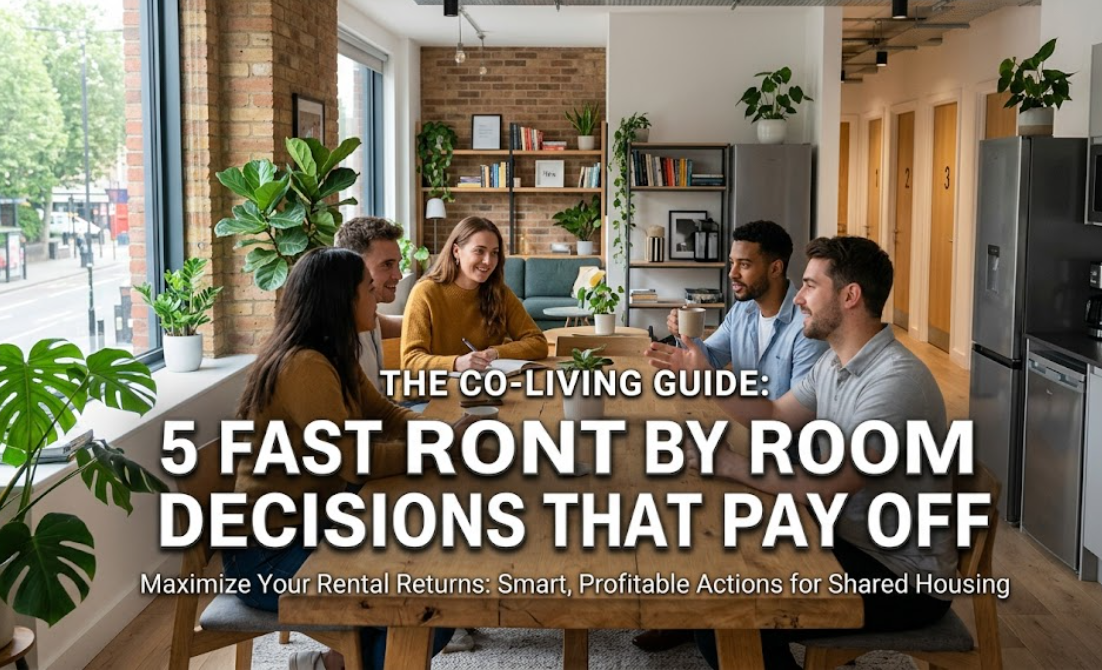
Rent-by-room strategies have become one of the most practical ways for landlords, property investors, and even homeowners to maximize rental income without waiting months for long-term lease cycles. Instead of renting an entire property to a single tenant, you divide the space into rentable rooms and optimize each unit individually.
But success in this model depends heavily on quick decisions—especially early ones. The faster and smarter your choices, the quicker you stabilize cash flow and reduce vacancy losses.
This article breaks down five fast rent-by-room decisions that consistently pay off, along with real-world comparisons, structured tables, and actionable insights.
Understanding the rent-by-room model
Before diving into decisions, it’s important to understand the core idea.
Rent-by-room means:
- Renting individual rooms instead of full units
- Sharing common areas like kitchen and living room
- Charging per room rather than per property
This model works best in:
- Urban apartments
- Student housing zones
- High-demand rental markets
- Properties near workplaces or universities
Key advantage:
Higher total rental yield compared to single-tenant leasing.
Decision 1: Choosing between furnished vs unfurnished rooms
One of the fastest and most impactful decisions is whether to furnish rooms.
Comparison table:
| Factor | Furnished Rooms | Unfurnished Rooms |
|---|---|---|
| Rental price | Higher | Lower |
| Tenant demand | High in cities | Stable long-term |
| Setup cost | High initially | Low |
| Vacancy speed | Faster renting | Slower renting |
| Flexibility | High turnover | Longer tenants |
Why it pays off fast:
Furnished rooms attract tenants immediately, especially young professionals and students who don’t want moving costs or furniture investment.
Smart move:
Start with basic furniture:
- Bed frame + mattress
- Study table
- Chair
- Small wardrobe
Avoid over-investing in luxury décor early on.
Decision 2: Setting aggressive but realistic room pricing
Pricing is the most sensitive factor in rent-by-room success.
A fast decision here can either fill rooms quickly or leave them empty for weeks.
Pricing strategy table:
| Strategy | Result | Risk Level |
|---|---|---|
| Above-market pricing | Higher profit per tenant | High vacancy risk |
| Market-average pricing | Balanced occupancy | Low risk |
| Slightly below market | Fast occupancy | Lower profit margin |
Best-performing approach:
Start slightly below market rate for the first 1–2 tenants, then adjust upward once occupancy stabilizes.
Psychological pricing trick:
Instead of round numbers, use:
- 18,500 instead of 20,000
- 14,900 instead of 15,000
This increases perceived affordability.
Decision 3: Room segmentation based on size and value
Not all rooms are equal, and treating them the same leads to lost income.
Quick segmentation approach:
| Room Type | Description | Suggested Rent Level |
|---|---|---|
| Master room | Attached bathroom, large space | Highest |
| Standard room | Medium size, shared bathroom | Medium |
| Small room | Compact space | Lowest |
Example income optimization:
Instead of renting a 3-bedroom unit for one price, you split:
| Setup | Monthly Income |
|---|---|
| Whole unit rent | 80,000 |
| Rent-by-room setup | 120,000–140,000 |
Why this decision pays off fast:
You immediately unlock hidden value in underpriced rooms.
Decision 4: Selecting the right tenant mix early
Tenant compatibility directly affects turnover, complaints, and vacancy costs.
Fast tenant mix strategy:
| Tenant Type | Pros | Cons |
|---|---|---|
| Students | Stable demand | Noise risk |
| Young professionals | Reliable income | Privacy expectations |
| Remote workers | Long stays | Higher utility usage |
| Short-term renters | High flexibility | High turnover |
Best combination strategy:
- 1–2 professionals
- 1 student or remote worker
- Avoid clustering similar high-noise tenants
Why it matters:
Bad tenant combinations cause early exits, which reduce profitability more than pricing mistakes.
Decision 5: Fast setup of shared space rules
Shared spaces (kitchen, bathroom, lounge) can either increase value or destroy tenant satisfaction.
Quick rule-setting framework:
| Area | Rule Type | Example |
|---|---|---|
| Kitchen | Time usage | Cooking allowed 6 AM–11 PM |
| Bathroom | Cleaning rotation | Weekly schedule |
| Living room | Noise control | No loud music after 10 PM |
| Utilities | Usage limits | Split bills equally |
Why this decision pays off fast:
Clear rules prevent conflicts, and fewer conflicts = longer tenant retention.
Retention impact:
| No rules | Frequent exits |
| Clear rules | Stable long-term tenants |
Combined impact: what happens when all 5 decisions are applied
When these five decisions are implemented early, the financial difference is significant.
Overall performance comparison:
| Metric | Poor setup | Optimized setup |
|---|---|---|
| Vacancy rate | 20–40% | 5–10% |
| Monthly income | Baseline | +30–70% higher |
| Tenant turnover | High | Low |
| Maintenance issues | Frequent | Controlled |
| Net profit | Unstable | Predictable |
Quick decision chart summary
| Decision | Speed of impact | Profit impact | Difficulty |
|---|---|---|---|
| Furnishing choice | Immediate | High | Low |
| Pricing strategy | 1–2 weeks | High | Medium |
| Room segmentation | Immediate | Very high | Medium |
| Tenant mix | 2–4 weeks | High | Medium |
| Shared rules | Immediate | Medium | Low |
Common mistakes to avoid
Even fast decisions can go wrong if rushed without structure:
- Over-furnishing rooms (wastes capital)
- Ignoring tenant compatibility
- Setting rigid high pricing too early
- Not adjusting prices after first tenants
- Weak enforcement of shared rules
FAQs
- Is rent-by-room more profitable than full-unit renting?
Yes, in most urban markets it generates 20%–70% higher total income, depending on demand and setup quality. - How quickly can rooms be rented after setup?
Well-priced and furnished rooms can be rented within 3–14 days in high-demand areas. - What is the biggest risk in rent-by-room setups?
Tenant conflict due to shared spaces and poor compatibility. - Should all rooms be priced equally?
No, pricing should reflect size, privacy, and amenities. - Do furnished rooms always perform better?
In cities and student areas, yes. In long-term suburban rentals, results vary. - How often should rent prices be reviewed?
Every 3–6 months based on demand and occupancy trends.