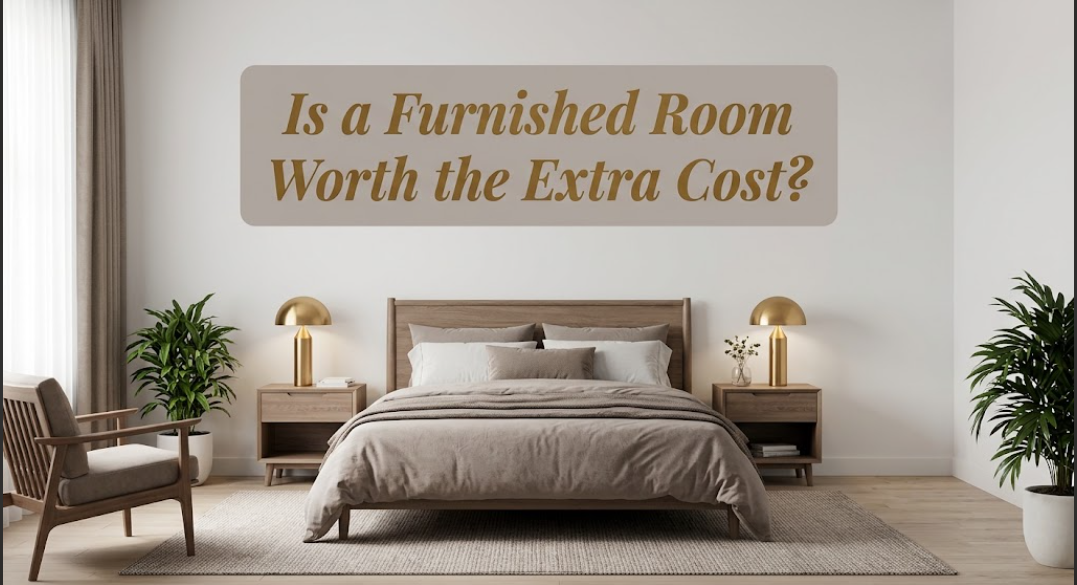
Most people asking this question are staring at two listings on the same street, same size room, same landlord even, and one costs $150 more a month because it says “furnished” at the top. That gap is the whole question. Is $150 a month for a bed, a desk, and a dresser actually a good deal, or is it just a markup with better marketing.
The honest answer is it depends entirely on what you’d otherwise have to buy, and how long you’re staying.
1. What “Furnished” Actually Means in Practice
This is where a lot of confusion starts, because “furnished” isn’t a regulated term. One listing might mean a full setup: bed frame, mattress, desk, chair, dresser, maybe curtains and a lamp. Another might mean a mattress on the floor and nothing else. You have to ask, specifically, what’s included, and ideally get it in writing or at least in the listing description before you commit.
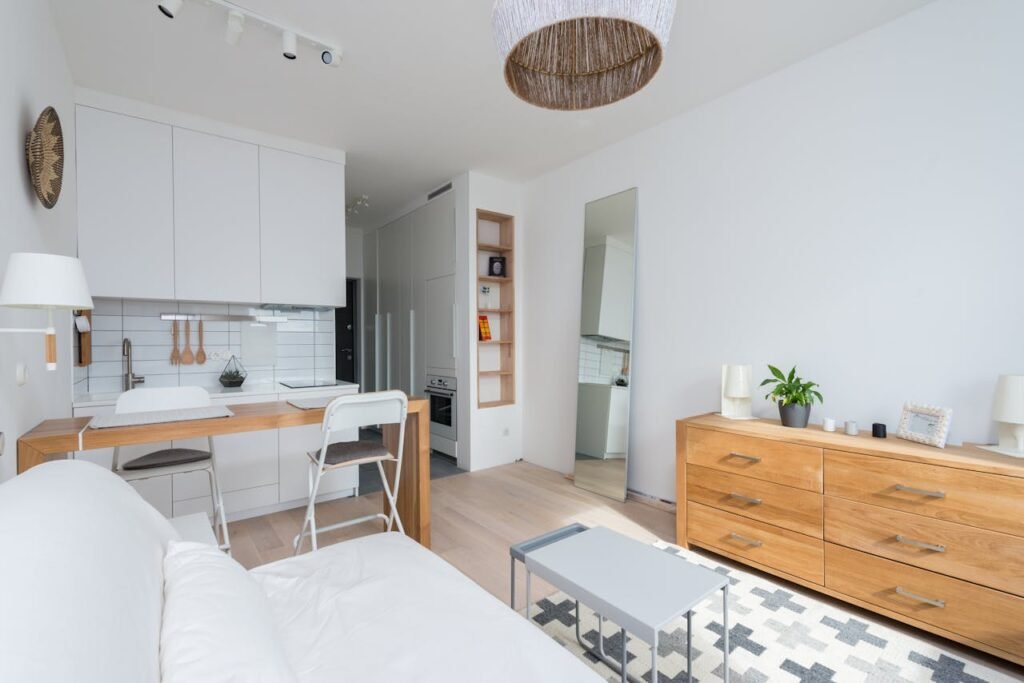
Here’s where people usually go wrong: they see the word “furnished,” assume it means everything they’d need, and then find themselves buying a desk and a chair anyway because the room only came with a bed. At that point you’re paying the furnished premium and the furniture cost, which is the worst of both options.
2. Running the Actual Cost Comparison
Set the emotional part aside for a second and do the arithmetic, because it’s not complicated.
Take the monthly difference between the furnished and unfurnished version of the same room. Multiply that by however many months you plan to stay. That’s your total furnished premium.
Then price out what you’d actually need to buy for the unfurnished version. Not top of the line, just functional. A basic bed frame and mattress, a desk, a chair, a dresser. Secondhand marketplaces and move-out sales near universities are usually the cheapest source for this, often 40 to 60 percent below retail for furniture in decent shape.
| Item | Approx. New Cost | Approx. Secondhand Cost |
|---|---|---|
| Mattress (twin/full) | $150-300 | $60-120 |
| Bed frame | $80-200 | $30-80 |
| Desk and chair | $100-180 | $40-70 |
| Dresser | $100-250 | $40-100 |
| Total | $430-930 | $170-370 |
If your furnished premium over the length of your stay is less than what you’d spend buying secondhand, furnished wins on pure cost. If you’re staying somewhere for a year or longer, the math almost always flips toward unfurnished, because the furniture cost is one-time and the premium keeps compounding every month.
3. The Part the Spreadsheet Misses
Money isn’t the only thing on the table here, and pretending it is leads people to the wrong decision even when the math technically favors unfurnished.
Moving furniture is its own cost, in time, in physical effort, and in logistics if you don’t have a vehicle. A freelance graphic designer moving into a room for a six-month contract doesn’t want to be sourcing a mattress on a Tuesday afternoon between client calls, then figuring out how to get it up three flights of stairs. For a short stay, furnished isn’t really a premium at all. It’s the price of not having to solve a logistics problem you’d rather not deal with.
There’s also resale to think about, though people rarely factor it in properly. If you buy furniture and then have to sell it in six months when you move again, you’re not getting your money back. Secondhand furniture typically resells for 30 to 50 percent of what you paid for it, so the “cheap” unfurnished option quietly gets more expensive the more often you move.
4. When Furnished Is Clearly the Better Call
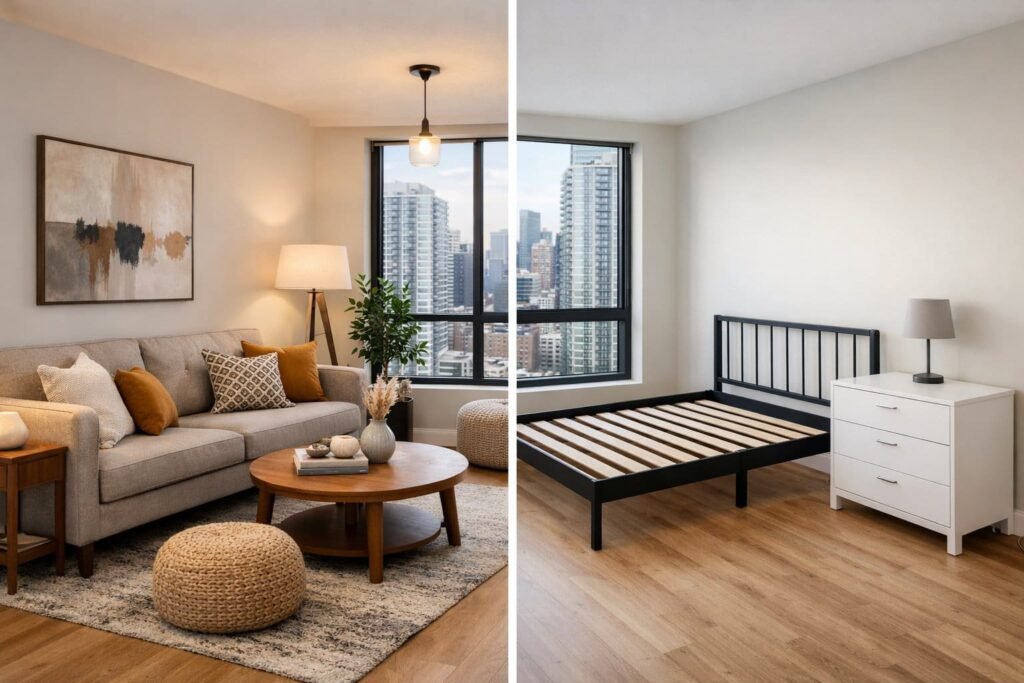
A few situations make the furnished premium worth paying without much debate. Short-term stays under six months are the clearest case, since the buy-and-resell cycle rarely breaks even in that window. People relocating from another city or country with no local network to help transport secondhand furniture are another. And anyone who’s tried moving a mattress up a narrow stairwell alone knows this isn’t a small consideration.
5. When Unfurnished Comes Out Ahead
Longer stays flip the math, generally past the eight to twelve month mark. People who already own furniture from a previous place, or who have access to a truck and some help moving, also tend to come out ahead going unfurnished. And if you actually care about your space looking and feeling like yours rather than a generic rental setup, buying your own pieces, even secondhand, usually beats whatever came with the furnished listing.
Sites and guides in the Rent By Room Guide Online space tend to treat this as a simple yes or no question, but it’s really a timeline question dressed up as a cost question. Figure out how long you’re staying first. The furniture decision mostly answers itself after that.
One more thing worth checking before you sign anything: ask what happens to the furniture at move-out. Some landlords expect it to stay exactly as arranged, others don’t care. Get that answer before, not after, you’ve rearranged the room to suit you.
Frequently Asked Questions
Is furnished always more expensive than unfurnished? Almost always on a month-to-month basis, though not by as much as people assume once you factor in what unfurnished actually costs you upfront to set up.
How much should I expect to pay extra for a furnished room? Typically $100-250 a month more than the same unfurnished room, depending on the market and how complete the furniture package is.
Can I negotiate a lower rate if I bring some of my own furniture to a furnished room? Sometimes, though not always. It’s worth asking directly rather than assuming, since some landlords would rather store their furniture elsewhere and knock a little off the rent.
What furniture is usually missing even in a “fully furnished” listing? Kitchen basics, curtains or blinds, and storage solutions like shelving are the most commonly missing items, even when a listing says fully furnished. Always ask for a specific inventory.
Is it worth buying furniture for a stay of less than six months? Rarely. The resale loss combined with moving logistics usually makes furnished the more practical option for anything under half a year, even if it costs more month to month.
For more on what to check before signing a room rental agreement, our guide on reading a shared lease before you sign covers the clauses that tend to catch people off guard.