Rent-by-room living is one of the most popular housing arrangements in cities where rent prices are high or flexibility is important. It allows people to reduce costs, share utilities, and live in central areas they might not afford alone.
However, while rent-by-room setups are affordable and convenient, they also come with safety risks that are often overlooked. These risks are not just physical—they include financial, emotional, legal, and digital safety concerns as well.
Many people only realize these risks after moving in. The goal of this guide is to help you avoid those situations entirely by understanding the most important safety practices before and during your stay.
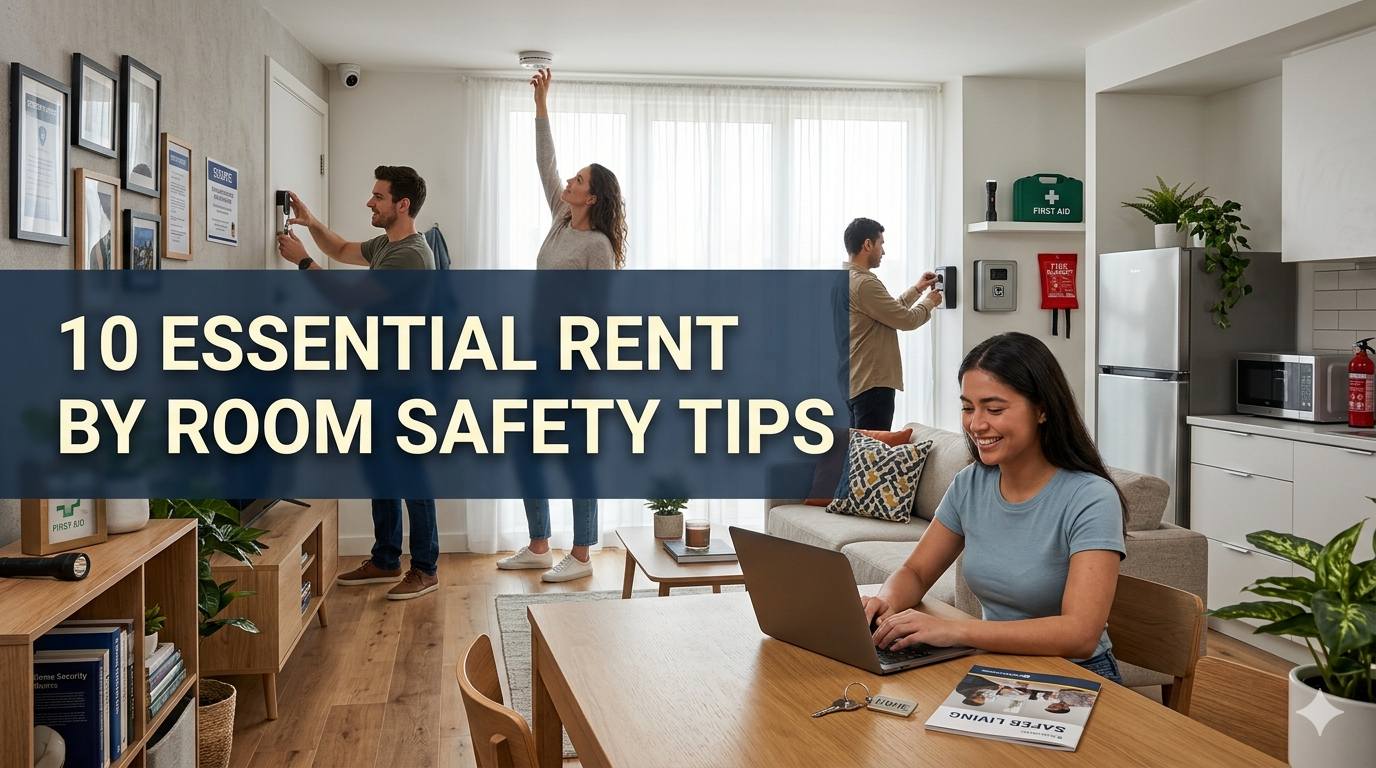
Below are ten essential rent-by-room safety tips based on real-life experiences, common mistakes, and practical solutions.
Tip 1: Always verify the identity of the landlord or primary tenant
One of the biggest risks in rent-by-room arrangements is dealing with unauthorized or fake landlords. In some cases, people sublet rooms without permission, which can lead to sudden eviction.
What to check before paying:
- Government ID of landlord or leaseholder
- Proof of property ownership or rental agreement
- Written permission for subletting
- Contact details of property owner (if applicable)
Verification checklist:
| Item | Must Be Verified | Risk If Ignored |
|---|---|---|
| Landlord ID | Yes | Fraud or fake listing |
| Ownership proof | Yes | Illegal renting situation |
| Subletting permission | Yes | Sudden eviction risk |
| Written contract | Yes | No legal protection |
Key insight: If someone avoids showing documents, it’s a warning sign.
Tip 2: Inspect locks, doors, and windows before moving in
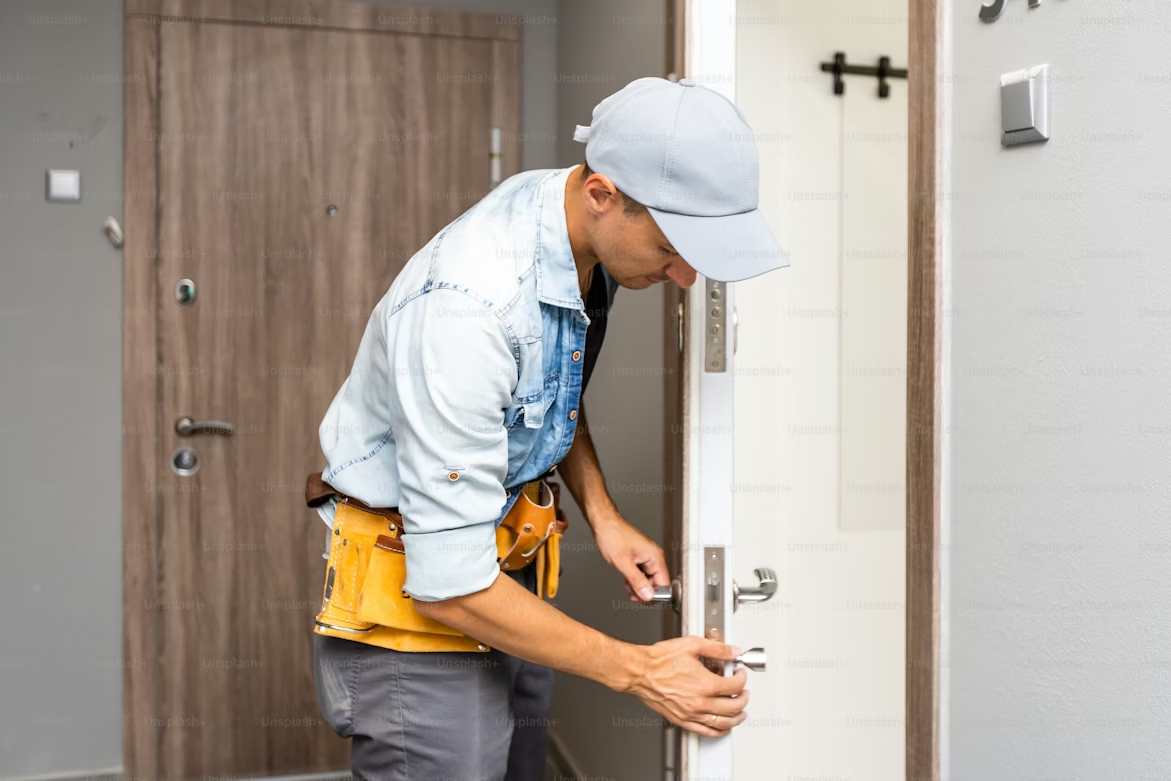
Physical security is often underestimated in shared housing. A room might look fine, but weak locks or broken windows create serious safety risks.
Key inspection points:
- Main door lock quality
- Bedroom lock functionality
- Window security and latches
- Emergency exit accessibility
Security rating table:
| Feature | Safe | Moderate | Unsafe |
|---|---|---|---|
| Door lock | Strong deadbolt | Basic lock | Broken or loose |
| Window lock | Fully secure | Partial lock | No lock |
| Entry control | Limited access | Shared entry | Open access |
Simple rule: If you wouldn’t feel safe leaving valuables in the room, don’t move in.
Tip 3: Understand who has access to your room and shared spaces
Many renters assume only roommates have access, but in reality, landlords, maintenance workers, or previous tenants may also have access.
Important questions:
- Who has keys to the house and your room?
- Are spare keys stored securely?
- Can the landlord enter without notice?
- Are maintenance visits scheduled or random?
Access control comparison:
| Access Type | Safety Level |
|---|---|
| Exclusive key control | High |
| Shared keys with rules | Medium |
| Unrestricted access | Low |
Key insight: Your safety depends on how controlled access is—not just who lives there.
Tip 4: Avoid paying cash without receipts or digital proof
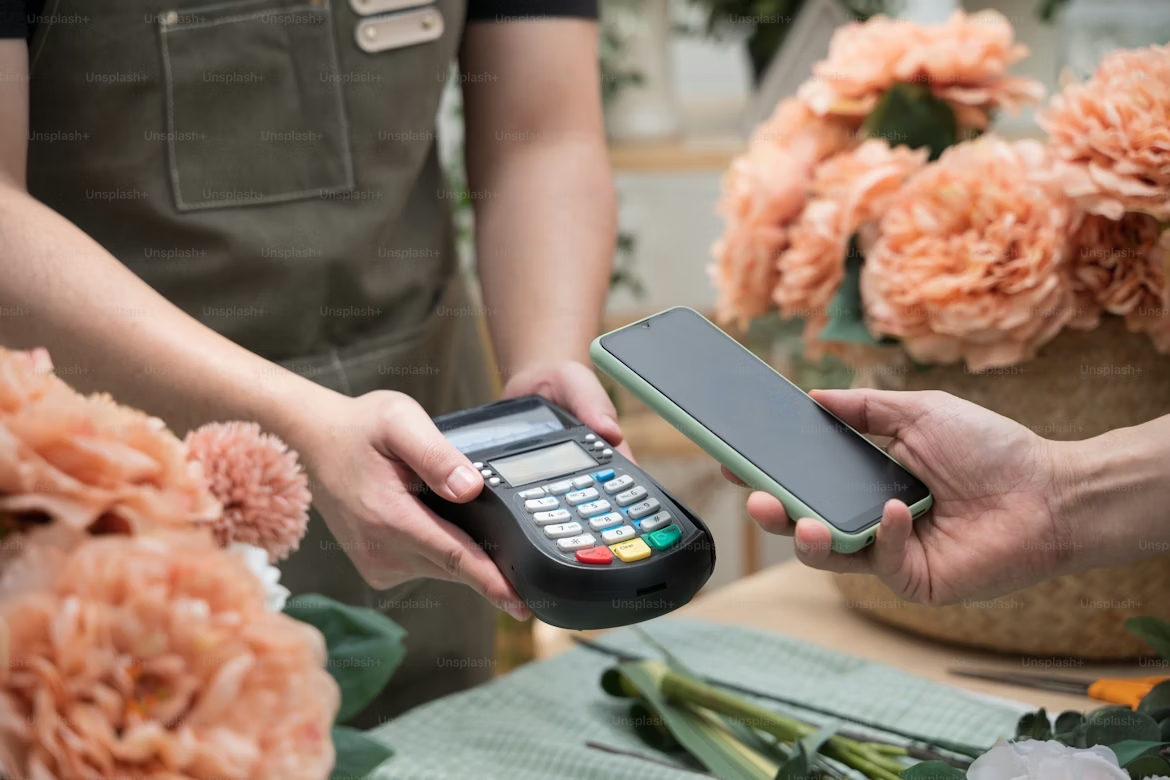
Financial safety is just as important as physical safety. Cash payments without documentation are risky.
Best payment practices:
- Use bank transfer or mobile payments
- Always request receipts
- Keep transaction screenshots
- Avoid informal verbal agreements
Payment safety table:
| Payment Method | Safety Level | Proof Availability |
|---|---|---|
| Bank transfer | High | Strong proof |
| Mobile wallet | High | Digital record |
| Cash with receipt | Medium | Limited proof |
| Cash only | Low | No protection |
Key insight: If there is no proof, there is no protection.
Tip 5: Check neighborhood safety, not just the house
Even a secure house can be unsafe if the surrounding area is risky.
Things to evaluate:
- Street lighting at night
- Nearby shops and activity level
- Crime reports in the area
- Distance to public transport
- Emergency services proximity
Neighborhood safety scoring:
| Factor | Safe Area | Risky Area |
|---|---|---|
| Lighting | Well-lit streets | Dark alleys |
| Activity | Active community | Isolated zone |
| Transport | Accessible | Limited access |
| Security presence | Regular patrols | Rare presence |
Key insight: Your safety begins outside the building.
Tip 6: Be cautious about sharing personal information
In shared housing, oversharing personal details can create privacy and security risks.
Avoid sharing:
- Bank account details
- Work passwords or devices
- Travel schedules
- Personal identification documents
Information sensitivity chart:
| Information Type | Risk Level |
|---|---|
| Phone number | Low |
| Work details | Medium |
| Financial info | High |
| Identity documents | Very High |
Key insight: Friendly roommates are not automatically safe data custodians.
Tip 7: Establish clear visitor rules
Uncontrolled visitors are one of the most common safety concerns in rent-by-room living.
Important visitor rules:
- Advance notice for guests
- No overnight guests without approval
- Limit number of visitors
- Shared agreement on guest behavior
Visitor risk table:
| Visitor Control Level | Safety Impact |
|---|---|
| Strict rules | High safety |
| Flexible rules | Moderate safety |
| No rules | Low safety |
Key insight: Most conflicts in shared homes come from unmanaged visitors.
Tip 8: Secure your valuables properly
Even in trustworthy environments, theft or accidental loss can happen.
Valuable protection steps:
- Use lockable storage boxes
- Avoid leaving cash in open spaces
- Label personal belongings
- Keep electronics secured
Security comparison:
| Storage Type | Protection Level |
|---|---|
| Locked drawer | High |
| Open shelf | Low |
| Shared cabinet | Medium |
Key insight: Trust reduces stress, but physical security prevents loss.
Tip 9: Know emergency exits and safety procedures
Many renters move in without knowing basic emergency exits or procedures.
You should always know:
- Fire exits
- Gas shutoff location
- Electrical breaker location
- Emergency contact numbers
Emergency readiness checklist:
| Item | Status Required |
|---|---|
| Exit routes known | Yes |
| Fire extinguisher access | Yes |
| Emergency contacts saved | Yes |
| Utility shutoff knowledge | Yes |
Key insight: Safety awareness can save lives in emergencies.
Tip 10: Trust your instincts but verify facts
Intuition is important, but it must be supported with verification.
Warning signs to take seriously:
- Landlord avoids questions
- Pressure to pay quickly
- Refusal to provide documents
- Inconsistent information
Risk evaluation chart:
| Situation | Action |
|---|---|
| Minor doubts | Ask questions |
| Repeated inconsistencies | Investigate further |
| Strong red flags | Walk away |
Key insight: Feeling uneasy is often your first safety warning system.
Summary table: Rent by Room Safety Essentials
| Tip | Core Safety Benefit |
|---|---|
| Identity verification | Prevents fraud |
| Physical inspection | Ensures security |
| Access control | Prevents intrusion |
| Payment proof | Financial protection |
| Neighborhood check | External safety |
| Privacy control | Information safety |
| Visitor rules | Household stability |
| Value protection | Theft prevention |
| Emergency readiness | Crisis survival |
| Instinct + verification | Risk avoidance |
Conclusion
Rent-by-room living can be safe, affordable, and efficient when approached with awareness and preparation. Most risks do not come from extreme situations but from small overlooked details—unclear agreements, weak security, lack of verification, and poor communication.
Safety in shared housing is not about fear—it is about structure, observation, and informed decision-making. When you apply these ten essential tips, you significantly reduce risk while improving your overall living experience.
FAQs
- Is rent-by-room living safe overall?
Yes, it can be safe if proper precautions are taken, such as verifying landlords, securing rooms, and setting clear rules. - What is the biggest safety risk in shared housing?
Unauthorized landlords or subletting without permission is one of the biggest risks. - How can I protect my belongings in a shared room?
Use lockable storage, avoid leaving valuables in open areas, and limit access to your personal items. - Should I trust verbal agreements with landlords?
No. Always insist on written agreements and payment proof. - How do I know if a neighborhood is safe?
Check lighting, activity levels, transport access, and local crime reports. - What should I do if I feel unsafe in a shared house?
Address concerns immediately, document issues, and if necessary, plan to move out safely.