Introduction
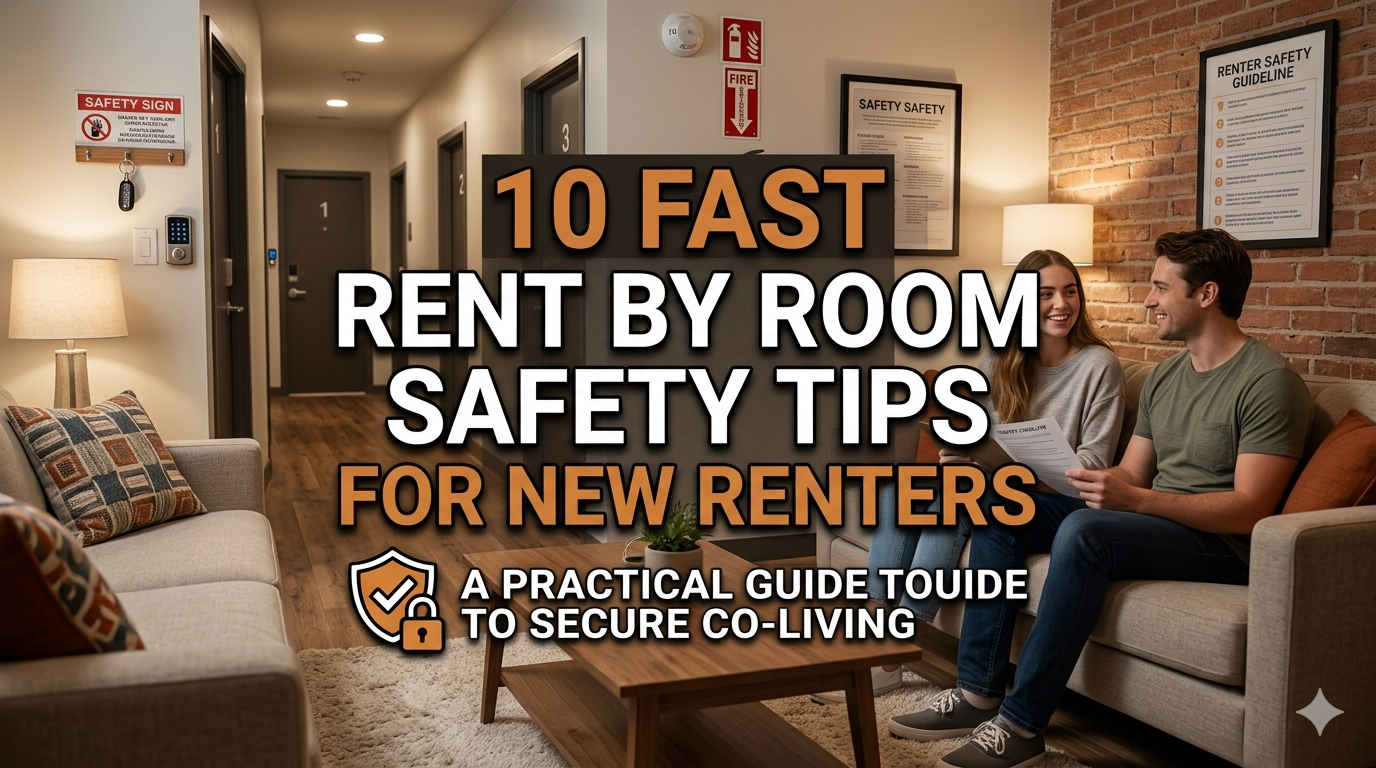
Rent-by-room arrangements are becoming a common choice for students, young professionals, and people relocating to expensive cities. Instead of renting an entire apartment, tenants rent a single room while sharing common areas like kitchens, bathrooms, and living spaces.
While this setup is affordable and flexible, safety is often overlooked. New renters tend to focus on price and location while ignoring risks such as security issues, unreliable roommates, property damage, and lack of privacy controls.
This guide provides 10 fast, practical safety tips that help new renters protect themselves, their belongings, and their peace of mind from day one.
Tip 1: Always inspect locks and entry points first
Before signing any agreement, your first priority should be physical security. A room may look good, but weak locks or broken entry points can create serious risks.
Check the following:
- Main door lock strength
- Room door lock quality
- Window locks and grills
- Emergency exits
Safety inspection checklist:
| Area | What to Check | Safe Condition Indicator |
|---|---|---|
| Main entrance | Deadbolt lock | Strong, not loose |
| Room door | Key lock or digital lock | Fully functional |
| Windows | Bars or secure locks | No easy external access |
| Balcony (if any) | Lockable door | Cannot be opened easily |
Never ignore broken locks or “temporary fixes” suggested by landlords.
Tip 2: Verify roommate background before moving in
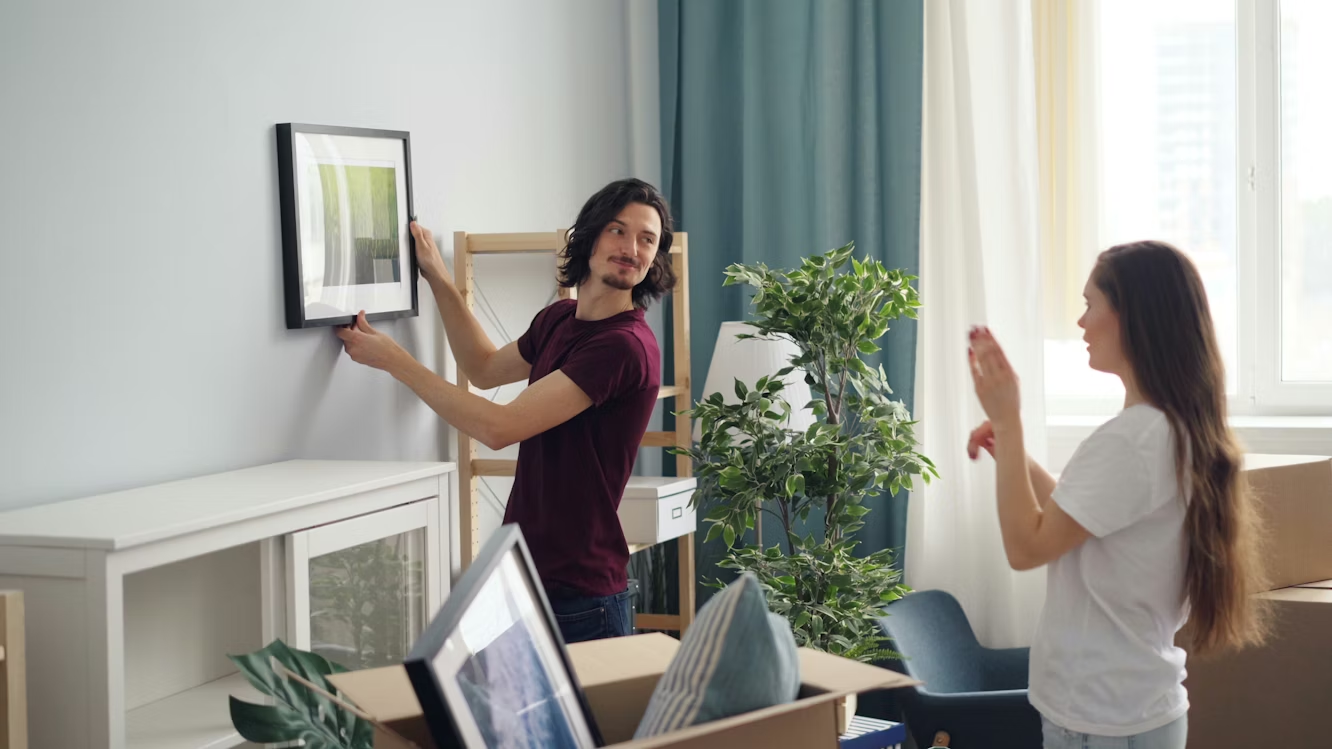
In rent-by-room setups, your roommates are part of your daily environment. Their habits directly affect your safety and comfort.
Ask questions such as:
- How long have they lived there?
- What do they do for work or study?
- Do they have a history of conflicts?
If possible, meet them in person before committing.
Roommate risk evaluation table:
| Factor | Low Risk | Medium Risk | High Risk |
|---|---|---|---|
| Communication | Open & respectful | Neutral | Aggressive or unclear |
| Cleanliness | Organized | Average | Very messy |
| Lifestyle | Stable routine | Irregular | Highly unpredictable |
| Noise level | Quiet | Moderate | Constant disturbance |
You don’t need perfection, but you should avoid extreme red flags.
Tip 3: Keep personal valuables secured at all times
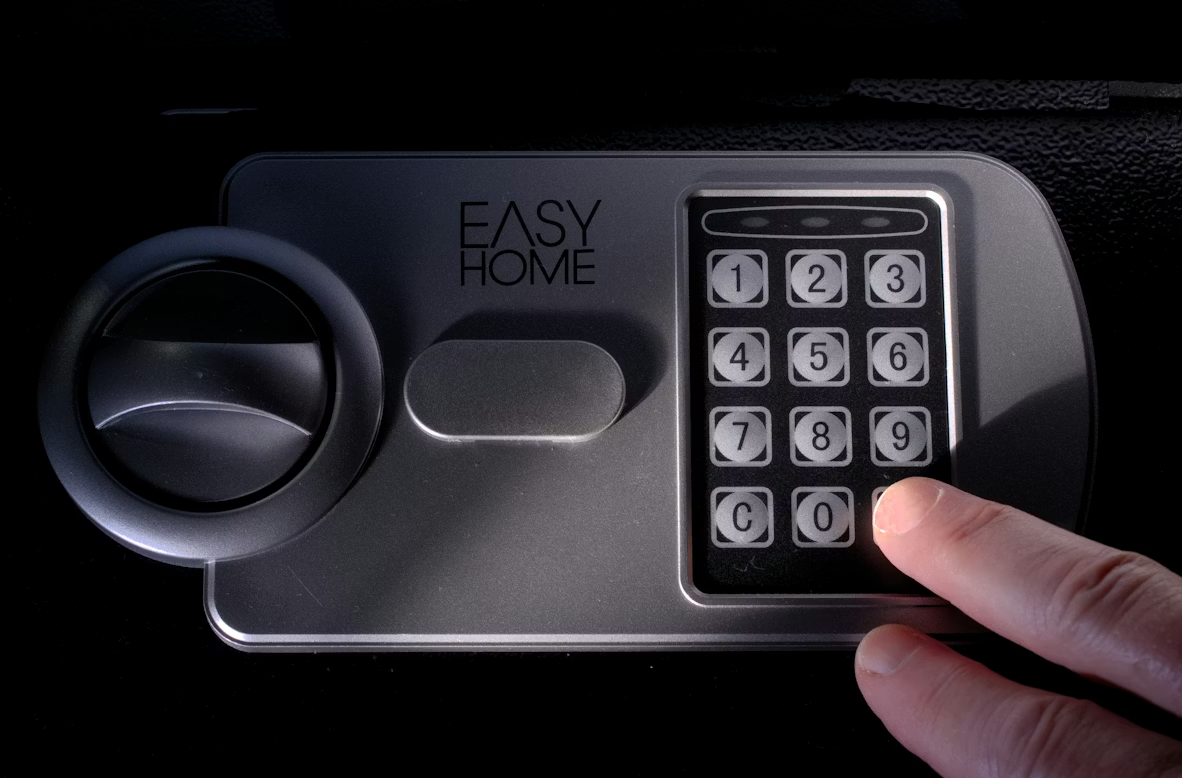
Shared housing increases exposure to theft or accidental loss. Even in trusted environments, it’s better to stay cautious.
Recommended safety tools:
- Lockable storage box
- Small safe for documents
- Hidden compartments in furniture
- Password-protected devices
Valuables safety priority chart:
| Item | Risk Level | Protection Method |
|---|---|---|
| Cash | High | Locked box or wallet |
| Passport/ID | High | Fireproof safe |
| Electronics | Medium | Password + hidden storage |
| Jewelry | High | Secure container |
Never leave important items in shared spaces.
Tip 4: Understand house rules clearly before moving in
Many safety issues come from unclear expectations. House rules should be discussed and documented early.
Key rules to clarify:
- Visitor policy
- Overnight guest rules
- Cleaning responsibilities
- Shared item usage
- Noise restrictions
Rule clarity table:
| Rule Type | Why It Matters | Common Issue |
|---|---|---|
| Guest policy | Prevents safety risks | Unexpected visitors |
| Cleaning rules | Hygiene control | Conflicts over chores |
| Quiet hours | Sleep safety | Noise disturbance |
| Shared items | Avoid disputes | Missing food/items |
If rules are not written, request them in writing.
Tip 5: Check neighborhood safety before committing
The room itself is only part of the safety picture. The surrounding area matters just as much.
Evaluate:
- Street lighting at night
- Distance to police or security posts
- Foot traffic levels
- Nearby shops or safe zones
Neighborhood safety scoring:
| Factor | Safe Area | Risk Area |
|---|---|---|
| Lighting | Bright streets | Dark alleyways |
| Activity | Active community | Isolated |
| Transport access | Easy availability | Limited options |
| Crime reports | Low | High |
Visit the area at night before making a decision.
Tip 6: Install basic personal security tools
Even if the property has security, adding personal layers of protection is smart.
Useful tools:
- Door alarms
- Portable door locks
- Motion sensor lights
- Smart cameras (if allowed)
Security tool effectiveness table:
| Tool | Purpose | Effectiveness |
|---|---|---|
| Door alarm | Alerts entry attempts | High |
| Portable lock | Extra door protection | Very high |
| Motion light | Deters intrusion | Medium |
| Indoor camera | Monitoring | High (if permitted) |
Small investments can significantly increase safety.
Tip 7: Secure your digital privacy in shared spaces
Safety is not only physical. Digital privacy is often overlooked in shared environments.
Best practices:
- Lock your devices always
- Avoid sharing Wi-Fi passwords unnecessarily
- Use VPN on shared networks
- Log out of accounts after use
Digital safety checklist:
| Action | Importance |
|---|---|
| Screen lock enabled | Essential |
| Two-factor authentication | Essential |
| Secure Wi-Fi use | High |
| Regular password updates | High |
Even trusted roommates should not have access to your accounts.
Tip 8: Set boundaries for personal space early
Boundaries prevent misunderstandings and uncomfortable situations.
Examples:
- No entering room without permission
- No borrowing items without asking
- Respect quiet hours
- No usage of personal belongings
Boundary clarity chart:
| Boundary Type | Example Rule | Result |
|---|---|---|
| Physical | No entry without permission | Privacy |
| Material | No borrowing items | Trust |
| Time | Quiet after 11 PM | Rest |
| Social | Respect alone time | Comfort |
Clear boundaries reduce long-term conflict.
Tip 9: Keep emergency contacts and plans ready
Preparedness is a major safety factor that many renters ignore.
You should always know:
- Local emergency numbers
- Nearest hospital location
- Building exit routes
- Trusted local contacts
Emergency readiness table:
| Situation | Action Plan |
|---|---|
| Fire | Use exit route immediately |
| Theft | Contact authorities + landlord |
| Medical issue | Call emergency services |
| Lockout | Contact backup key holder |
Preparation reduces panic in real situations.
Tip 10: Trust your instincts during the first visit
One of the most underrated safety tools is personal intuition. If something feels off, it often is.
Warning signs include:
- Avoidance of clear answers
- Poor maintenance of property
- Disrespectful communication
- Hidden fees or unclear agreements
First impression safety checklist:
| Observation | Positive Sign | Warning Sign |
|---|---|---|
| Cleanliness | Well maintained | Dirty or neglected |
| Communication | Transparent | Evasive |
| Agreement clarity | Written contract | Verbal only |
| Environment | Calm and stable | Chaotic |
Never ignore discomfort during initial visits.
Summary safety overview
| Category | Key Action |
|---|---|
| Physical safety | Locks + tools |
| Social safety | Roommate screening |
| Financial safety | Clear agreements |
| Digital safety | Device protection |
| Environmental safety | Neighborhood checks |
Conclusion
Rent-by-room living can be safe, affordable, and convenient when approached with awareness and preparation. Most safety problems do not come from extreme situations but from overlooked details such as unclear rules, weak locks, or lack of communication.
By applying these 10 fast safety tips, new renters can significantly reduce risks and create a more stable and comfortable living environment from the beginning.
FAQs
- Is rent-by-room living safe for first-time renters?
Yes, it can be safe if proper precautions like lock checks and roommate screening are taken. - What is the biggest safety risk in rent-by-room housing?
Unvetted roommates and unclear house rules are the most common risks. - Should I install my own lock in a rented room?
Yes, if allowed by the landlord, adding an extra lock increases safety. - How do I know if a neighborhood is safe?
Check lighting, activity levels, and local crime reports before moving in. - What should I do if I feel unsafe with roommates?
Document issues and speak to the landlord or consider moving out. - Are digital safety measures really necessary in shared housing?
Yes, because shared networks and devices can expose personal data if not protected.