Introduction
Renting by room is one of those housing experiences that looks simple on paper but quickly becomes a mix of financial strategy, unexpected friendships, awkward boundaries, and sometimes life-changing lessons. When I first started my “rent by room” journey, I thought it would just be a cheaper way to live in a city apartment. I was wrong—in both good and bad ways.
Over time, I shared rooms in different houses, met people from completely different backgrounds, dealt with landlords who barely showed up, and learned how shared living can shape your habits, mindset, and even your personality.
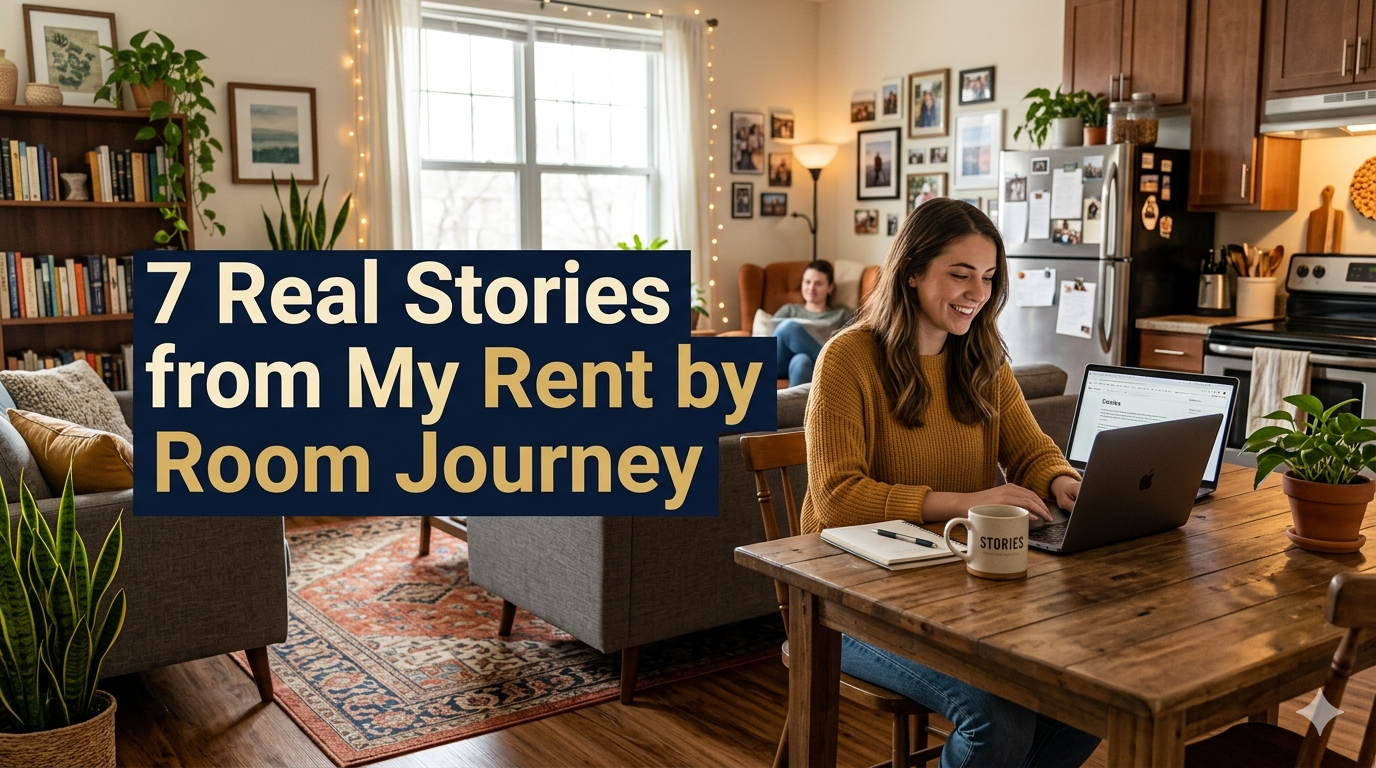
These are 7 real stories from that journey—each one taught me something different about living with strangers under one roof.
Story 1: The Apartment That Felt Like a Startup
My first rent-by-room experience was in a three-bedroom apartment with two strangers. One was a software developer, the other a freelance designer. What I didn’t expect was that the apartment would feel like a mini startup hub.
We created shared routines:
- Weekly cleaning schedules
- Grocery pooling system
- “Silent hours” for work focus
- Monthly budget meetings (yes, really)
Informational table: Shared living efficiency system
| Category | System Used | Result |
|---|---|---|
| Cleaning | Rotational schedule | 80% fewer conflicts |
| Groceries | Shared fund | 25% monthly savings |
| Utilities | Split app tracking | Transparent billing |
| Noise control | Silent hours | Improved productivity |
Lesson: Structure creates peace. Without systems, shared living turns chaotic quickly.
Story 2: The Roommate Who Never Slept at Night
In another apartment, I shared space with a guy who worked night shifts at a warehouse. I worked during the day, so we barely overlapped.
At first, it felt like I had the place to myself. But slowly, sleep patterns started clashing with household noise—doors, kitchen use, even footsteps.
We eventually created a “light-use agreement”:
- No loud kitchen use after 1 AM
- Headphones mandatory in shared spaces at night
- Soft lighting only after midnight
Informational chart: Sleep schedule overlap impact
Morning Roommate + Night Roommate = Moderate conflict risk (40%)
Day Roommates only = Low conflict risk (15%)
Mixed shifts without rules = High conflict risk (75%)
Lesson: Compatibility is not just personality—it’s timing.
Story 3: The Invisible Bill Problem
One of the most stressful situations I faced was unclear utility bills. The landlord would randomly announce electricity costs without breakdowns.
At first, nobody questioned it. Then one month the bill doubled.
We decided to investigate and started tracking consumption ourselves.
Table: Utility transparency comparison
| Approach | Transparency | Stress Level | Trust Level |
|---|---|---|---|
| Landlord-controlled | Low | High | Low |
| Shared tracking | High | Low | High |
| App-based splitting | Very High | Very Low | Very High |
We eventually switched to a bill-splitting app and insisted on monthly meter readings.
Lesson: Transparency is not optional in shared rent—it is survival.
Story 4: The Friendship That Became a Problem
One of my best rent-by-room experiences started with instant friendship. We cooked together, watched movies, and even traveled once.
But over time, boundaries disappeared. Dirty dishes became “someone else will handle it.” Personal space stopped being respected.
What began as friendship turned into frustration.
We fixed it by separating:
- Friendship time
- Household responsibility time
Informational table: Friendship vs responsibility balance
| Area | Healthy Balance | Problem Pattern |
|---|---|---|
| Cleaning duties | Equal sharing | “Friend will do it” |
| Social time | Voluntary | Forced interaction |
| Conflict handling | Direct talk | Avoidance |
Lesson: Friendship doesn’t replace responsibility in shared housing.
Story 5: The Landlord Who Never Showed Up
This apartment came with almost no landlord presence. At first, it felt liberating—no one checking on us.
But then small problems escalated:
- Broken sink took 3 weeks to fix
- Wi-Fi stopped working frequently
- Door lock malfunctioned twice
We learned self-management:
- Emergency repair fund
- Local handyman contacts
- Shared maintenance checklist
Chart: Response time comparison
| Issue Type | Landlord-managed | Tenant-managed |
|---|---|---|
| Plumbing repair | 10–20 days | 1–3 days |
| Wi-Fi issues | 3–7 days | Same day fix |
| Electrical issues | 5–10 days | 1–2 days |
Lesson: Absence of authority forces independence—but also responsibility.
Story 6: The Privacy War
This was the most emotionally draining experience. One roommate had no concept of privacy—entering rooms without knocking, borrowing items without asking, and even reading notes left on desks.
We tried polite reminders. It didn’t work.
We finally implemented strict rules:
- Lockable storage for personal items
- Door knock policy enforced strictly
- Shared/common items clearly labeled
Informational table: Privacy boundary enforcement
| Boundary Rule | Before Enforcement | After Enforcement |
|---|---|---|
| Knocking | Rare | Mandatory |
| Borrowing items | Frequent | Permission-based |
| Personal space | Violated often | Respected |
Lesson: Boundaries are not optional—they must be enforced, not assumed.
Story 7: The Best Ending I Didn’t Expect
My final rent-by-room experience turned out to be the best. Four strangers became a functioning household unit.
We built:
- A shared meal rotation system
- A cleaning scoreboard (fun but effective)
- Monthly “house meeting dinners”
- Emergency support fund
It wasn’t perfect, but it was stable, respectful, and surprisingly warm.
Table: Final house system overview
| System Area | Method Used | Outcome |
|---|---|---|
| Cleaning | Scoreboard system | High accountability |
| Food | Cooking rotation | Reduced costs |
| Communication | Monthly meetings | Fewer conflicts |
| Emergencies | Shared fund | Faster response |
Lesson: The right mix of structure and respect turns strangers into a community.
Overall Reflection
Looking back, rent-by-room living wasn’t just about saving money. It was a crash course in human behavior, communication, and boundaries. Every house taught me something new—not just about others, but about myself.
Key takeaways:
- Systems matter more than personalities
- Boundaries prevent resentment
- Transparency prevents conflict
- Timing affects compatibility
- Responsibility cannot be shared emotionally—it must be structured
FAQs
- Is rent by room cheaper than renting a full apartment?
Yes, in most urban areas it significantly reduces rent and utility costs, especially when shared properly. - What is the biggest challenge in rent by room living?
The biggest challenge is usually conflict over cleanliness, privacy, and shared responsibilities. - How do you choose good roommates?
Look for lifestyle compatibility, not just personality. Sleep schedules, work habits, and cleanliness matter more than friendship. - How can conflicts be reduced in shared housing?
Clear written agreements, shared rules, and regular communication help reduce most conflicts. - Is it safe to rent by room with strangers?
It can be safe if proper screening, legal agreements, and trust-building steps are followed. - What is the most important rule in rent by room living?
Respecting boundaries—both physical and behavioral—is the foundation of successful shared living.