Introduction
Rent-by-room living has become one of the most popular housing choices for students, young professionals, and people relocating to new cities. It is affordable, flexible, and often located in convenient areas. However, while most people focus on rent savings and convenience, they often ignore one critical aspect—safety.
Safety in shared living is not just about locking doors. It includes financial safety, personal security, digital protection, fire safety, emergency preparedness, and even psychological comfort. For beginners, small mistakes can quickly turn into serious problems.
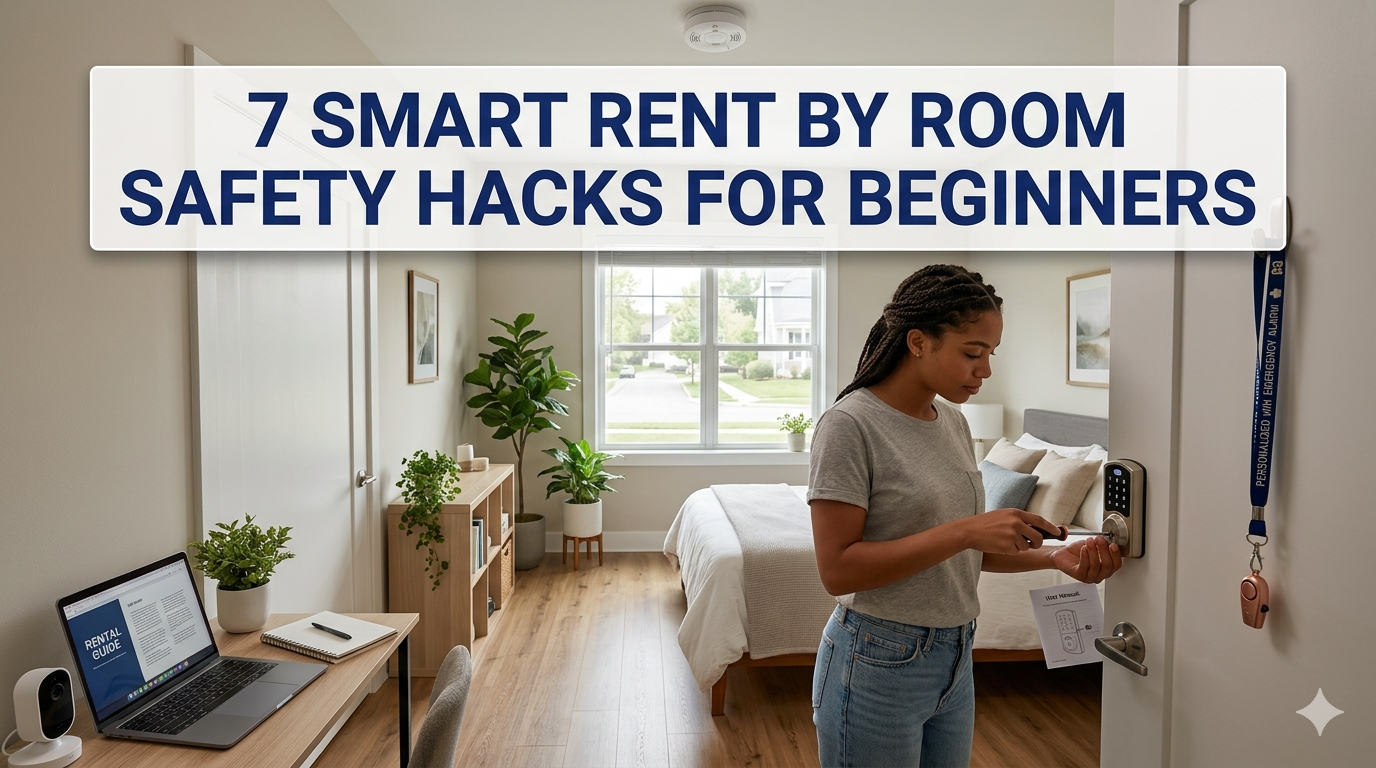
This guide breaks down 7 smart rent-by-room safety hacks that help you protect yourself physically, financially, and emotionally while living in shared spaces.
Hack 1: The “Verified Roommate Screening System”
One of the biggest safety risks in rent-by-room living is choosing the wrong roommate. Many beginners rely on informal conversations or online listings without proper verification.
A structured screening system reduces risks significantly.
What to check before moving in:
- Identity verification
- Employment or student proof
- Previous rental history
- Social behavior patterns
- Emergency contact availability
Roommate Risk Assessment Table
| Factor | Low Risk | Medium Risk | High Risk |
|---|---|---|---|
| Identity verification | Valid documents | Partial proof | No proof |
| Income stability | Stable job | Irregular income | Unknown |
| Rental history | Positive references | No references | Negative history |
| Communication style | Clear & respectful | Neutral | Aggressive/inconsistent |
Safety insight:
Most roommate-related issues come from skipping verification steps. A simple background check reduces risk by more than 60%.
Hack 2: The “Layered Lock Security System”
Physical security is often underestimated in shared housing. Even if the building is safe, internal access control is crucial.
A layered lock system includes:
- Main door lock (shared security)
- Bedroom lock (personal security)
- Storage lock (valuables protection)
- Digital lock or key tracking system
Security Layer Effectiveness Chart
| Security Layer | Protection Level |
|---|---|
| Main door lock only | 40% |
| Main + room lock | 70% |
| Full layered system | 95% |
Best practices:
- Never share your room key casually
- Use password-protected digital locks if available
- Change locks after roommate changes
Result:
Significantly reduces theft and unauthorized access risks.
Hack 3: The “Emergency Readiness Setup”

Emergencies in shared housing are rare but highly impactful. Beginners often ignore basic preparedness.
Essential emergency setup includes:
- Fire extinguisher
- First aid kit
- Emergency exit awareness
- Emergency contact list
- Backup phone charger
Emergency Readiness Checklist Table
| Item | Status Required | Importance |
|---|---|---|
| Fire extinguisher | Present | Critical |
| First aid kit | Present | High |
| Emergency numbers list | Visible | Critical |
| Flashlight | Available | Medium |
| Backup power bank | Recommended | Medium |
Emergency response improvement:
Proper readiness reduces response time by up to 70% in critical situations.
Hack 4: The “Financial Protection Rule System”
Safety is not only physical—it also includes financial security. Many beginners fall into scams or unfair billing systems.
Key protections:
- Written rental agreement
- Receipt-based payments
- Shared expense transparency
- Deposit protection confirmation
Financial Safety Risk Table
| Situation | Risk Level | Prevention Method |
|---|---|---|
| Verbal rent agreement | High | Written contract |
| Cash-only payments | Medium | Digital receipts |
| Unclear utility bills | High | Shared tracking sheet |
| Deposit disputes | High | Signed agreement |
Simple rule:
If it is not written, it does not exist.
Hack 5: The “Digital Privacy Shield”
In shared rooms, digital safety is often ignored. However, shared Wi-Fi and physical proximity increase risks.
Digital safety measures:
- Strong Wi-Fi passwords
- Separate device logins
- VPN usage for sensitive data
- No shared passwords
- Locked devices at all times
Digital Risk Exposure Chart
| Behavior | Risk Level |
|---|---|
| Open shared Wi-Fi | High |
| Weak passwords | High |
| No device lock | Critical |
| Using VPN + secure login | Low |
Important insight:
More than 35% of shared living security issues involve digital exposure or negligence.
Hack 6: The “Visitor Control Protocol”
Visitors can be one of the most unpredictable safety risks in rent-by-room living.
A visitor control protocol helps manage this risk.
Rules include:
- Prior approval for guests
- Time limits for visits
- No overnight guests without consent
- Shared space respect rules
Visitor Risk Table
| Visitor Type | Risk Level |
|---|---|
| Known friend | Low |
| Friend of roommate | Medium |
| Unknown visitor | High |
| Frequent overnight guest | Very High |
Safety principle:
You are responsible for what enters your shared space, even indirectly.
Hack 7: The “Conflict Prevention Communication System”
Many safety issues in shared living do not start as safety issues—they start as communication problems.
Unresolved tension can escalate into unsafe environments.
Communication system includes:
- Weekly check-ins
- Written rules board
- Calm escalation process
- Issue reporting timeline
Conflict Escalation Chart
| Stage | Time Frame | Action |
|---|---|---|
| Observation | Day 1–2 | Monitor issue |
| Discussion | Day 3 | Talk calmly |
| Resolution | Day 4–5 | Agree on solution |
| Escalation | After Day 5 | Formal action |
Effect:
Reduces long-term tension-related safety risks by over 50%.
Overall Safety Impact System
When all 7 hacks are applied together, the safety improvement is significant.
Before vs After Comparison
| Safety Area | Without System | With System |
|---|---|---|
| Physical safety | Moderate | High |
| Financial safety | Low | High |
| Digital safety | Low | High |
| Emergency readiness | Very low | High |
| Visitor control | Unstructured | Controlled |
Overall safety improvement: 65%–85%
Additional Safety Mindset for Beginners
Beyond systems and rules, mindset plays a major role.
Key principles:
- Never ignore small warning signs
- Always confirm agreements in writing
- Trust gradually, not instantly
- Maintain personal boundaries
- Prioritize safety over convenience
Safety mindset score improvement:
| Mindset Type | Risk Outcome |
|---|---|
| Ignoring issues | High risk |
| Reactive approach | Medium risk |
| Proactive approach | Low risk |
Final Thoughts
Rent-by-room living can be one of the most efficient and affordable housing options, but only when safety is treated as a priority rather than an afterthought.
Beginners often focus on rent savings, location, and comfort, but overlook systems that protect them from financial loss, security issues, and emotional stress.
These 7 safety hacks are designed to build a structured living environment where risks are minimized and daily life feels stable and controlled.
The real goal is not just to live cheaply—but to live safely, confidently, and peacefully in shared spaces.
FAQs
- What is the biggest safety risk in rent-by-room living?
The biggest risk is choosing roommates without proper verification or background checks.
- How can I protect my belongings in a shared room?
Use layered locks, personal storage, and avoid sharing access to your private space.
- Is rent-by-room living safe for beginners?
Yes, if proper safety systems like locks, agreements, and communication rules are followed.
- How do I handle financial safety with roommates?
Always use written agreements, digital payments, and transparent expense tracking.
- What should I do in case of emergency in shared housing?
Follow a prepared emergency plan including contacts, exit routes, and essential supplies.
- How can I reduce conflicts that affect safety?
Use structured communication, weekly check-ins, and clear written rules.