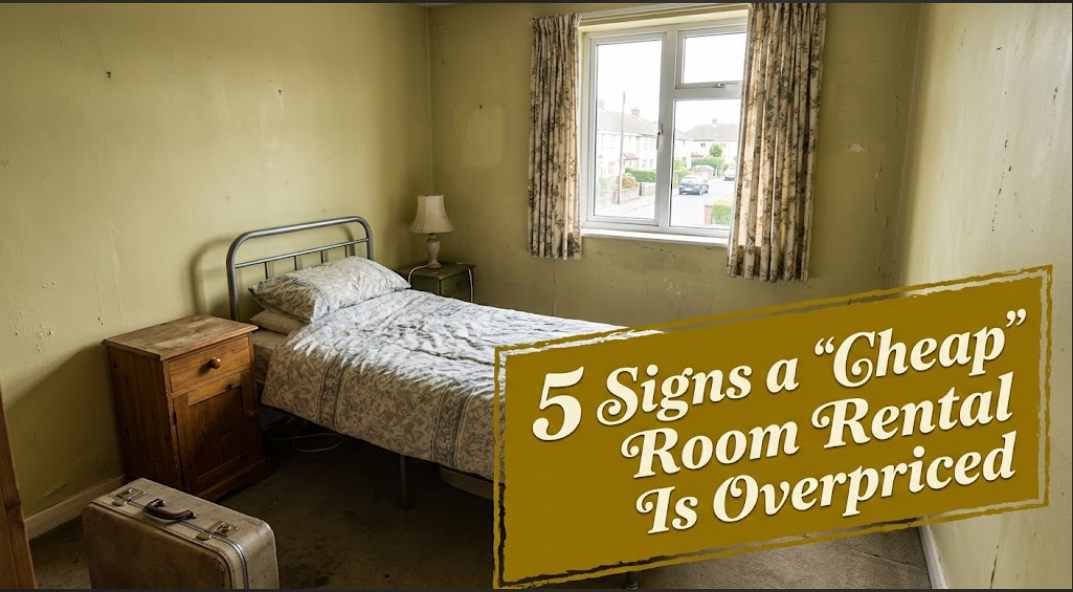
I once sat across from a landlord who described a windowless basement corner as a “cozy studio nook.” Four hundred dollars a month, utilities not included, shared bathroom down a hallway that smelled faintly of someone else’s cooking. It wasn’t a bad room. It was a badly priced room, and there’s a difference that most renters never learn until they’ve already signed something.
That gap between “cheap” and “fairly priced” is where a lot of people get burned. A low number on a listing feels like a win before you’ve done any actual math. Below are the five signals that tell you a rental marketed as a deal is quietly costing you more than it should.
1. The Rent Doesn’t Match What’s Actually Included
A room can be listed at a number that looks great compared to everything else on the block, but that number often hides what’s missing. No Wi-Fi. No parking. A shared kitchen with three other tenants and one working burner. Utilities billed separately and split “however the landlord decides.”

Before comparing two listings, add up the full monthly cost, not just the headline rent. Utilities, internet, any mandatory cleaning or amenity fee, and parking if you need it. A $650 room with everything included can be cheaper than a $500 room that nickels you to $700 by month’s end.
| Line item | “Cheap” listing ($500) | Fuller listing ($650) |
|---|---|---|
| Base rent | $500 | $650 |
| Utilities | $90 (estimated, split 4 ways) | Included |
| Internet | $45 | Included |
| Parking | $60 | Included |
| Real monthly cost | $695 | $650 |
This is the comparison that almost never happens before someone signs a lease, and it’s the one that matters most.
2. The Listing Photos Are Older Than the Paint Job
Anyone who has scrolled through a few dozen room listings starts to notice the same handful of photos reused across postings from the same landlord, sometimes years apart. A carpet that looked fine in a photo from three winters ago is rarely the carpet you’ll find in person. This isn’t always dishonest. Sometimes it’s just laziness. But the effect on you is the same either way.
Ask for photos taken within the last month, or better, ask to video call the space before committing to an in-person visit if you’re relocating from out of town. A landlord who’s genuinely proud of the room won’t hesitate. One who stalls, or keeps sending the same three angles, is telling you something without saying it.
3. The Neighborhood Has Quietly Changed Since the Price Was Set
Rent prices lag behind reality more often than people assume. A landlord who set a rate two years ago based on the neighborhood at the time might not have adjusted for a new transit line, a wave of new restaurants, or, just as often, a rise in noise complaints and turnover that made the block less desirable than the listing implies. A price that hasn’t moved in a long time isn’t automatically a bargain. Sometimes it’s a sign nobody’s bothered to check.
Search the address itself, not just the neighborhood name, for recent local news or community forum threads. Fifteen minutes of research here has saved plenty of Rent By Room Guide readers from a mismatch between what they expected and what they got.
4. Maintenance Requests Take Weeks, Not Days
Here’s where people usually go wrong: they focus entirely on the price and the room itself, and they never ask a single question about how the property gets maintained. A slow leak, a broken lock, a space heater that’s the only source of warmth in January. These things happen everywhere. What separates a fair deal from a false one is how fast they get fixed.

If you can, ask a current or former tenant directly. Room rental groups on social platforms are full of people willing to answer an honest question about a specific address. A landlord who’s slow to respond before you’ve even moved in tends to get slower once your rent is already in their account.
5. The Lease Terms Shift the Real Costs Onto You Later
A rock-bottom monthly rate sometimes comes with a lease that quietly transfers the risk. Security deposits that exceed local caps. Vague language about “wear and tear” that leaves room for disputes at move-out. Clauses requiring 60 days’ notice to leave, while the landlord can end the arrangement with much less. None of this shows up in the listing price, but all of it shows up eventually.
Read the lease slowly, out loud if you have to, and don’t be embarrassed to ask a friend who’s rented for years to look it over too. A cheap room with an expensive exit clause isn’t actually cheap. It’s deferred.
Common Mistake Worth Repeating
The single biggest misconception in room rentals is treating “cheap” and “affordable” as the same word. Affordable accounts for everything, the rent, the utilities, the commute, the hassle of dealing with a landlord who doesn’t return calls. Cheap only accounts for the number on the listing. Most bad rental decisions come from confusing the two.
If you’re weighing several listings at once, our guide on comparing shared housing costs across neighborhoods walks through the full math in more detail, and the piece on what a fair security deposit actually looks like is worth a read before you sign anything.
Frequently Asked Questions
How much lower than market rate should make me suspicious? Anything more than about 15 to 20 percent below comparable rooms nearby deserves a closer look. It doesn’t automatically mean something’s wrong, but it means you should ask more questions before assuming it’s just good luck.
Is it normal for utilities to be split unevenly among roommates? It happens, but it should be spelled out in writing before you move in, not negotiated informally after the fact. If a landlord can’t explain the split clearly, that’s worth noting.
Should I still consider a room with older photos if the price is good? Yes, just verify first. A video call or a same-day in-person visit costs you very little and protects you from a mismatch that would otherwise cost a full deposit to undo.
What’s a reasonable turnaround time for a maintenance request? For anything affecting safety or livability, like heat, water, or a broken lock, 48 to 72 hours is a fair standard. Cosmetic issues can reasonably take longer.
Can I negotiate lease terms on a room rental, or is it take-it-or-leave-it? Many landlords will negotiate small things, especially deposit amounts or notice periods, particularly if you’re a long-term tenant they’d rather keep than replace. It rarely hurts to ask.
For more on evaluating a listing before you commit, our full room rental checklist covers what to bring to a viewing and what questions to ask on the spot.