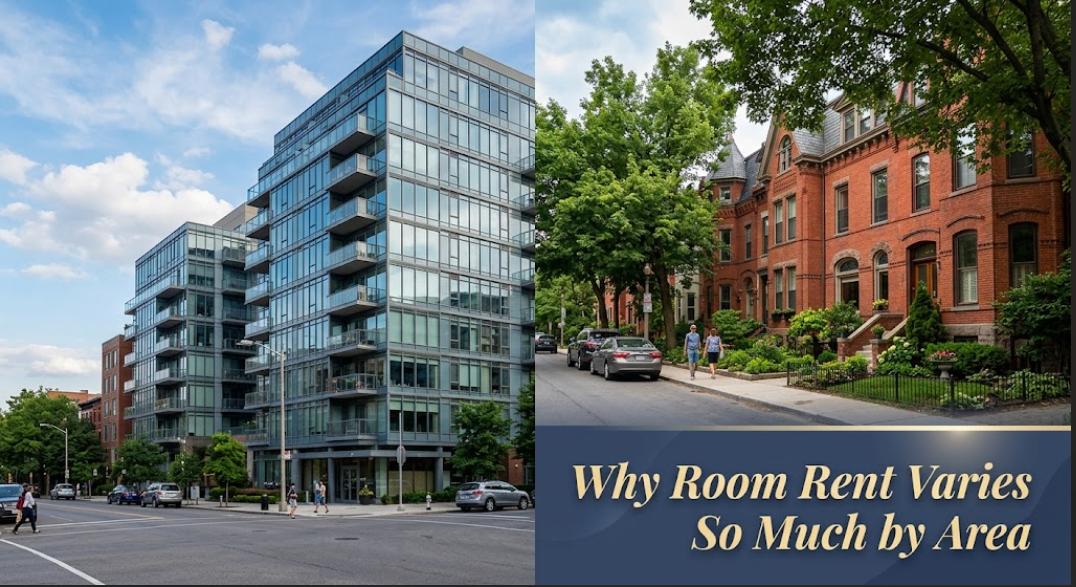
A room ten minutes apart from another can rent for double the price. Same city, same general condition, sometimes the same street grid. People assume it comes down to square footage or how new the paint is, and that’s rarely the real answer.
I spent close to nine years managing shared housing units across three different metro markets before I moved into rental consulting full time, and the question I get asked more than almost any other is some version of “why is this room so much more expensive than that one.” So let’s actually walk through it, side by side, because the answer isn’t one thing. It’s a stack of smaller things that add up fast.
1. Location Within the City Isn’t Just About the City
People compare rent across cities constantly. What they don’t compare enough is rent across neighborhoods within the same city, which honestly moves the number more than the city label does.

A room fifteen minutes from a major transit hub can cost 30 to 50 percent more than one that requires a car or a long bus ride. Walkability to grocery stores, distance to a university or hospital, and even which side of a busy road a building sits on all shift price. I’ve seen two rooms in buildings across the street from each other rent at meaningfully different rates because one faced a park and the other faced a parking structure.
And school zones matter more than most renters expect, even for people without kids, because school district boundaries tend to track with broader neighborhood investment and safety perception.
2. Room Size and Layout Get Overweighted, Then Underweighted
Here’s where people usually go wrong. They fixate on square footage as the main driver, then get confused when a smaller room costs more than a bigger one down the hall.
Layout carries more weight than raw size. A room with its own entrance, an attached half bath, or a window that actually opens onto something other than a wall will out-earn a larger interior room every time. Closet space matters too, more than people admit before they’re actually living somewhere.
| Room Feature | Typical Rent Impact |
|---|---|
| Private bathroom attached | +15% to +25% |
| Private entrance | +10% to +20% |
| Natural light / usable window | +5% to +10% |
| Larger square footage, no other perks | +2% to +5% |
| Furnished vs. unfurnished | +5% to +15% |
That last row surprises people. Furnishing a room properly, not just tossing in a mattress, can add more to the asking rent than adding forty square feet does.
3. What the Rest of the House or Building Offers
A room’s price doesn’t live in isolation. It’s priced against everything else in the unit, and against the people you’d be sharing it with, implicitly.
Shared kitchen quality is a bigger factor than most first-time renters expect. So is laundry, whether it’s in-unit, in-building, or a fifteen-minute walk to a laundromat. I once managed a property where we upgraded the shared kitchen appliances and nothing else, and were able to raise room rates by roughly 8 percent within two lease cycles without a single complaint.
Utilities bundled into rent versus billed separately changes the effective price too, even when the sticker number looks similar. A room advertised at a lower monthly rate that bills internet, water, and electric separately can end up costing more than a slightly higher quoted rent that bundles everything in.
Sites like Rent By Room Guide break down which utility setups tend to favor the renter versus the landlord, and it’s worth checking before comparing two listings that look close on paper but aren’t structured the same way underneath.
4. Timing, Turnover, and Local Supply
This is the part that’s hardest to see from a single listing, because it has nothing to do with the room itself.
Rent tracks vacancy rates block by block, sometimes building by building. If three units on the same street all turned over in the same month, landlords start competing on price whether they want to or not. If a new employer just opened offices two miles away, the opposite happens fast.
Seasonal timing plays in too. Rooms listed in late summer, tied to school and job relocation cycles, tend to command higher prices than the exact same room listed in February. I’ve watched identical units swing 10 to 15 percent purely based on when they hit the market, nothing structural changed at all.
And landlords who’ve had a room sit empty for six or eight weeks will usually negotiate. Landlords who just listed yesterday, generally won’t, not yet anyway.
5. Roommate Composition and House Rules
This one gets left out of most rent breakdowns, but it shapes price more than people think.
A room in a quiet, established household with long-term tenants often rents at a premium over an identical room in a house with high turnover or a more chaotic living situation. Stability has value, and both renters and landlords price it that way, even if nobody says so directly.
House rules cut both directions. Strict quiet hours and no-guest policies can lower demand for some renters and raise it for others, students studying for boards, people working night shifts, whoever needs the predictability. It’s less about the rules being strict or lenient and more about whether they match what the specific renter is looking for.
What This Means When You’re Actually Comparing Listings
Don’t compare two rooms on price alone. Compare what each price is actually buying, because that’s where the real gap usually is.
Pull the utility structure, ask about turnover history if the landlord will share it, and look hard at layout details that don’t show up well in photos, things like where the window actually faces or whether the bathroom is truly private or shared with one other room. A slightly higher listed rent that includes utilities and a private bath is frequently the better deal even though the number on the page looks worse at first glance.
Affordable Rent doesn’t always mean the lowest sticker price. Sometimes it means the lowest total cost once everything’s accounted for, which isn’t the same thing, and it’s a distinction worth sitting with before signing anything.
Frequently Asked Questions
Why does the exact same floor plan cost different amounts in different buildings nearby? Usually it comes down to building age, whether utilities are bundled, and how recently the shared spaces were updated. Two identical layouts a block apart can differ by 15 percent or more once those factors are accounted for.
Is it normal for rent to change based on how long a room has been vacant? Yes. A room that’s sat empty for over a month is a much stronger negotiating position than a room listed three days ago. Landlords carrying an empty room are often motivated to move quickly.
Does furnishing a room actually raise what you can charge, or is that overstated? It’s real, particularly for shorter-term renters, students, and people relocating for work who don’t want to buy furniture for a lease they might not renew. The impact tends to be strongest on six to twelve month leases.
Should I ask about roommate turnover before agreeing to a room? It’s worth asking directly. High turnover in a shared house is often a sign of something worth understanding before you sign, whether it’s house rules, noise, or general unit management. It doesn’t always mean a problem, but it’s a fair question to ask.
Why do two rooms with almost identical square footage sometimes have very different rent? Square footage rarely tells the whole story. Layout, natural light, bathroom access, and proximity to shared spaces like the kitchen tend to matter more than the raw number on a listing.
If you’re weighing two listings that look similar on paper, it’s worth spending a little more time with the details before deciding, and Rent By Room Guide has more breakdowns on what actually separates a fair-priced room from an overpriced one at rentbyroomguide.online.