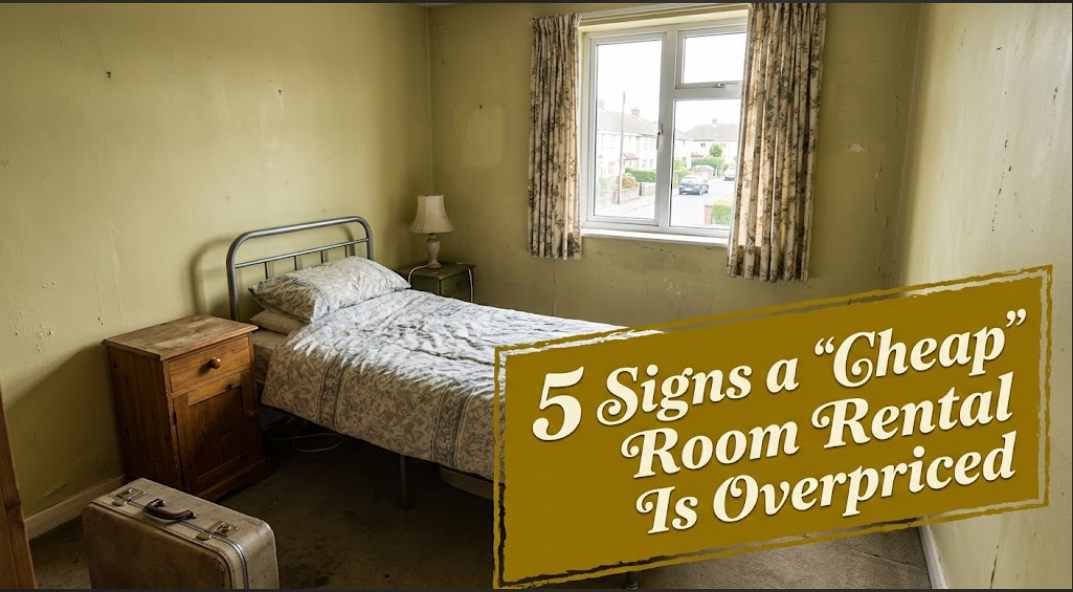

The first time I helped someone budget for a room instead of a full apartment, I got the math wrong. Not by a little. I told a client renting a room in a shared house that she’d save close to 40% compared to a studio in the same neighborhood. She signed the lease, moved in, and three months later called me confused about why her actual savings looked closer to 20%. I’d forgotten to account for the stuff that doesn’t show up on the listing: utility splits that weren’t even, a “shared” kitchen that meant buying her own everything anyway, and a deposit structure that ate into what she thought she’d pocket upfront.
That mistake taught me more about room budgeting than any spreadsheet could have. So here’s what I actually tell people now, not the version that looks clean in a listing description.
1. Start With the Real Number, Not the Advertised One
Room listings almost always show the base rent and stop there. That number is a starting point, not a budget. A room advertised at $650 a month in a three-bedroom house might come with a $50-75 utility split, a $30-40 monthly contribution to shared supplies like cleaning products and paper goods, and sometimes a parking fee if the house has limited spots. Add those up and that $650 room is closer to $730-770 in practice.
The general rule of thumb, room or otherwise, is that housing shouldn’t exceed 30% of your gross monthly income. But that guideline was built around whole-unit renting. Rooms complicate it because so much of the real cost lives outside the advertised rent, and people consistently underestimate it because nobody puts “hidden costs” in a listing headline.
2. Understand What “Shared” Actually Costs You
This is where I see the most confusion, and it’s the section I wish every first-time room renter would read before signing anything.

“Shared kitchen” can mean three very different things depending on the house. Sometimes it genuinely means shared groceries, shared cookware, and a communal grocery fund everyone contributes to. More often, especially in larger shared houses, it means you have access to a kitchen but you’re buying and storing your own food separately, which erases a lot of the savings people assume come automatically with room rentals.
Here’s a rough breakdown of what to actually expect and budget for:
| Category | What’s Often Advertised | What You Should Actually Budget |
|---|---|---|
| Utilities (electric, water, gas) | “Included” or “split evenly” | $50-90/month, verify the split method |
| Internet/Wi-Fi | “Included” | $15-30/month if not truly included |
| Kitchen/groceries | “Shared kitchen” | Budget for your own groceries unless explicitly pooled |
| Cleaning supplies | Rarely mentioned | $10-20/month contribution is common |
| Parking | Sometimes extra | $0-75/month depending on city and availability |
| Renter’s insurance | Rarely required but should be | $10-20/month |
I’ve had roommates who split utilities down the middle with no regard for who’s actually running the AC all summer, and I’ve had houses that use apps to track usage fairly. Ask which system a place uses before you assume anything.
3. Factor In the Move-In Costs People Forget
Deposits for room rentals work differently than a standard lease in a lot of cases, and this trips people up constantly. Some room rentals ask for first and last month plus a security deposit, same as a full apartment. Others ask for less because the “landlord” is actually a roommate subletting a spare room, which comes with its own risks around lease legitimacy that are worth checking into separately.
A realistic move-in budget for a room rental usually looks like:
- First month’s rent
- Security deposit, often equal to one month but sometimes negotiable for room shares
- A prorated amount if you’re moving in mid-month
- Basic furnishings if the room is unfurnished, which for a bed, small dresser, and desk can run $400-800 even buying secondhand
That last one catches people off guard the most. A room might be cheaper monthly than a studio, but if it’s unfurnished and the studio you were considering came furnished, the upfront gap narrows fast.
4. Where People Consistently Get the Math Wrong
The most common mistake I see, and I mean this is the one that comes up in almost every budgeting conversation I have, is treating the room’s rent as a fixed, final number when comparing it to a studio or one-bedroom. People will say “the room is $200 cheaper” without running the utility split, the grocery difference, or the furnishing cost into that comparison. Once you actually do the math, that $200 gap often shrinks to $80-100, sometimes less depending on the house.
The second mistake is not asking how long-term roommates have split costs historically. A house that’s been running the same utility split for two years with no arguments is a very different situation than one where the split “depends on the month.”
And a smaller thing, but it matters: people forget to ask whether the room rate includes any home services like landscaping, pest control, or a shared cleaning service for common areas. Those costs, if not included, get folded into the monthly split whether you agreed to it clearly or not.
5. A Simple Way to Actually Set Your Number
Take the advertised rent. Add a realistic estimate for utilities based on the breakdown above. Add $30-50 for groceries and supplies if the kitchen isn’t genuinely pooled. That’s your real monthly cost. Compare that number, not the advertised one, against 25-30% of your take-home pay, and against what a studio or one-bedroom would run in the same area.

I generally tell people to budget on the higher end of these ranges for the first two or three months in a new shared house. You won’t know the actual utility rhythm of a household until you’ve lived through a full billing cycle, and it’s much easier to have a little cushion built in than to scramble when the first split bill lands higher than expected.
Renting a room can genuinely save you money. It just rarely saves you exactly what the listing implies, and the difference between those two numbers is where most budgeting mistakes happen.
FAQs
Is a room rental actually cheaper than a studio apartment? Usually yes, but the gap is often smaller than it looks on paper once utilities, groceries, and furnishing costs are factored in. Run the full comparison before assuming a room saves you as much as the base rent suggests.
How much should I budget for utilities in a shared room rental? Plan for $50-90 a month depending on the house size and season, and confirm how the split is calculated before signing anything. A flat even split isn’t always used.
Do I need renter’s insurance for a room rental? It’s not always required, but it’s worth the $10-20 a month. Homeowners’ or landlords’ insurance typically doesn’t cover your personal belongings.
What if the room rental is a sublet from another roommate, not the landlord? Ask to see the original lease and confirm subletting is permitted. Informal sublets can fall apart quickly if the primary tenant’s lease has restrictions you weren’t told about.
Should I negotiate the deposit on a room rental? It’s worth asking, especially in roommate-run situations rather than formal landlord listings. Deposits on room shares are sometimes more flexible than on standard apartment leases.
For more on setting up a shared living situation without the financial surprises, Rent By Room Guide Online has additional breakdowns worth reading before you sign a lease.