
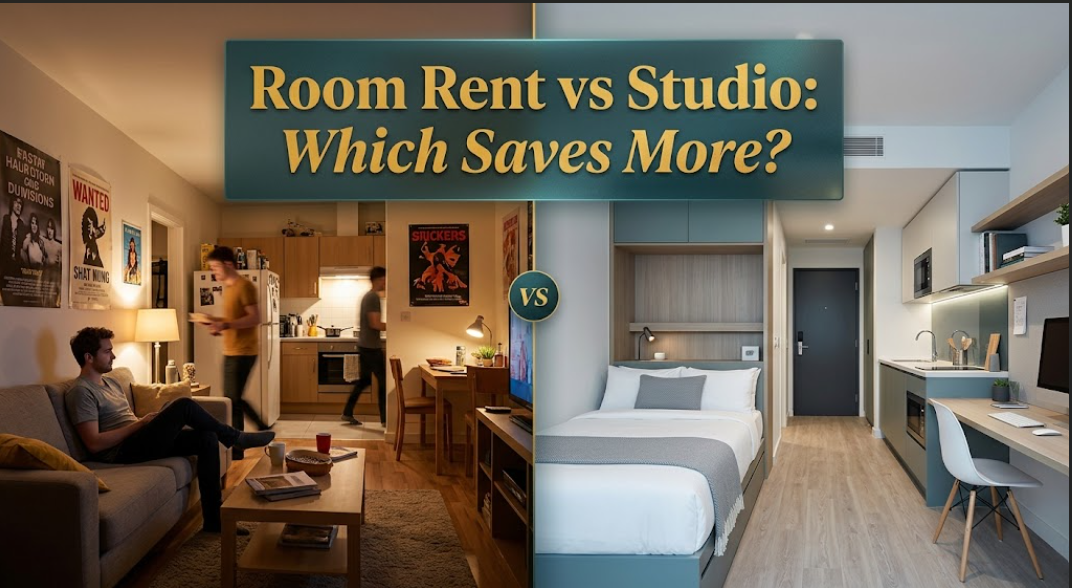
A friend of mine spent three weeks going back and forth between a shared room listing and a studio apartment before she finally asked me to just look at the numbers with her. That conversation is basically this article. The studio “felt” more expensive. It wasn’t, not once you counted everything. And the room “felt” cheaper. It also wasn’t, once she factored in what she’d actually be giving up.
That’s the trap most people fall into when comparing the two. They compare the sticker price and stop there.
1. What the Sticker Price Actually Hides
A room rental almost always lists a lower monthly number than a studio. That part is true. What’s not always true is that the room ends up cheaper once you add in what’s missing from that number.
Rooms often come with shared utilities split unevenly, no lease protections if a roommate bails mid-year, and sometimes a “furnished” tag that really means a mattress and a lamp. Studios, on the other hand, usually roll utilities, internet, and sometimes even parking into a flat monthly rate. When you’re comparing Room Rent vs Studio costs, the real question isn’t “which number is smaller,” it’s “which number is complete.”
Here’s where people usually go wrong: they compare a room’s base rent to a studio’s all-in rent, and conclude the room wins by a wide margin. Redo that math with both numbers fully loaded and the gap usually shrinks to $50-150 a month, sometimes less.
| Cost Category | Shared Room | Studio Apartment |
|---|---|---|
| Base rent | Lower | Higher |
| Utilities | Often split, sometimes uneven | Usually included or flat-rate |
| Furnishing | Sometimes provided, often basic | Rarely provided |
| Security deposit | Lower, but risk of disputes | Higher, but standard lease terms |
| Privacy | Low to none | Full |
| Lease stability | Depends on roommate turnover | Fixed term, in your name only |
2. The Roommate Variable Nobody Puts in a Spreadsheet
You can’t spreadsheet your way around a bad roommate. This is the part of room-sharing math that guides on Rent By Room Guide Online tend to underweight, and it deserves more attention than it gets.

A room rental is cheaper on paper. But it’s cheaper because you’re sharing risk with someone you may not have chosen. Rent gets split unevenly when someone’s late. Utility bills get argued over. If a roommate leaves without notice, you’re sometimes covering their share until a replacement is found, and that can wipe out months of “savings” in a single bad stretch.
None of this means room-sharing is a bad option. For a lot of people, especially those early in their career or new to a city, it’s the only realistic way in. It just means the savings are conditional, not guaranteed. A studio’s cost is fixed and predictable. A room’s cost is lower on average but higher in variance.
3. Where a Studio Quietly Wins
Studios win on things that don’t show up in a rent comparison but absolutely show up in your monthly stress level.

You’re not negotiating shower schedules. You’re not explaining to a landlord why your roommate’s guest has been staying for three weeks. Your lease has your name on it, which matters more than people expect when it comes to building rental history, something that affects your ability to qualify for better apartments later.
There’s also a slower cost to room-sharing that’s easy to miss: decision fatigue. Every shared expense becomes a small negotiation. Every noise complaint becomes a conversation you have to initiate. That’s not a dollar figure, but it adds up, and for some people it adds up to more than the money they’re saving.
4. Running the Real Numbers
If you want an honest comparison, do this exercise before signing anything, for either option.
List every cost tied to the room: base rent, your share of utilities based on last year’s average bills if you can get them, any furnishing you’d need to buy, and a buffer for at least one month of covering a roommate’s share if they leave unexpectedly.
Then list every cost tied to the studio: rent, utilities if not included, a modest furnishing budget if you’re starting from zero, and renter’s insurance, which most people skip on a room but shouldn’t skip on a studio.
Compare the totals over a full year, not a single month. A single month makes the room look like the obvious winner almost every time. A full year, with the buffer built in, tells a more accurate story. In markets we’ve tracked through Rent By Room Guide Online, that yearly comparison narrows the gap far more often than people expect, and in some cities with high roommate turnover, it erases it entirely.
5. Which One Actually Fits You
This isn’t really a math question at the end. It’s a math question with a personality question sitting inside it.
If you’re the kind of person who can live comfortably with shared space, doesn’t mind some unpredictability, and is trying to save aggressively for a specific goal, a room rental with a well-vetted roommate can genuinely save you money. If you value predictability, privacy, or you’re at a stage where lease history and stability matter for your next move, a studio’s higher fixed cost often buys you more than it costs you.
Neither one is the “smarter” choice in the abstract. The smarter choice is the one that matches how you actually live, not how you think you should live to save the most on paper.
Frequently Asked Questions
Is a shared room always cheaper than a studio? Usually cheaper on base rent, not always cheaper once utilities, furnishing, and roommate risk are factored in. The real gap is often smaller than the listed rent difference suggests.
How much should I budget as a buffer for a room rental? A reasonable buffer is one extra month of your share of rent and utilities, set aside in case a roommate leaves without notice. It’s not a cost you’ll always pay, but it’s a real risk worth planning for.
Does a studio build better credit or rental history than a room? Yes, generally. A lease in your own name reports more cleanly and consistently than a shared lease or a sublet arrangement, which matters when you apply for your next place.
What’s the biggest hidden cost people miss when comparing the two? Furnishing and utility splits. People compare base rent and forget that a “furnished” room might just mean a bed frame, while a studio might need a full setup from scratch.
Is it worth paying more for a studio just for privacy? That depends on what privacy is worth to you day to day. For people working from home or dealing with irregular schedules, the extra cost often pays for itself in fewer daily friction points.
For a closer look at how these numbers shift by city, our guide on splitting rent fairly with roommates walks through a few real examples worth comparing against your own numbers.