

My rent went up by $150 last year. No warning, just a renewal letter sitting in my inbox with a politely worded “due to market conditions” explanation.
I sat with it for a few days, genuinely stressed. Then I got practical.
Over the next couple of months, I tested, adjusted, and figured out ways to claw back most of that increase — not by moving, not by arguing with my landlord, but by being smarter about how I approached the whole renting situation. Some of it was obvious in hindsight. Some of it genuinely surprised me.
If your rent feels like it’s swallowing too much of your paycheck, these seven ideas are worth your time. None of them require you to be a finance expert or live like a monk. They just require a bit of intention.
1. Negotiate Your Rent Before You Sign — or Renew
Most people treat the rent price like it’s carved in stone. It isn’t.
Landlords would rather keep a reliable tenant at a slightly lower rate than deal with the cost and hassle of finding someone new. Vacancy is expensive for them — advertising, cleaning, possible weeks without income. That’s your leverage.
When my lease came up for renewal, I did something I’d never done before: I replied to the renewal offer with a counter. I pulled up three comparable listings in my area (all priced lower than my new rate), attached them to my email, and politely said I’d love to stay but needed the numbers to work.
My landlord came down $80. Not the full $150 increase, but still — that’s $960 a year back in my pocket just from one email.
How to negotiate confidently:
- Research local listings on Zillow, SpareRoom, or Rightmove before your lease ends.
- Note the average price for comparable rooms or units.
- Write a short, professional email — not aggressive, just factual.
- Offer something in return: longer lease term, early payment, or simply your track record as a reliable tenant.
- Do this 60 days before your lease expires, not two weeks before.
Even if you only knock off $50 a month, that’s $600 a year. Worth the 20-minute effort every time.
2. Switch to Room Sharing (If You Haven’t Already)
I know, I know. Sharing a home with someone sounds like a step backward to a lot of people. But hear me out — because the math is genuinely hard to argue with.
A one-bedroom apartment at $1,200/month means you’re paying $1,200. A two-bedroom shared between two people at $1,600/month means you’re each paying $800. That’s $400 saved every single month, or $4,800 a year.
And that’s before you factor in split utility bills, shared Wi-Fi, and sometimes shared groceries.
I moved into a shared house two years ago after my solo apartment lease ended. The adjustment took maybe three weeks. After that, I had more money, more social interaction when I wanted it, and — honestly — less stress about making rent every month.
The key is choosing the right roommate. That’s the part people get wrong. They rush it, pick whoever responds first, and then spend six months regretting it.
Check out these 8 fast ways to avoid bad roommates before you commit to sharing with anyone — it covers exactly what to look for and what red flags to never ignore.
Room sharing savings breakdown:
| Living Situation | Monthly Rent | Monthly Bills | Total Monthly Cost |
|---|---|---|---|
| Solo 1-bed apartment | $1,200 | $180 | $1,380 |
| Shared 2-bed (your half) | $800 | $90 | $890 |
| Shared 3-bed (your third) | $600 | $60 | $660 |
The numbers speak for themselves. Sharing isn’t settling — it’s strategy.
3. Time Your Move to Avoid Peak Rental Season
This one surprised me when I first learned it, but it makes total sense.
Rental markets have seasons, just like everything else. In most cities, demand peaks between May and September. People are graduating, relocating for summer jobs, moving before the school year starts. Landlords know this, and prices reflect it.
If you move in November, December, or January, you’re often looking at lower asking prices and more negotiating room. Landlords sitting on empty units through the cold months are far more motivated to make a deal.
When I moved into my current place, I deliberately waited until late October to start seriously searching. The landlord had already dropped the listing price once. I got the room at $75 below the original asking price, and the landlord threw in a month’s free parking.
Practical steps:
- If your lease ends in summer, try to negotiate a 15-month lease instead of 12 — so your next renewal hits in the off-season.
- Start your off-season search early (October for a November/December move).
- Be ready to move quickly when you find something good, since fewer listings are available but motivated landlords move fast too.
It takes a bit of planning, but timing alone can shave hundreds off your annual housing cost.
4. Audit Your Bills and Cut the Hidden Monthly Drains

Rent is the big number, but what surrounds it quietly kills your budget too.
I did a full audit of my monthly housing-related expenses about eight months ago and found things I’d completely forgotten I was paying for:
- A renters insurance policy I’d auto-renewed at a higher rate than necessary (switched providers, saved $18/month)
- Internet at $75/month when a competing provider was offering $45 for the same speed
- Streaming services I never used but had set up when I first moved in “to feel at home”
None of those alone sound huge. Together? Over $500 a year gone without me even noticing.
Simple monthly audit process:
- Pull up your bank statement and highlight every recurring charge.
- Ask yourself: do I actually use this? Is there a cheaper version?
- Call your internet provider and ask for their current promotions — they almost always have ones they don’t advertise.
- Check if your renters insurance is competitive using Lemonade or Policygenius.
- Cancel anything you haven’t used in 30 days. If you miss it, resubscribe. Usually you won’t.
This takes about an hour once and can save you meaningful money every month going forward. Think of it as a “rent reduction” that doesn’t require any landlord cooperation.
5. Learn What’s Included — and Use It
A lot of renters pay for things that are technically already covered by their landlord or building — they just don’t know it.
In my old apartment building, the laundry room was included in rent. I didn’t know that for four months and was using a laundromat down the street. That’s probably $60–80 I wasted for no reason.
Beyond laundry, think about:
- Parking spaces that come with the unit but aren’t mentioned upfront
- Storage rooms in the basement
- Gym or pool access in apartment buildings
- Pest control (often the landlord’s legal responsibility, not yours)
- Maintenance and repairs — many tenants pay for things out of pocket that they could simply request
Before you spend money on anything related to your rental, ask yourself: is this something my landlord or building should cover?
And before you sign a new lease, ask the landlord or agent directly: what’s included? Get it in writing. You’d be surprised what you’ve been missing.
If you want a clear picture of what landlords often don’t volunteer, these secrets landlords won’t reveal are eye-opening — especially for first-time renters who don’t know what questions to ask.
6. Use Apps to Split and Track Shared Costs Properly
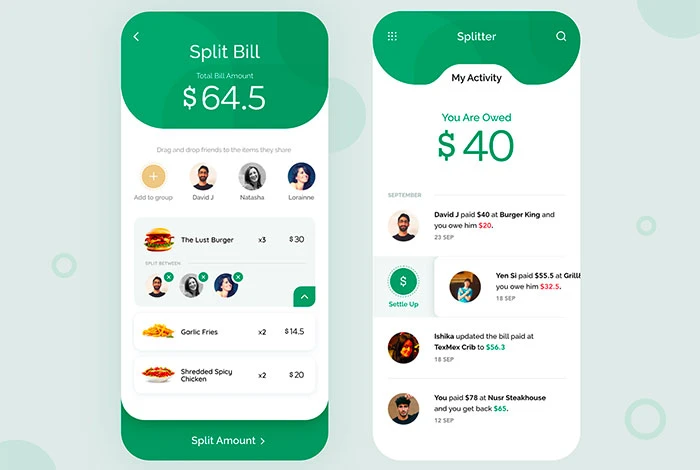
If you live with other people, messy money management is one of the biggest hidden drains on your budget.
Casual arrangements like “I’ll get groceries this week, you get them next week” sound fine until someone starts keeping score differently in their head. Before you know it, there’s tension, someone feels taken advantage of, and the whole living situation becomes uncomfortable.
Worse — people sometimes just absorb costs they shouldn’t because they don’t want conflict. That adds up fast.
The fix is boring but it works: use a proper expense-tracking app.
Best apps for shared living costs:
| App | Best For | Cost |
|---|---|---|
| Splitwise | Tracking who owes what over time | Free (premium available) |
| Tricount | Group trips and shared expenses | Free |
| Honeydue | Couples managing shared bills | Free |
| Google Sheets | Simple DIY expense tracker | Free |
Splitwise is the one I use and recommend. You add your roommates, log every shared expense, and it automatically calculates who owes who at the end of the month. No awkward conversations. No memory lapses. No one quietly absorbing more than their share.
Set up a system in the first week of moving in together. It becomes invisible once it’s running, but it prevents a surprising amount of financial leakage.
7. Build a Simple Rent Fund to Avoid Late Fees and Panic
This last one isn’t flashy, but it might be the most quietly powerful thing on this list.
Late rent fees are brutal. Depending on your lease, they can be anywhere from $50 to 5% of your monthly rent — charged the moment you miss the deadline, sometimes with no grace period. And if you’re ever in a tough month financially, the stress of scrambling to cover rent makes everything harder.
The solution is a dedicated rent fund — a separate savings account that you treat as untouchable except for rent.
Here’s how I set mine up:
- Opened a free savings account with Marcus by Goldman Sachs (good interest rate, no fees).
- Set up an automatic transfer of $50 extra per paycheck into that account.
- Within a few months, I had a full month’s rent sitting there as a buffer.
Now, rent is never a panic. It goes out automatically from that account. If a weird month happens — a big unexpected bill, fewer work hours — rent is still covered.
The secondary benefit? No late fees. Ever. At typical rates, even avoiding two late fees a year more than covers what it costs you to build the fund.
How long does it take to build a one-month rent buffer?
| Monthly Rent | Weekly Savings | Time to Full Buffer |
|---|---|---|
| $600 | $25 | ~6 months |
| $900 | $40 | ~5.5 months |
| $1,200 | $50 | ~6 months |
| $1,500 | $60 | ~6 months |
Start small. The habit matters more than the amount. Once the buffer exists, the feeling of financial breathing room is genuinely hard to describe — you just feel less squeezed every month.
And if you’re trying to cut costs across the board, there are some solid behind-the-scenes strategies to decrease rent costs that go even deeper on the budgeting side of shared living.
The Bigger Picture
Saving money on rent isn’t about dramatic life changes. It’s about stacking small, smart decisions that compound over time.
Negotiate your renewal and save $80/month. Switch to room sharing and save $300/month. Time your next move and save $75/month. Audit your bills and save $45/month. That’s potentially $500/month — $6,000 a year — without moving to a cheaper city or living miserably.
The renters who struggle most financially aren’t usually making huge mistakes. They’re just not being intentional. They accept the first price. They don’t track shared costs. They auto-renew everything. They treat rent as fixed when it often isn’t.
You don’t have to overhaul your life. You just have to pay a little more attention.