A tenant once told me she’d found a room for $410 a month in a city where the average was closer to $700. She was thrilled. Three weeks later she was sleeping with a chair wedged under the doorknob because the “private room” lock was actually a hook-and-eye latch that anyone in the house could flip open from either side.
That’s the story that comes up again and again when people ask why their unbelievably cheap room listing feels off. The price isn’t the problem. The price is a symptom.
1. The Lock Is the First Thing to Check, Not the Last
Most people evaluate a room the way they’d evaluate a hotel: is it clean, is it close to work, does the photo match reality. Locks get a glance, if that. But a room’s safety comes down to a boring, mechanical fact: can you actually secure it, and does that security hold up when someone on the other side wants in.
Cheap rooms cut corners here constantly, because a real deadbolt costs money and a hollow-core door with a $12 latch doesn’t. Ask specifically whether the door has a keyed lock the tenant controls, not just the landlord. If the answer is vague, that’s your answer.
A quick reference before you tour anything:
| What to check | Red flag | Why it matters |
|---|---|---|
| Door lock type | Hook latch, chain only, or “we’ll add one” | Anyone with access to the house can open it |
| Window locks | Painted shut or missing hardware | Ground-floor rooms need working locks, not luck |
| Key control | Landlord holds a master key with no log | You can’t verify who else has access |
| Lease terms | “Room agreement,” no formal lease | Harder to enforce your rights if something goes wrong |
If a listing hits two or more of those red flags, the low price starts making a lot more sense.
2. Cheap Often Means Someone Else Is Subsidizing the Rent
There’s a pattern worth knowing: a room priced well under market is frequently being subsidized by something the landlord doesn’t want to advertise. Sometimes it’s a maintenance issue, no heat in one wing, mold behind a closet wall, a plumbing problem that only shows up when three other tenants shower before you. Sometimes it’s overcrowding, four people paying “single room” rates in a space zoned for two. And sometimes, and this is the one people don’t expect, it’s because the landlord is using the low rent to fill a room fast with whoever answers first, without doing any screening on the other tenants already living there.
That last one matters more than people give it credit for. You’re not just renting a room. You’re renting proximity to strangers you didn’t choose and the landlord didn’t vet either. If you’re weighing whether the savings are worth it, how much you should actually budget for a room is a useful gut check before you get attached to a number that looks too good.
3. The Neighborhood Rate Tells You More Than the Listing Does
Every city has a floor. Below that floor, something is being traded off, usually location, safety, or condition, and sometimes all three. A $400 room in a $700 market isn’t a deal. It’s a question you haven’t asked yet.
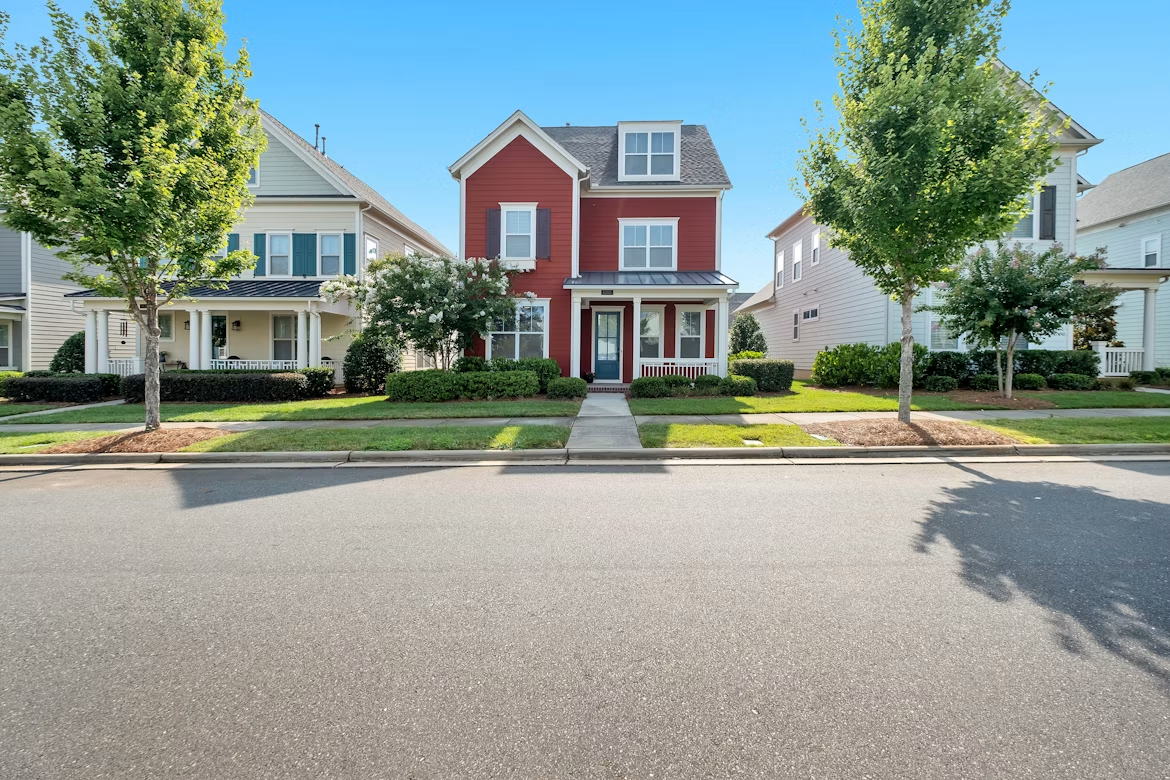
The fastest way to find that floor is to actually look at what similar rooms in the same three or four blocks are going for, not the citywide average. Rent varies block to block for reasons that have nothing to do with charm, and why room rent varies so much by area breaks down the actual drivers, things like proximity to transit lines, school district boundaries, and which side of a street falls into which zoning category.
Here’s where people usually go wrong: they compare the price to what they were paying in a different city, or to what a friend pays somewhere else entirely, instead of comparing it to the block it’s actually on.
4. Screening Goes Both Ways, and Most Renters Only Do Half of It
Landlords screen tenants. Almost nobody screens landlords, and even fewer people think to screen the other tenants they’d be living with. That second gap is where a lot of the real safety issues live, not with the building itself but with who else has a key to it.

A few questions worth asking before you sign anything:
- Who else lives in the unit, and how long have they been there
- Has the landlord ever removed a tenant for a safety issue, and why
- Is there a written house policy on guests, or is it whatever the current tenants decide
- What’s the actual process if you need a lock changed
None of these questions are rude. A landlord who bristles at them is telling you something. If you want a fuller list before a move-in conversation, what to ask before moving in with roommates covers the ones people forget until it’s too late to ask.
I’ll admit this is the part I underestimate every time I revisit it, the roommate variable matters more than the building variable, and yet almost every safety conversation online is about deadbolts and doorbell cameras.
5. Paper Trail or It Didn’t Happen
A verbal agreement and a text message thread are not a lease. They’re a liability with good intentions. If a landlord is only offering an informal “room agreement” with no clear terms on notice periods, deposit return, or what happens if a lock needs replacing, you have no real leverage if something goes wrong at 11pm on a Tuesday.
This is where price and safety connect most directly. Landlords running unlicensed or borderline-legal room-share setups tend to avoid formal leases, because a formal lease creates a paper trail that a code inspector or a court could eventually look at. The lower the price, the more worth double checking that the paperwork is real. How to write a simple roommate agreement is a decent starting template even if the landlord won’t provide one, and having your own version to propose can flush out a lot of hesitation fast.
Where This Actually Lands
None of this means every cheap room is dangerous. Plenty of low-cost rooms are just that, low cost, because a landlord priced it fairly for an unglamorous location or an older building with no frills. The difference is whether the low price comes with an explanation you can verify or a story that keeps shifting when you ask direct questions.
Check the lock. Check the block. Ask who else lives there. Get it in writing. If a listing can survive all four, the price stops being a warning sign and starts just being a good deal.
FAQs
Is a room without a proper lock even legal to rent? It depends on local housing code, but in most jurisdictions a rented room does need to meet basic habitability standards, and a functioning lock is often part of that. Rules vary by city, so check your local tenant rights office if you’re unsure.
How do I find out what other rooms in the same building are renting for? Ask current or former tenants directly if you can, or check recent listings within the same few blocks rather than relying on citywide averages, which can be misleading for a specific street.
What if the landlord says the lock will be “added before move-in”? Get it in writing with a specific date, and don’t hand over a deposit until it’s actually installed. Verbal promises about safety fixes are the single most common thing that quietly never happens.
Are roommate red flags different from landlord red flags? Mostly yes. Landlord issues tend to show up in paperwork and maintenance response time, while roommate issues show up in day-to-day boundaries and shared-space habits. Roommate red flags you should never ignore is worth a read separately from landlord vetting.
Is it worth paying more for a furnished room if safety is a concern? Not directly, furnishing has nothing to do with lock quality or lease legitimacy, but landlords who invest in furnishing a room often invest in the basics too. It’s a weak signal, not a guarantee, so don’t use it as a substitute for actually checking.
For a broader look at what a fair price actually includes, Rent By Room Guide’s budgeting breakdown is a good next stop before you sign anything.