A woman in Austin once wired a $1,400 deposit for a room she never saw in person. The listing had good photos, a landlord who answered every message within minutes, and a story about being “out of the country for work.” By the time she landed at the address to move in, an actual tenant answered the door and had been living there for two years. The room was never for rent. The photos were lifted from a real estate listing three states away.
That story isn’t rare. It’s the most common shape scams take in room rentals, and most people don’t hear about it until it’s already happened to them or someone they know.
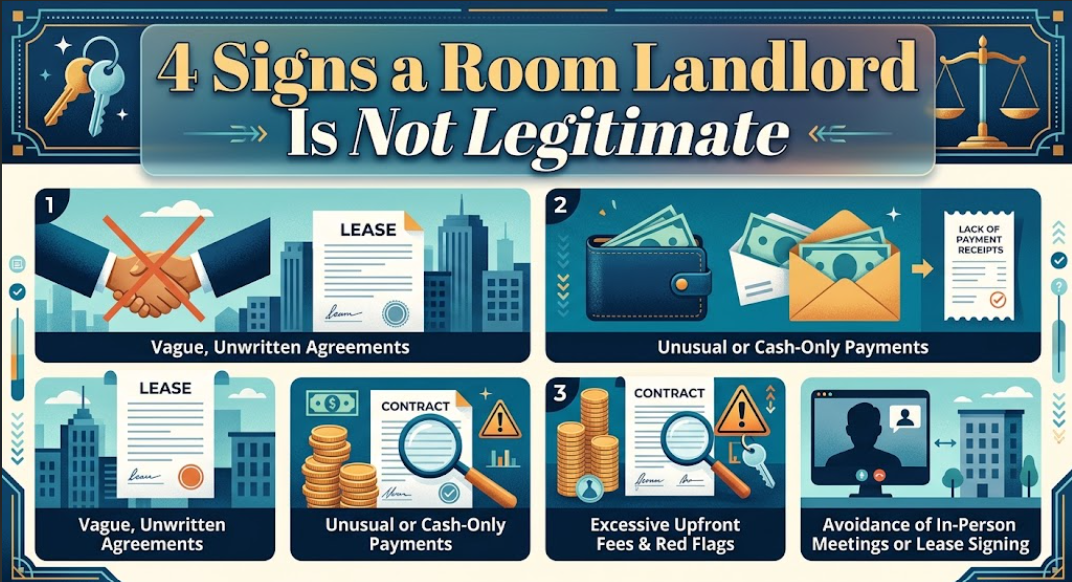
1. The Deposit-Before-Viewing Trap
This is the one that catches the most people, because it plays on urgency. A listing gets dozens of inquiries within hours, so when someone says “I need the deposit today to hold it,” the pressure feels reasonable. It isn’t.
Legitimate landlords and current tenants renting out a spare room almost never ask for money before you’ve seen the space, whether that’s in person or over a live video call where you can ask the person to walk around and show you specific things, like the lock on the door or the view from the window. If someone refuses a live video walkthrough and only offers photos or a prerecorded video, that’s worth pausing on.
Here’s where people usually go wrong: they assume that because the listing looks professional, the person behind it is legitimate. Scammers reuse real listings from Zillow, Craigslist, or Facebook Marketplace, sometimes lightly edited, and repost them on their own accounts. A reverse image search on the main photo takes thirty seconds and can save you fifteen hundred dollars.
2. The “Landlord Is Out of the Country” Script
If you’ve spent any time browsing room listings, you’ve probably seen a version of this. The landlord is a missionary, a military contractor, a widow moving to be near family, always something that explains why they can’t meet you and why the process has to happen entirely over text or email.
The story changes slightly from scam to scam, but the mechanics stay the same. They’ll offer to mail you keys once payment clears, or claim a property manager will meet you but needs the deposit processed first “for insurance purposes.” No licensed property manager works that way, and keys don’t get mailed to strangers for a room that’s actually occupied or actually exists.
If you’re weighing whether a listing’s price reflects the area, it helps to have a baseline. This piece on how much you should budget for a room breaks down realistic ranges, and a price that’s dramatically below that range for a similar space is often the first sign something’s off, not a lucky find.
3. Fake Application Fees and Credit Check Scams
Some scams don’t try to take a deposit at all. Instead, they ask for a “processing fee” or “application fee” to run a credit check, sometimes as little as twenty or thirty dollars, specifically because that amount feels too small to fight over if something goes wrong.
The catch is that these fees often go through a third-party site the scammer controls, meaning the credit check never happens and the fee disappears. A real credit check comes from a service you can independently verify, like a named background check company with its own website and reviews, not a link pasted into a text message.
At Rent By Room Guide, we hear from readers fairly often who paid one of these small fees and then never heard back. It’s a low-effort, low-risk scam for the person running it, which is exactly why it’s so common.
| Scam Type | Typical Ask | Red Flag to Watch For |
|---|---|---|
| Deposit before viewing | $300–$1,500 | Refuses live video walkthrough |
| Landlord abroad | Full deposit + first month | Payment requested before any contract |
| Fake application fee | $20–$60 | Third-party payment link, no verifiable company |
| Overpayment refund | Deposit + “extra” to refund | Asks you to wire back the difference |
4. The Overpayment Refund Con
This one is less common but more elaborate, and it specifically targets people who’ve already had a few normal, reassuring exchanges with the “landlord.” The scammer sends a cashier’s check or money order for more than the deposit amount, apologizes for the mistake, and asks you to deposit it and wire back the difference.

The check bounces days later, usually after you’ve already sent the wired amount, which is real money leaving your actual account. Banks are required to make funds temporarily available before a check fully clears, and scammers rely on that gap. If anyone overpays you and asks for money back, treat it as a hard stop, not an inconvenience to smooth over.
Common Mistakes People Make Even When They’re Being Careful
Even cautious renters get caught because they check for some red flags and not others. Grammar mistakes in a listing don’t mean much anymore. Professional-sounding language doesn’t mean much either. What actually matters is whether you can verify the person exists independently of what they’ve told you, and whether they’ll let you see the room without money changing hands first.
It also helps to know what a normal roommate agreement looks like before you’re in a rush to sign anything. If you haven’t put one together before, this guide to writing a simple roommate agreement is a good starting point, and it makes it much easier to spot when someone’s asking you to skip steps that a legitimate landlord wouldn’t skip.
And if you’re new to sharing a space in general, not just renting one, it’s worth reading through roommate red flags you should never ignore before you sign anything. Some of the same instincts that protect you from a bad roommate also protect you from a scam, because both rely on you not asking enough questions early.
What Actually Protects You
None of this requires becoming paranoid about every listing. A few habits do most of the work. Insist on seeing the space live, whether in person or by video call, before any money moves. Search the listing photos and the phone number or email address separately to see if they show up elsewhere under a different name or city. Never wire money or send gift cards, since both are essentially untraceable once sent. And when a price looks unusually good for the area, check it against a realistic range rather than assuming you got lucky.
If you’re comparing a room rental against other options in a city you’re new to, it’s also worth reading about why room rent varies so much by area, since understanding that variation makes it much easier to spot a price that’s designed to lure rather than one that’s just a good deal.
Most of these scams aren’t sophisticated. They rely on speed, a plausible story, and a renter who doesn’t want to seem difficult by asking pointed questions. Asking them anyway is the whole defense.
FAQs
Is it normal for a landlord to ask for a deposit before I’ve seen the room? No, not without at least a live video walkthrough first. Deposits before any viewing are one of the clearest signs of a scam listing.
How can I tell if listing photos are stolen from somewhere else? Run the main photo through a reverse image search. If it shows up on a real estate site or a listing in a completely different city, that’s a strong signal the room isn’t what it claims to be.
What should I do if I already sent money to a scammer? Contact your bank or payment provider immediately to see if the transaction can be reversed or flagged, and file a report with the FTC and your local police. Recovery isn’t guaranteed, but reporting it helps others and sometimes helps investigators build a pattern against repeat scammers.
Are scams more common on certain platforms than others? Craigslist and Facebook Marketplace tend to have more of them simply because listings are easier to post with little verification. That doesn’t mean other platforms are risk-free, just that the volume of low-effort scams is usually higher there.
Is a slightly-too-good price always a scam? Not always, but it’s worth checking against typical rates for the area before assuming you found a deal. A breakdown of budgeting for a room gives a reasonable baseline to compare against.
For a broader look at staying safe while searching, Rent By Room Guide keeps an ongoing collection of renter safety resources worth checking before you start reaching out to listings.