I once turned down a room that was $200 cheaper than everything else I’d looked at that month. Great location, good landlord, decent kitchen. The only reason I said no was a fifteen-minute conversation with the person I’d be sharing a bathroom with. Something about the way she talked over me twice in that short window told me everything I needed to know. I’ve never regretted that decision, and I’ve watched enough friends learn the opposite lesson the hard way to know it wasn’t luck.
Most people hunting for a room treat the interview, if they even do one, as a formality standing between them and a signed lease. Rent gets all the attention. Square footage gets all the attention. The actual human being you’ll be living twelve inches away from, sharing a fridge with, hearing through thin walls at 2am, barely gets a conversation before someone signs a year-long commitment with them.
1. Rent Is a Number, a Roommate Is a Daily Variable
Rent is fixed. You know exactly what you’re paying on the first of every month, and that predictability feels like control. A roommate is not fixed. They’re a variable that changes how you experience your home every single day, and unlike rent, you can’t budget for a bad one.

I’ve talked to renters who saved $150 a month by choosing the cheaper option, only to spend three times that moving out early after six miserable months. The math on a lease looks clean until you factor in the cost of dreading your own front door.
A cheap room with a roommate who leaves dishes for a week, invites people over without asking, or treats shared space like their personal storage unit isn’t actually cheap. It’s expensive in a currency that doesn’t show up on a spreadsheet.
2. What an Interview Actually Reveals
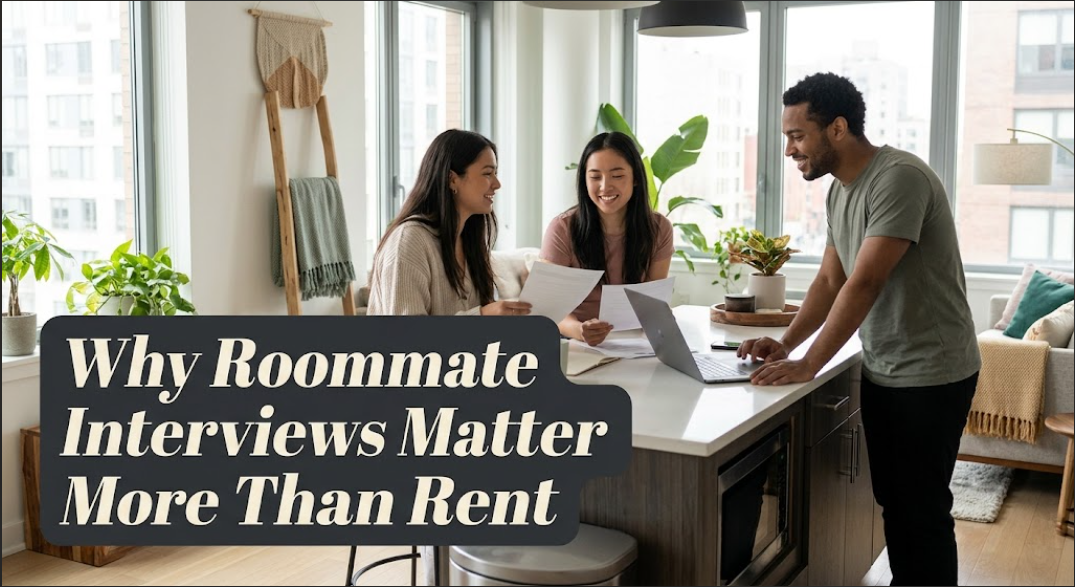
A good roommate interview isn’t about liking the same shows or having similar hobbies. It’s about surfacing the boring, practical stuff that determines whether two adults can share a kitchen without resentment building up. I usually ask about:
- Sleep schedule and noise tolerance
- How they handle shared cleaning, specifically, not vaguely
- Whether they work from home and what that looks like day to day
- Guest habits, overnight guests included
- How they’ve handled conflict with a previous roommate
That last one tends to be the most revealing. Someone who says “we never really had issues” without elaborating is often someone who avoids conflict rather than resolves it, and avoidance has a way of curdling into resentment that surfaces at the worst possible time.
3. Where People Usually Go Wrong
Here’s where most room hunters trip up, and but I say this as someone who’s done it too: they let urgency override judgment. The lease is signed in three days, the room is the only affordable one left in the neighborhood, and suddenly all those careful questions get skipped because there’s no time.

Financial pressure does this to good instincts. It convinces you that a slightly awkward vibe during the walkthrough doesn’t matter, that you’re overthinking it, that you can adjust once you move in. Sometimes that’s true. Often it isn’t. If Rent By Room Guide Online has a consistent message across everything I’ve written for this site, it’s that budgeting for a room means more than budgeting for the number on the listing. It means budgeting time to actually vet the situation, even when the market makes that feel like a luxury.
Another mistake worth naming directly: outsourcing the interview to a group chat or a single text exchange. A real conversation, ideally in person or on a video call, tells you things a text thread never will. Tone. Hesitation. How they answer a question they weren’t expecting.
4. A Quick-Reference Chart for Interview Red Flags
Something I hand to friends when they’re room hunting, because it’s easier to remember three columns than a mental checklist under pressure.
| Signal | What It Might Mean | Worth Asking About |
|---|---|---|
| Vague answers about cleaning habits | Avoidance of responsibility later | “What does a normal Sunday cleanup look like for you?” |
| Talks over you repeatedly | Difficulty sharing space and decision-making | How they’ve split chores or bills before |
| No mention of past roommates, ever | Possible pattern of short stays or conflict | Ask directly how long they usually stay in a place |
| Overly rehearsed, salesy answers | May be optimizing to get approved, not to be honest | Ask something unscripted, like what annoys them in a shared space |
| Dismisses your questions as unnecessary | Low respect for boundaries going forward | Pay attention to tone here, not just content |
This isn’t about disqualifying someone for one odd answer. It’s about noticing patterns. One weird moment in an hour-long conversation is human. Three or four is data.
5. When the Interview Should Change Based on the Living Situation
A studio split with a curtain down the middle needs a more thorough conversation than a three-bedroom house where you’ll mostly cross paths in the kitchen. If you’re looking at furnished rooms versus unfurnished, that’s worth asking about too, since shared furniture ownership creates its own small conflicts nobody thinks to mention until the lease is already signed.
And if the room is priced noticeably below others in the area, that’s worth a longer conversation, not a shorter one. Sometimes it’s a landlord being generous. Sometimes it’s a red flag the interview would have caught. I wrote a bit more about spotting the difference in signs a cheap rental might be overpriced in disguise, which is really the same instinct applied to pricing instead of people.
If you’re comparing a room setup against a studio entirely, the calculation shifts again. A studio removes the roommate variable altogether, for a price. Whether that trade is worth it depends on what you value more, privacy or savings, and that’s a genuinely personal call. I go into that trade-off in more detail in room rent versus studio living.
6. What I’d Tell Someone About to Sign
Ask the uncomfortable questions before the lease, not after. Trust the version of yourself that notices something feels slightly off, even when you can’t articulate exactly why. And remember that the room is temporary either way. A bad living situation ends eventually. It’s just so much cheaper, in every sense, when it ends because the lease ran out rather than because you couldn’t stand another month.
I still think about that room I turned down sometimes. Not because I made some brilliant decision, but because I almost didn’t ask the questions that made the decision easy. The fifteen minutes felt inconvenient at the time. It saved me a year.
FAQs
Is it weird to formally interview a potential roommate? No, and most people who’ve lived with a bad roommate wish they’d done exactly that. A casual conversation framed as getting to know each other works fine, it doesn’t need to feel like a job interview.
What if the roommate is already chosen by the landlord or property manager? You can still ask to speak with them before signing. Landlords are generally fine with this since a stable, compatible household benefits them too, fewer vacancies and fewer disputes.
How long should a roommate interview actually take? Fifteen to thirty minutes is usually enough to surface real signals, especially if you’re asking specific questions rather than general ones. Longer isn’t always better, focused is better.
What’s the single most important question to ask? How they’ve handled a conflict with a past roommate, and whether they can describe it specifically. Vague or defensive answers here tend to predict future friction more than almost anything else.
Should rent price ever override a bad interview feeling? Rarely, and if it does, go in with eyes open about the trade-off you’re making. A cheaper room with a difficult roommate often ends up costing more in stress, moving fees, and lost time than the monthly savings were worth.
For more on getting the numbers right before you even start touring rooms, Rent By Room Guide Online’s budgeting breakdown is a good next stop.