
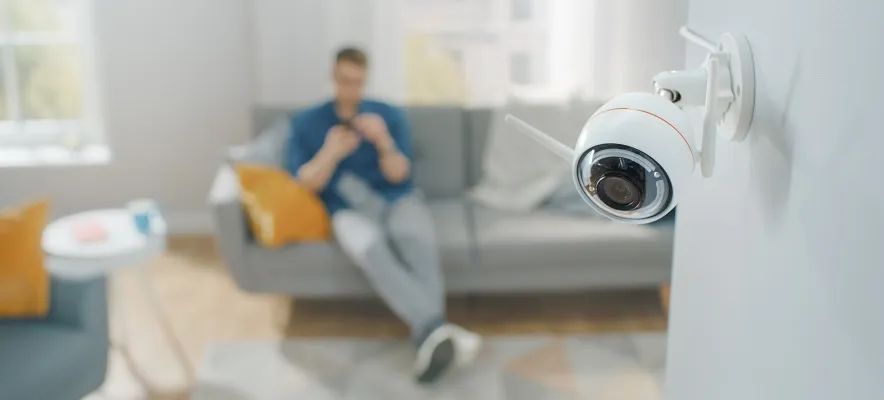
I still remember the night my neighbor’s apartment got broken into. We were living in a mid-rise building in a pretty decent area — not the kind of place you’d expect trouble. But it happened. And after that, I couldn’t sleep properly for weeks. I kept checking the door, peeking through the peephole at odd hours, wondering if my own place was actually as secure as I thought it was.
Here’s the thing nobody tells you when you’re renting: your landlord’s idea of “secure” and your idea of “secure” are two very different things. A basic lock and a hallway camera that’s probably been broken since 2019 don’t count as security. Not really.
But you’re also in a tricky spot as a renter. You can’t just tear down walls or install whatever you want. You don’t own the place. So what can you actually do?
Turns out — quite a lot. And most of it is affordable, renter-friendly, and doesn’t require drilling a single hole (well, maybe one or two small ones). Here are six upgrades I’ve either personally used or seen work really well for renters who wanted to feel genuinely safer in their homes.
1. Smart Door Locks — The Upgrade That Changed Everything For Me
The first time I installed a smart lock on my apartment door, I was honestly nervous. I thought the landlord would flip out. But I did my research first — most smart locks are designed to replace just the interior portion of the lock, leaving the exterior cylinder intact. That means no permanent changes, and when you move out, you swap it back in minutes.
I went with the Schlage Encode Plus — it connects to Wi-Fi, lets you set entry codes, and sends you an alert every time the door opens or closes. Game changer.
Why does this matter for security?
Because old deadbolts are easier to pick or bump than most people realize. And that spare key you gave to your ex three apartments ago? Yeah. A smart lock lets you invalidate access instantly without changing the hardware.
What to look for in a renter-friendly smart lock:
- No permanent modifications to door frame
- Easy reinstallation of original lock
- Remote access via app
- Temporary access codes (great for guests or maintenance workers)
- Battery backup so you’re not locked out during a power cut
Brands worth looking at: Schlage, Yale, Level Lock (nearly invisible), and August Smart Lock (installs over your existing deadbolt — literally no tools needed for some models).
One mistake I made early on: I set a code that was too simple — my building number plus my apartment number. Don’t do that. Use something random.
2. Door Reinforcement Kits — The Underrated Fix Nobody Talks About
Here’s something I learned the hard way after doing some research post-break-in incident: most break-ins don’t happen because the lock was picked. They happen because the door frame was kicked in.
A standard apartment door frame is often just softwood with basic screws. One decent kick near the lock and it gives way. Your deadbolt doesn’t matter if the frame collapses around it.
Door reinforcement kits fix exactly this problem. Products like the Door Armor Max or Door Jamb Armor use heavy-gauge steel plates that wrap around the door frame and are secured with 3-inch screws that go deep into the structural studs.
Now, this one does require a little more installation effort. But it’s still renter-friendly if done right — the plates can be removed when you leave, and the screw holes (which are small and minimal) can be patched with wood filler and paint.
Here’s what a basic reinforcement setup looks like:
| Component | What It Does |
|---|---|
| Door Jamb Armor | Protects the frame from kick-ins |
| Hinge Bolts | Prevents hinge-side attacks |
| Strike Plate Upgrade | Replaces thin stock plate with heavy steel |
| Door Bar / Security Bar | Adds secondary physical resistance |
Before installing, I’d strongly recommend checking your lease and maybe sending a quick message to your landlord framing it as “I want to maintain the door integrity.” Most landlords are actually fine with it — because it protects their property too.
If you’re also looking at how to evaluate the security of a place before you even move in, these 4 things to check before paying a deposit on rent by room can save you from renting somewhere that’s fundamentally unsafe.
3. Window Sensors and Stoppers — Cheap, Simple, Effective
Windows are the forgotten vulnerability. Everyone obsesses over the front door and ignores the fact that a ground-floor or fire-escape-adjacent window is just as accessible — sometimes more so.
I lived on the second floor of a building once where the fire escape was literally outside my bedroom window. I slept with a chair wedged under the window handle for six months before I figured out a better solution.
There are two easy layers you can add here:
Layer 1 — Window Stop Pins or Sash Locks
These are little pins or wedges that prevent a window from being opened more than a few inches from the outside. They cost under $10 for a pack of them, require no tools, and can be removed without a trace. Perfect for renters.
Layer 2 — Window/Door Sensors
These are small magnetic sensors (one piece on the frame, one on the window itself) that trigger an alarm or send your phone a notification when the window opens. Brands like Ring, SimpliSafe, and Wyze all make these. They pair with their broader home security ecosystems but also work standalone.
I added four window sensors to my apartment and connected them to a Wyze Home Monitoring plan. The whole setup cost me less than $60. Now if any window opens unexpectedly while I’m at work, I get a push notification within seconds.
Quick tip: Don’t forget sliding doors. A simple wooden dowel or an adjustable Charley Bar in the track makes sliding doors nearly impossible to force open.
4. A Renter-Friendly Video Doorbell — See Who’s There Before They Know You’re Home
This one’s almost a no-brainer now, but the number of renters who still don’t have one surprises me.
A video doorbell doesn’t just let you see who’s knocking — it also creates a documented record of anyone who approaches your door. Opportunistic theft drops dramatically when people realize they’re on camera.
The challenge for renters is installation. You typically can’t hardwire a doorbell without landlord permission. But the Ring Video Doorbell (battery version) and Eufy Video Doorbell both run on rechargeable batteries and mount with just two small screws — easily patchable when you move out.
What to look for:
- Battery-powered (no wiring required)
- Night vision
- Motion detection zones (so you’re not getting alerts every time someone walks past in the hallway)
- Two-way audio
- Cloud or local storage for footage
One thing I’d recommend: be upfront with neighbors if your doorbell’s field of view covers shared hallway space. It avoids friction and, in most places, it’s the courteous (and sometimes legally necessary) thing to do.
For shared living situations — where you might have roommates coming and going — these essential rent-by-room tips for safe shared living walk through how to think about security when multiple people have access to the same space.
5. Portable Door Alarms and Travel Locks — For When You Need Backup
This might sound like something only travelers use. But honestly, portable door alarms are one of the most underrated apartment security tools out there — especially if you’ve just moved somewhere new and you’re still figuring out the neighborhood.
A door stop alarm (like the ones from Sabre or Doberman Security) wedges under your door from the inside. If anyone tries to push the door open, it triggers a 120dB alarm. They cost between $10 and $20. That’s it.
I kept one under my hotel room door every time I traveled. Then one day I thought — why am I not using this at home too?
Now I keep one at the front door and one at the bedroom door. If something ever bypassed my main lock (unlikely but possible), there’s a second physical and audible barrier.
Other portable options worth considering:
- Addalock — a small portable lock that slides into the door latch strike plate and prevents the door from being opened, even with a key. Useful when you’re inside and want maximum security.
- Door chain with alarm — combines a physical chain with a sensor that triggers if the chain is tampered with.
- Window break sensors — stick-on sensors that trigger at the sound frequency of breaking glass.
These are all temporary, removable, and leave zero marks on your apartment. Perfect for renters who want flexibility.
6. Smart Lighting With Motion Sensors — Making Your Apartment Look Occupied
This one’s more psychological than physical, but it’s genuinely effective.
Most burglars don’t want a confrontation. They scout for apartments that look empty — dark windows, no movement, predictable schedules. Smart lighting disrupts that pattern.
Philips Hue, LIFX, and Wyze Bulbs all let you set schedules and automation so your lights turn on and off at random intervals when you’re away. Some apps even have a “vacation mode” that mimics natural activity patterns.
Pair that with motion-activated plug-in lamps near windows and entry points, and your apartment suddenly looks a lot less like an easy target.
Here’s a simple setup that works:
| Location | Upgrade | Estimated Cost |
|---|---|---|
| Living room | Smart bulb with schedule | $12–$25 |
| Bedroom | Motion-sensor lamp | $15–$30 |
| Hallway/entry | Smart plug + existing lamp | $10–$20 |
| Exterior (if applicable) | Motion-sensor outdoor light | $20–$40 |
If you have a balcony or shared outdoor space, a plug-in motion sensor floodlight is another great addition — no hardwiring, just plug into an outdoor outlet.
One thing to avoid: keeping your curtains or blinds wide open at night with lights on. That actually works against you — it lets anyone outside see exactly what’s in your apartment. Frosted or blackout curtains in bedroom windows are a small detail that makes a big difference.
If you’re living in a shared building or rent-by-room situation, understanding how to protect yourself financially and physically is crucial — these smart ways to protect your money as a renter are worth reading alongside any physical security upgrades you make.
Common Mistakes Renters Make With Security Upgrades
I’ve made most of these myself, so no judgment:
- Buying equipment without checking lease terms first. Some leases are weirdly specific about what you can install. Read yours, or just ask.
- Only securing the front door. Windows, sliding doors, fire escape access — all of these need attention.
- Installing cameras pointed at shared spaces without thinking it through. Your neighbor’s right to privacy matters. Keep cameras pointed at your own door only.
- Not documenting what you installed. If you’re making any modifications, take before-and-after photos so you can prove the apartment was restored to its original condition when you leave.
- Assuming a security system means you’re done. No single upgrade is foolproof. Layering multiple systems (physical + digital + visual deterrents) is what actually works.
- Choosing looks over function. Some smart locks look great but have terrible app support or die after six months. Read reviews from real users, not just the product page.
A Quick Cost Overview
Here’s a rough breakdown of what a full security upgrade might cost for an average renter:
| Upgrade | Estimated Cost | DIY Friendly? |
|---|---|---|
| Smart door lock | $80–$250 | ✅ Yes |
| Door reinforcement kit | $60–$120 | ✅ Yes (with basic tools) |
| Window sensors (x4) | $40–$80 | ✅ Yes |
| Video doorbell (battery) | $60–$150 | ✅ Yes |
| Portable door alarm | $10–$25 | ✅ Yes |
| Smart bulbs + scheduling | $30–$80 | ✅ Yes |
| Total | ~$280–$700 |
That range sounds wide, but you don’t have to do all of it at once. Start with the door lock and window sensors — those two alone will make a significant difference.
Final Thoughts
Feeling safe in your apartment isn’t a luxury. It’s basic. And the good news is that you don’t have to own the place to make it significantly more secure.
The upgrades here are all designed to be renter-friendly — no major modifications, no lease violations, and nothing that can’t be undone when you move on. Most of them are also the kind of thing a landlord should appreciate, because a more secure apartment is a better-maintained one.
Start small if the budget’s tight. A $15 door stop alarm and a $10 window pin kit is already miles ahead of nothing. Then build from there as you settle in.
And if you’re still in the process of evaluating rental options or thinking about shared living arrangements, don’t miss this guide: 10 Essential Rent-by-Room Safety Tips You Must Know — it covers the broader picture of staying safe from day one.
Your home should feel like a refuge. A few smart upgrades can make sure it actually is.